

Transceivers
-
Product
range - Guide


GUIDE
Transceivers: an important component of network technology
Transceivers are an important component of network technology for data transmission and therefore essential for networking large network infrastructures.
The term "Transceiver" comes from English and is made up of the words Transmitter (sender) and Receiver (receiver). Seen this way, a transceiver combines a transmitter and a receiver in a single device. Since transceivers transmit data optically via LWL fiber optic cables, they are also referred to as optical transceivers in transmission technology. Thanks to the fiber optic connection, transceivers are able to send and receive large amounts of data at high speeds over longer distances. Transceivers also include SFP modules.
In the field of video surveillance, the transceiver is an important link for connecting several buildings on a site to form a control center.
Frequently asked questions (FAQ)
What is a transceiver?
A transceiver is a network component responsible for sending and receiving data and signals within a network, or for connecting different networks over long distances. The term transceiver comes from English and is made up of "Transmitter" (sender) and Receiver (receiver), which together mean transmitter-receiver. Transceivers can take the form of different hardware media. Among the best-known hardware media are, for example, SFP modules.
How does a transceiver work?
-
of high data volumes at speeds in the multi-gigabit range per second (Gbit/s) over very long distances.

What are transceivers used for?
Transceivers are used in networking to transport large amounts of data at high speeds over long distances. They are also an effective hardware component in video surveillance areas such as city surveillance and highway surveillance, where high-resolution IP cameras depend on real-time image transmission.
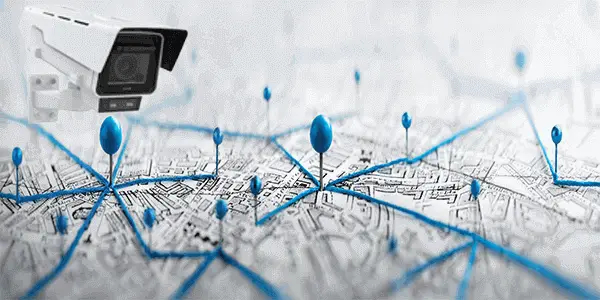
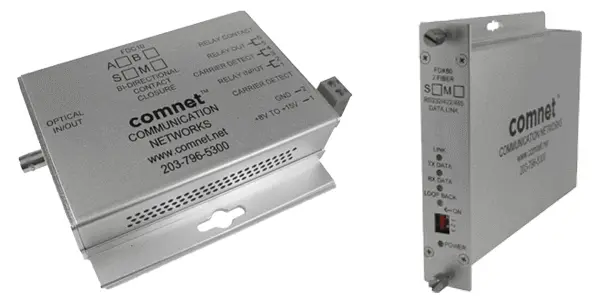
In this way, countless IP cameras can be networked for large-scale video surveillance, e.g., on a large site. Networking various NVRs (network video recorders) and the associated surveillance cameras, which may be distributed across different buildings on the site, can also be combined very efficiently in a VMS (video management software) in the control center using a transceiver. With this type of networking, the VMS displays not only the individual IP cameras but also the entire NVR as a drive. As a result, the analysis function located on the network video recorder can also be used in the control center.

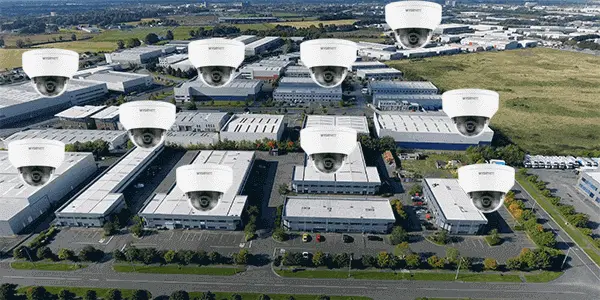
From a technical video surveillance perspective, transmission technology with a transceiver offers essential and reliable options for transmitting high-resolution images from a surveillance camera in real time without latency. Especially for professional video surveillance applications, such as road surveillance, airport surveillance, and mountain rescue surveillance, where latency-free image transmission over longer distances in real time is essential, the use of transceivers is indeed valuable. Our online shop for professional video surveillance offers a wide range of transceiver products from renowned manufacturers such as Comnet, Nitek, SeeEyes, Videotec and IFS. This way, we guarantee our customers extensive and suitable selection options for every application area. So that you can easily equip your video surveillance system with a suitable transceiver, our expert team for transmission technology is available at any time for professional advice.