

VIDEO SURVEILLANCE TECHNOLOGY
- Categories
-
Product
range - Guide


GUIDE
Table of Contents:
1. Video Surveillance Technology - Accessories for Professional Video Surveillance
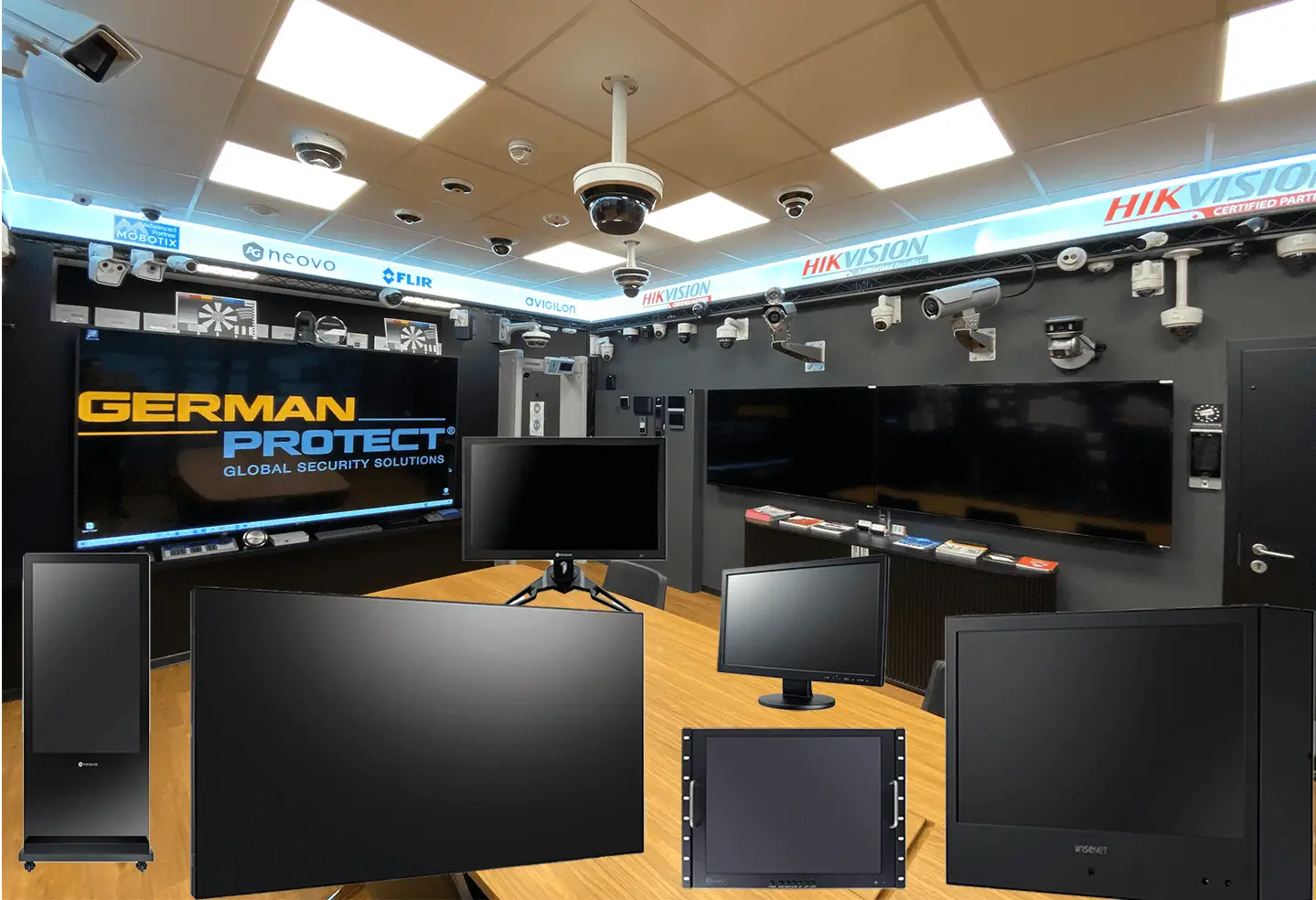
2. Monitors for Surveillance and Medical Technology
3. Floodlights and Infrared Illuminators
4. Media Converters for Security Technology
5. Video Decoders and Encoders
6. Lenses and Sensor Units
7. Cables for Video Surveillance
8. Video Surveillance Technology Components
9. Power Supplies
Thanks to the constant technological advancement of video surveillance technology, modern video surveillance today offers optimal object protection in all relevant security applications that are necessary for effective and reliable protection.
In particular, surveillance cameras have undergone rapid development over the years, not only in terms of resolution but, even more importantly, also in areas such as intelligent and cognitive video analytics, thanks to the integration of AI (artificial intelligence).
Thanks to this rapid technological development of video surveillance technology in recent years, it is now even possible to integrate a surveillance camera into an alarm system, which enables the visualization of alarm events.
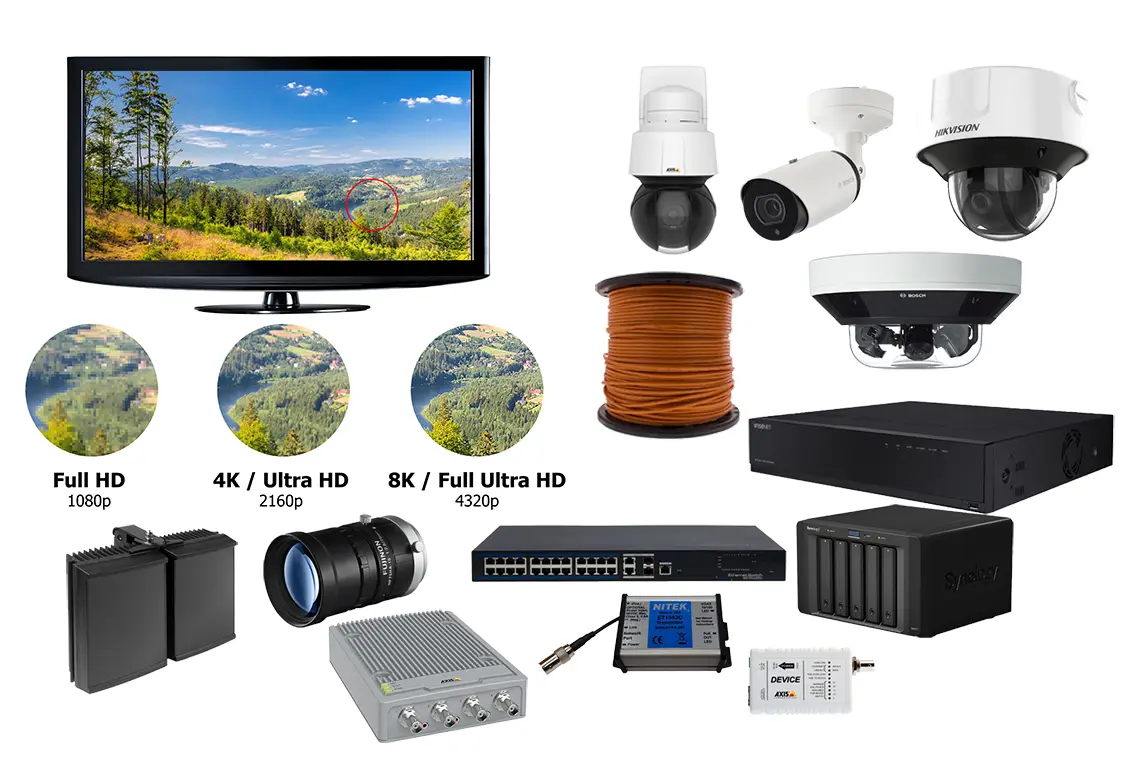
High resolutions in the range of 8 megapixel 4K or even 12 megapixel and beyond no longer pose a major technological challenge for a surveillance camera, provided all components of the video surveillance system are of the same quality and therefore work together to deliver optimal performance. Latency (image delay) issues in connection with high resolution, which until recently often weighed against choosing an IP camera, have also been resolved by all reputable surveillance camera manufacturers. By optimizing the communication between IP cameras and NVRs (network video recorders), thanks to the new development of H.265 and H.265+ compression, many manufacturers have been able to achieve latency that is barely noticeable in video surveillance technology. For smooth video transmission from multiple high-resolution surveillance cameras within the network, other video surveillance components, such as the quality of the switches or network cables used, certainly also play an important role. Many high-resolution surveillance cameras in a video surveillance system also generate a large volume of data within the network, which must not only be transmitted without interruption but also processed. Ultimately, the individual components used in a video surveillance system can only perform as well as the entire peripheral setup. Even with analog video surveillance, the components combined with each other in video surveillance technology, such as cables, connectors and media converters, are very important for proper functionality of the video surveillance system. Regardless of the type of video surveillance, selecting the right individual components and devices from video surveillance technology that work optimally together is of great importance.
As ESA GmbH German Protect, a professional and certified online shop for security and video surveillance technology, we show you which video surveillance components are suitable, how and for what purposes they are used, and which are necessary for the proper functionality of video surveillance.
Floodlights and Infrared Illuminators
To procure a high-performance infrastructure for a surveillance camera for outdoor use, so that optimal surveillance images can be achieved at night, video surveillance technology provides suitable infrared illuminators as well as white light illuminators for every application. Often, the infrared illuminators built into the IP camera are insufficient in terms of range and illumination strength and must be supplemented.
Conventional surveillance cameras for outdoor use usually have a maximum infrared range of 80 meters, which makes it necessary to use a second IP camera. Depending on the manufacturer, the illumination intensity of the infrared illuminators sometimes shows weaknesses in the last meters of the range, and the surveillance area can no longer be sufficiently illuminated for detection at night. To overcome such issues in video surveillance, video surveillance technology offers a wide variety of infrared and white light illuminators. In our online shop, you will find a broad product range of leading manufacturers worldwide for infrared illuminators and white light illuminators, such as Raytec, Axis Communicators, Videotech, Bosch and Vivotek.
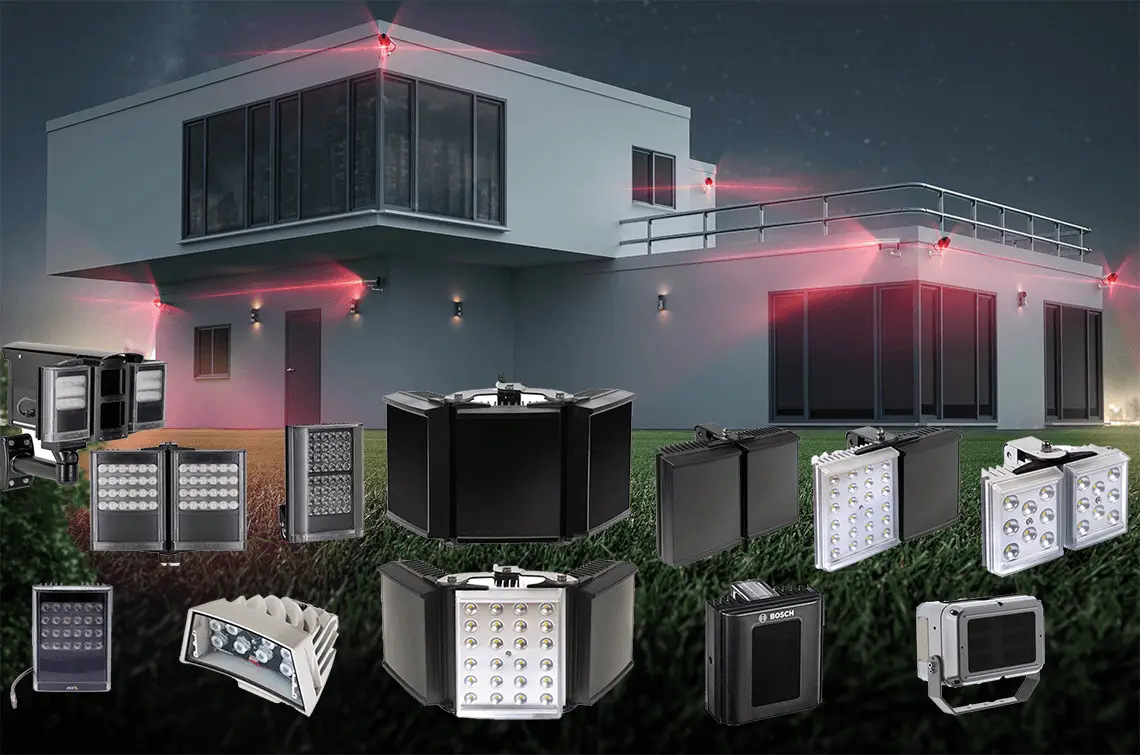
Our Expert Tip! Most criminal activities take place in darkness. A surveillance image at night in which the perpetrator cannot be identified, either in the live images or in the video recordings, due to suboptimal illumination of the surveillance area, greatly weakens the effectiveness and therefore the reliability of the surveillance system. Additional infrared illuminators increase the effectiveness of the surveillance camera and provide glare-free surveillance images even at greater distances, so that the perpetrator can be identified in time.
Media Converters for Security Technology
Media converters are an extremely helpful component in video surveillance technology, allowing different media, such as IP camera signals, to be transmitted over existing analog coaxial cables. Media converters thus make it possible to equip an analog video surveillance system with IP surveillance cameras and to digitize it. The existing coaxial cables of the analog surveillance system do not have to be replaced thanks to the media converter in order to implement an IP camera. Basically, media converters enable different transmission media such as coaxial, CAT cable (network cable) and LWL (fiber optic cable) to work together within the network. Especially with outdated analog video surveillance systems, where miles of coaxial cable are already in place, the media converter is a cost-effective solution to upgrade video surveillance with technologically advanced IP cameras without having to carry out expensive new cabling.
In our online shop, we offer an extensive range of media converters from leading manufacturers such as Axis, Bosch, Barox, Comnet, Nitek, Hanwha Techwin, Hikvision, OT Systems, SeeEyes, Vivotek, etc.
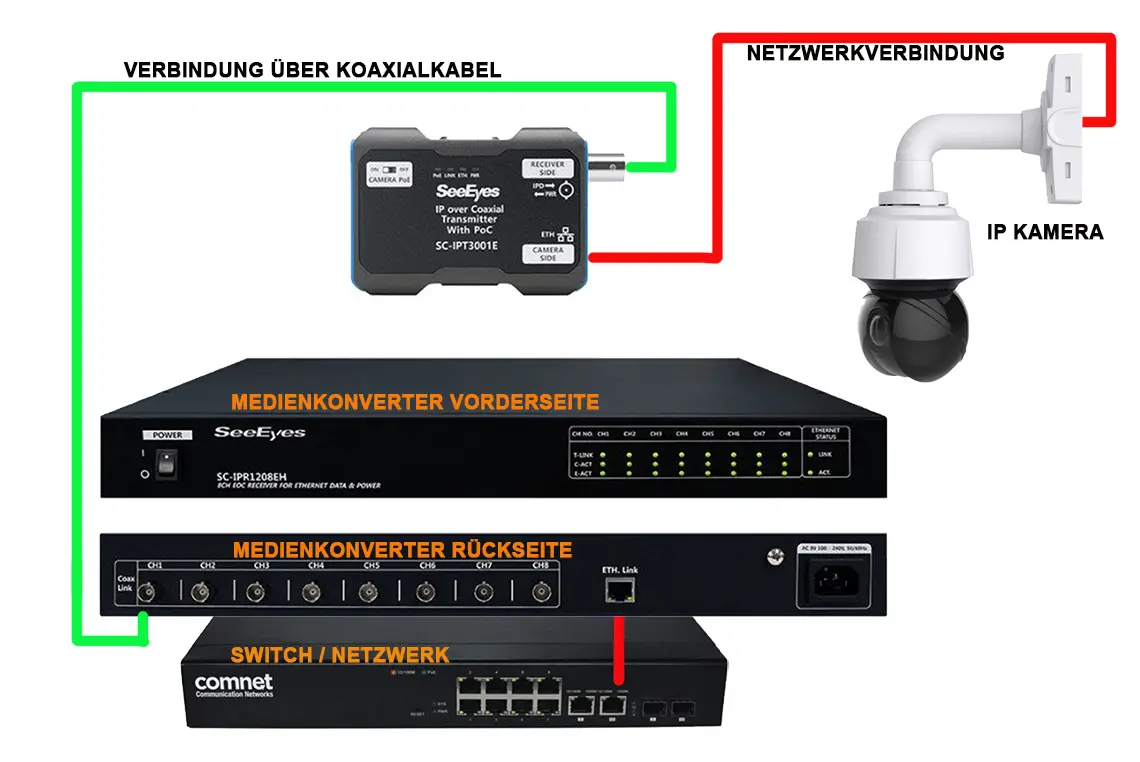
Our Expert Tip! Save yourself the high costs of re-laying cables for your video surveillance system and, instead of replacing the cables, use a media converter. Our expert team is happy to provide comprehensive advice.
Video Decoder and Encoder
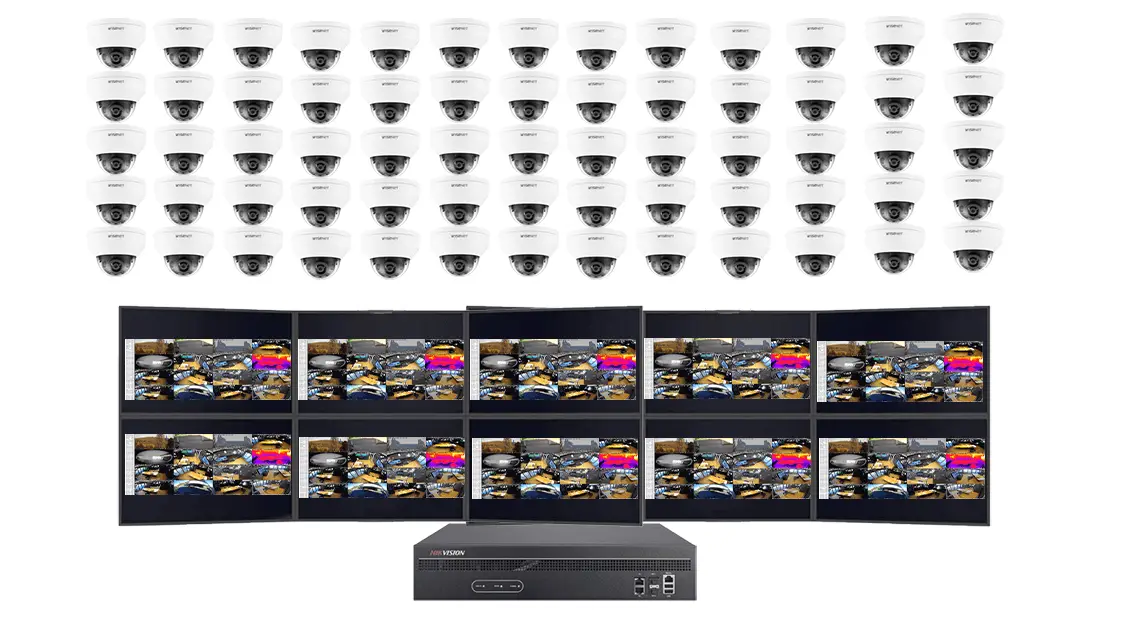 Video surveillance technology offers helpful devices especially suited for upgrading and flexibly expanding a video surveillance system, such as video decoders and encoders, which help you avoid costly investments.
A video decoder enables the targeted distribution and organization of countless existing IP cameras in a network across multiple surveillance monitors. The distribution is carried out via HDMI ports and depends on the decoder's equipment. Generally, decoders have between 2 and 8 HDMI outputs to which the monitors can be connected. The decoding capacity of the decoder, i.e. roughly how many IP cameras it can display, depends on the performance of the processor and the resolution of the cameras. For example, high-performance decoders can decode and display up to 128 IP cameras with 2-megapixel resolution at 30 fps (frames per second) each. To correctly calculate decoding performance, the following rules apply in video surveillance:
The higher the resolution, the fewer channels can be displayed.
An example of decoding capacities with a video decoder:
At 24MP resolution and 30fps: 8 channels/ IP cameras
At 12MP resolution and 20fps: 16 channels/ IP cameras
At 8MP resolution and 30fps: 32 channels/ IP cameras
At 5MP resolution and 30fps: 48 channels/ IP cameras
At 3MP resolution and 30fps: 80 channels/ IP cameras
At 2MP resolution and 30fps: 128 channels/ IP cameras
Viewed this way, the decoder can display the feeds from 128 IP cameras with 2MP resolution on eight different monitors.
Video decoders are an indispensable component of professional video surveillance technology, making large surveillance applications possible, such as airport surveillance, city surveillance, department store surveillance or industrial surveillance.
Expert Tip! For efficient and professional display of larger video surveillance systems with more than 64 surveillance cameras, the use of video decoders is highly recommended.
Our expert team is happy to help you correctly calculate a suitable video decoder for your video surveillance system.
Video encoders are components of video surveillance technology that convert the signals of analog surveillance cameras into digital signals, thus enabling IP transmission of the surveillance images over the network.
Outdated analog video surveillance systems can be fully digitized using video encoders and cost-effectively converted to an IP network. Analog HD surveillance cameras such as TVI, AHD and CVI can also be converted into IP cameras with the help of video encoders. This combines different surveillance technologies into one system and centralizes them.
Older analog surveillance cameras that provide adequate resolution for surveillance applications and therefore do not necessarily need to be replaced, but unfortunately have no or insufficient analysis functions, can now be given intelligence by switching to IP with the help of an NVR (network video recorder). The NVR analyzes the images from the analog surveillance camera and evaluates them. This way, "dumb" cameras in the surveillance chain are upgraded and do not need to be replaced.
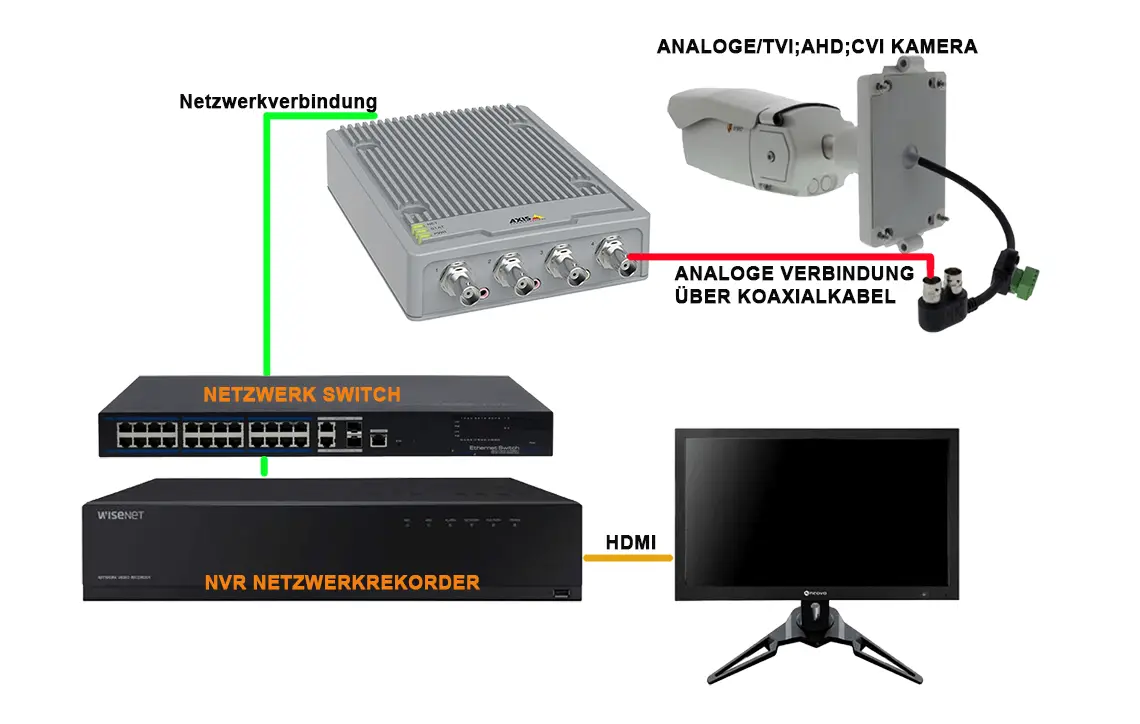
Expert Tip! Using video encoders is an efficient way to upgrade an existing video surveillance system to the latest technology without high costs.
Our expert team is happy to provide comprehensive product advice.
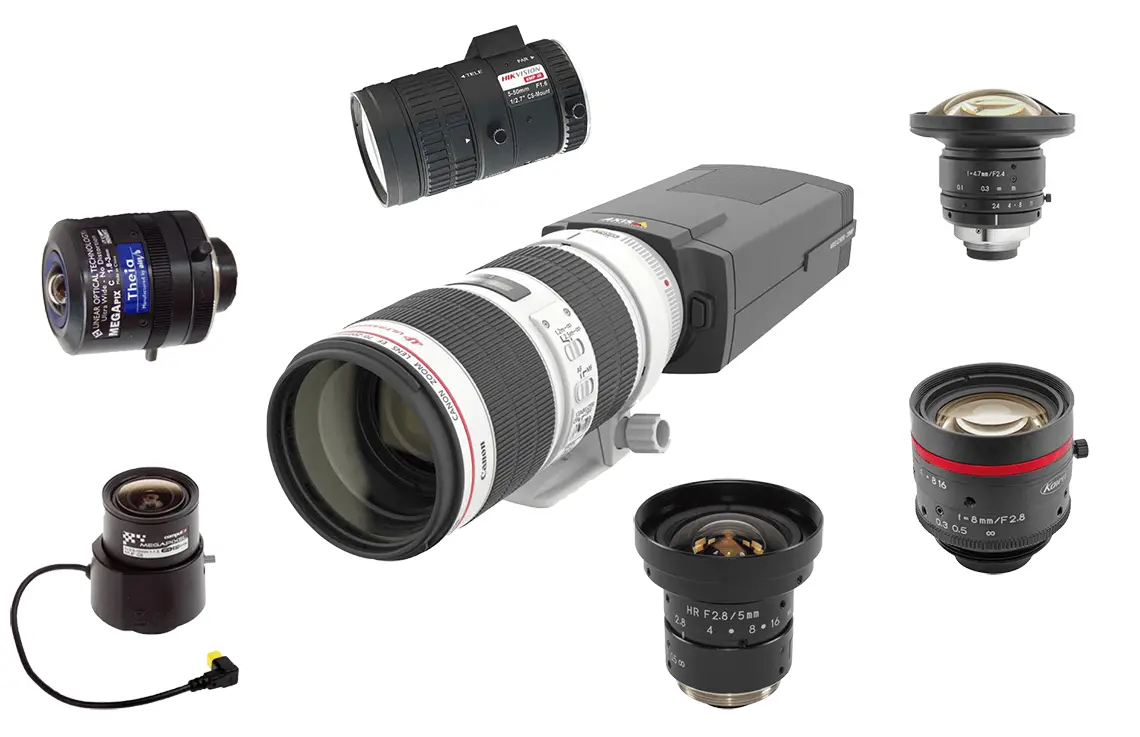
Our Expert Tip! A 4K IP camera can only accurately display the high resolution of 8 megapixels in every situation if it is also equipped with a suitable 4K lens. This is often not the case with surveillance cameras in the lower price segment, which unfortunately is usually only noticed too late. A surveillance camera serves to protect against and preventively deter crimes and should therefore be selected with care. To avoid disappointing results, have our expert team advise you free of charge before you purchase a surveillance camera.
Cables for Video Surveillance
The quality of the connection, and therefore of the transmission between a surveillance camera and a recording device, is very important for reliable and high-performance functionality of a video surveillance system.
These important factors result from correctly selecting cables for the respective applications and their quality, whether it is coaxial cable for an analog or analog HD surveillance camera, or network cable for an IP camera. In particular, selecting the right cable, whether for indoor or outdoor installation, is a decisive factor for the consistentlyflawless functionality of the surveillance system. Cables that are not suitable for installation in outdoor use can break at lower temperatures and cause video surveillance failures. The quality of the shielding is also an important criterion for interference-free image transmission. If the cabling of the surveillance camera runs very close to power cables or power sources, the shielding is of great importance.
In the video surveillance technology section of our online shop, as a professional installer of security technology, we offer an appropriate selection of quality network cables and coaxial cables for various applications.
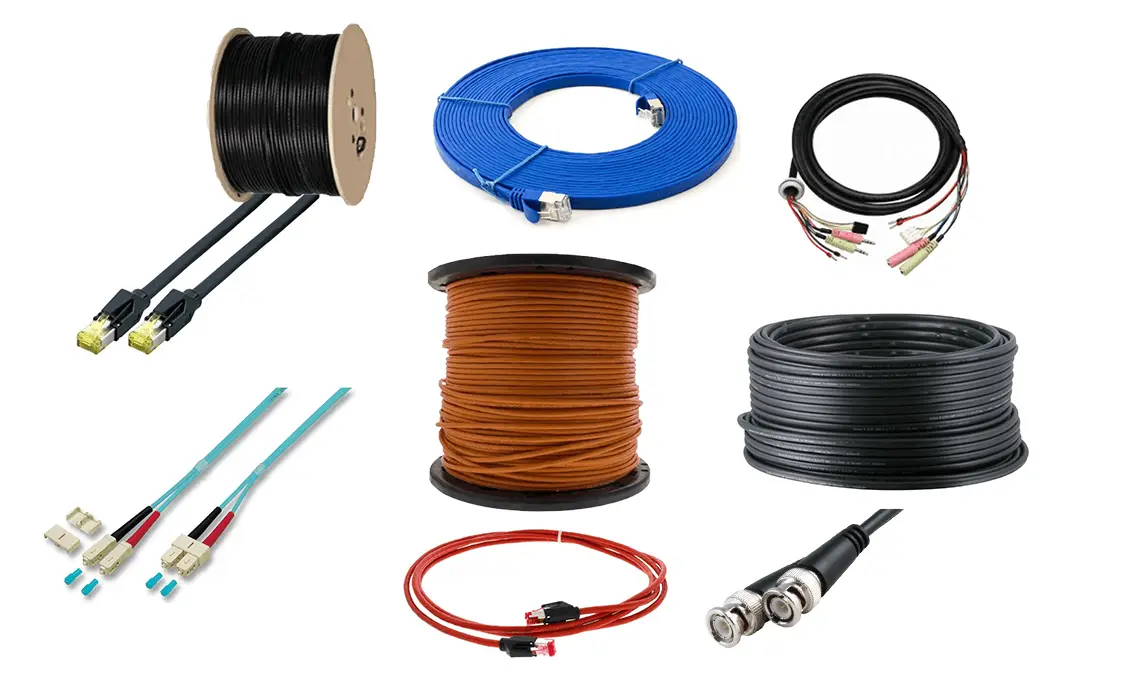
Our Expert Tip! Cable routing for video surveillance is usually associated with considerable effort and cost, but it is decisive for the trouble-free and reliable functionality of the surveillance system. Therefore, professional installation and correct selection of suitable cables are very important and help avoid unpleasant surprises. Our technicians are happy to help you make the right selection.
Video Surveillance Technology Components
Our online shop for professional video surveillance technology includes a complete range of video surveillance technology components, such as protective housings and camera mounts, microphones and loudspeakers, joysticks and camera controls, video distributors and matrix switches, two-wire technology and analog transmission, tools and measuring instruments, and finally security stickers that are necessary for the professional setup and expansion of a video surveillance system. Our expert team is happy to provide advice on professional planning of video surveillance systems as well as on extending existing surveillance systems, including selecting the right video surveillance technology components.
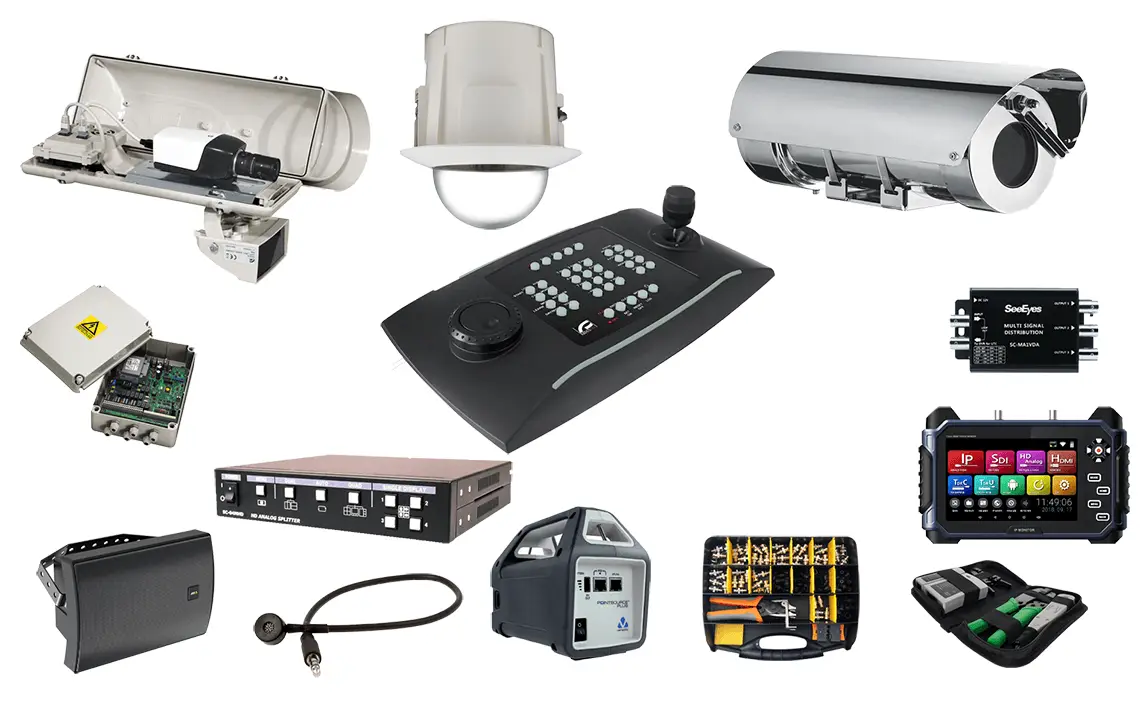
Our Expert Tip! Professional planning of a video surveillance system and advice before purchase saves costs and avoids disappointing results. A great deal is possible in the field of video surveillance. The question is what is necessary and, above all, permissible. With German Protect, you receive professional, free expert advice.
Power Supply
Every type of video surveillance depends on the reliable power supply of the respective video components. In the Video Surveillance Technology category in our online shop, you will find a wide range of equipment for powering various camera systems, such as IP cameras or analog and analog HD surveillance cameras. From power supplies, power strips, batteries and rechargeable batteries to power distributors, UPS units and solar power supplies, our product range includes all the components needed to power a professional video surveillance system.
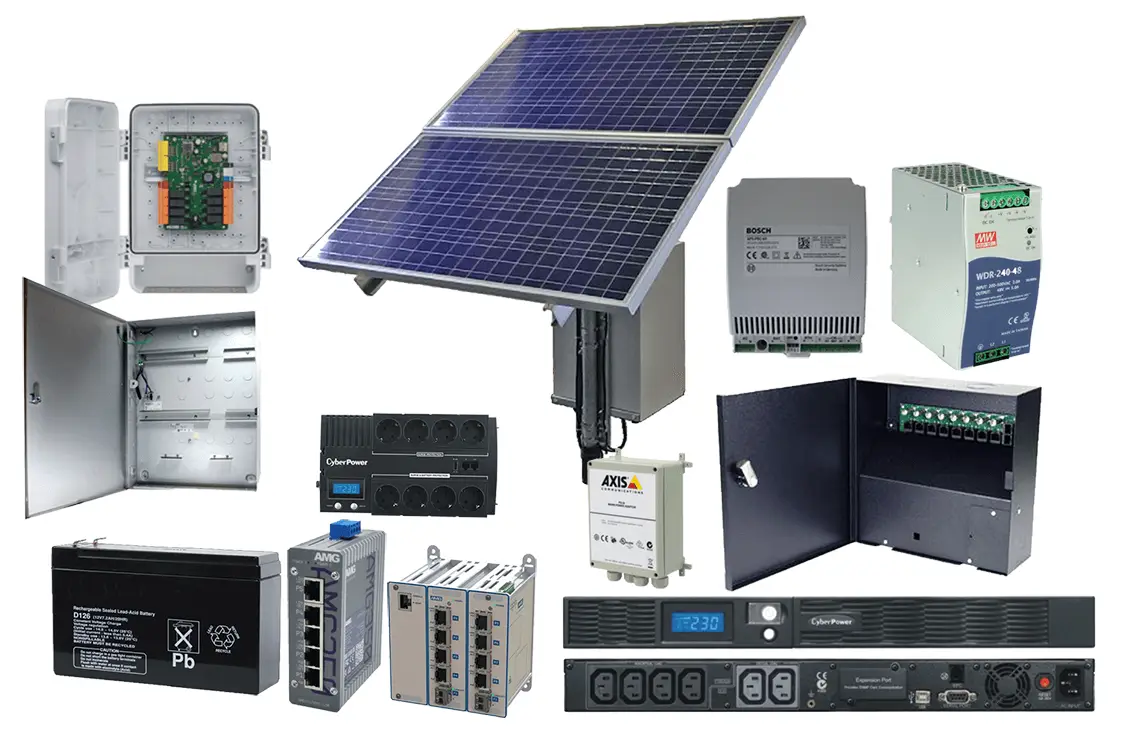
Due in particular to the growing technological complexity of surveillance cameras, such as heating, ventilation and powerful infrared illuminators, a suitable power supply is often underestimated and therefore calculated incorrectly. Insufficient power supply often causes many surveillance cameras to fail at night as soon as the infrared illuminators switch on. Surveillance cameras can also freeze and be damaged in winter due to insufficient voltage. The cause is mostly the use of unsuitable power supplies or insufficient power budget, power supplies, PoE injectors or switches.
To avoid such failures, we recommend using the power supply accessories recommended by the manufacturer and not experimenting.
Our expert tip! The manufacturer's specifications for the voltage required by the surveillance camera in various applications are always relevant and must be observed. If you are unsure, call us before mounting the surveillance camera. Our technical team will be happy to advise you.