Focal Length of a Surveillance Camera - Explanation & Examples
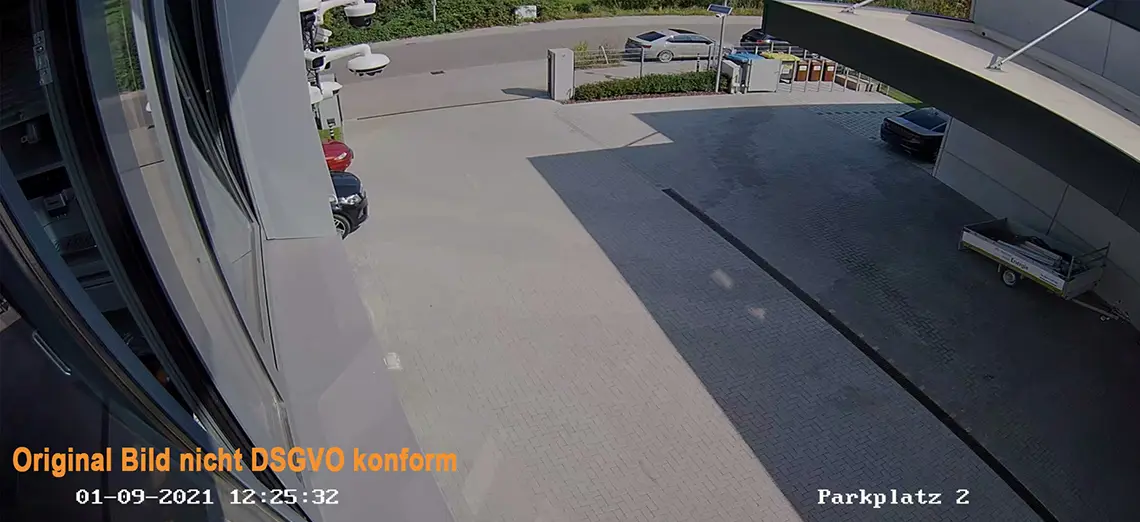
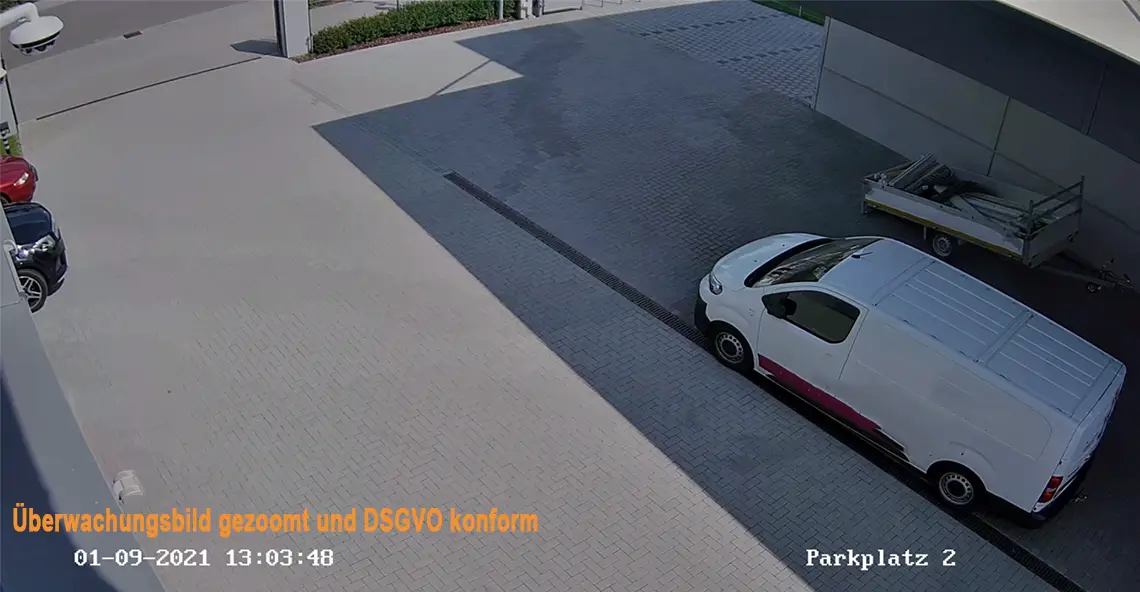
The most common and most recommended focal lengths for surveillance cameras are 2.8mm to 12mm, varifocal lens (zoomable). The advantage of variable focal lengths, i.e. varifocal lenses, is that the area of interest in the image is variable and can be adjusted accordingly, without having to privatize the image for GDPR reasons. For varifocal lenses or focal lengths, the range of the infrared illuminators must be taken into account.
A varifocal lens, a so-called telephoto lens, can be equipped with a focal length of 2.8mm to 500mm in video surveillance technology, for example for PTZ domes. Here the following rules apply: the more you optically zoom in the image, the more the FOV / Field of View (visible image area), i.e. essentially the viewing angle, is reduced.
The most common fixed focal lengths for surveillance cameras are: 2.8mm/ 4mm/ 6mm/ 8mm or 12mm. Fixed focal lengths are mostly used for a general image (i.e. without demanding analyses) in surveillance technology and are not adjustable. The disadvantage of fixed focal lengths is that the image very often has to be privatized under the GDPR, which causes extreme disturbances from the blurring in the live stream as well as in the recordings. The advantage of surveillance cameras equipped with fixed focal lengths is that they are less expensive than cameras with a varifocal lens. However, fixed focal length cameras are less powerful in comparison.
EXAMPLES OF FIXED FOCAL LENGTHS
Below are some example images showing the image rendering of various fixed focal lengths.
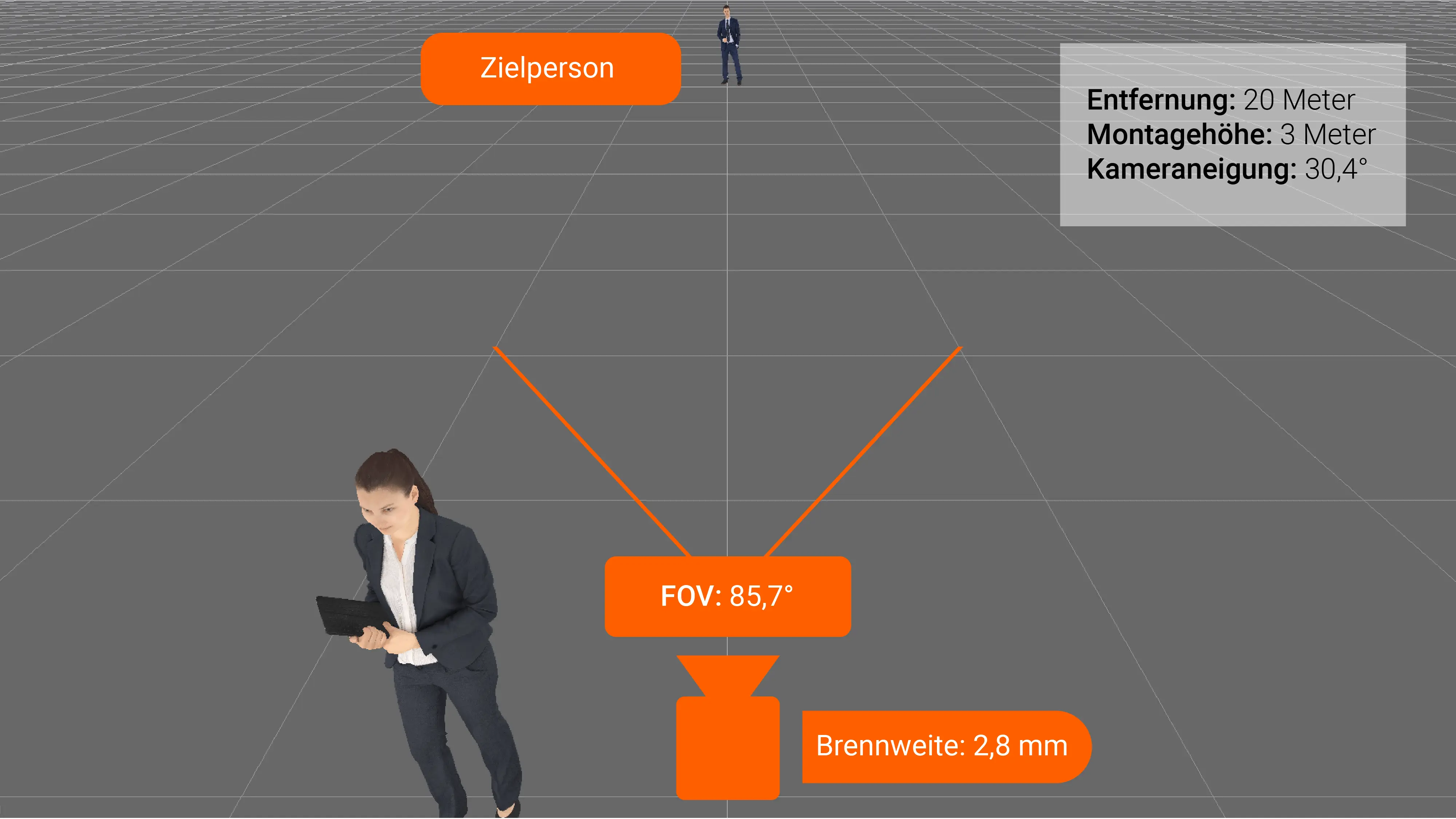
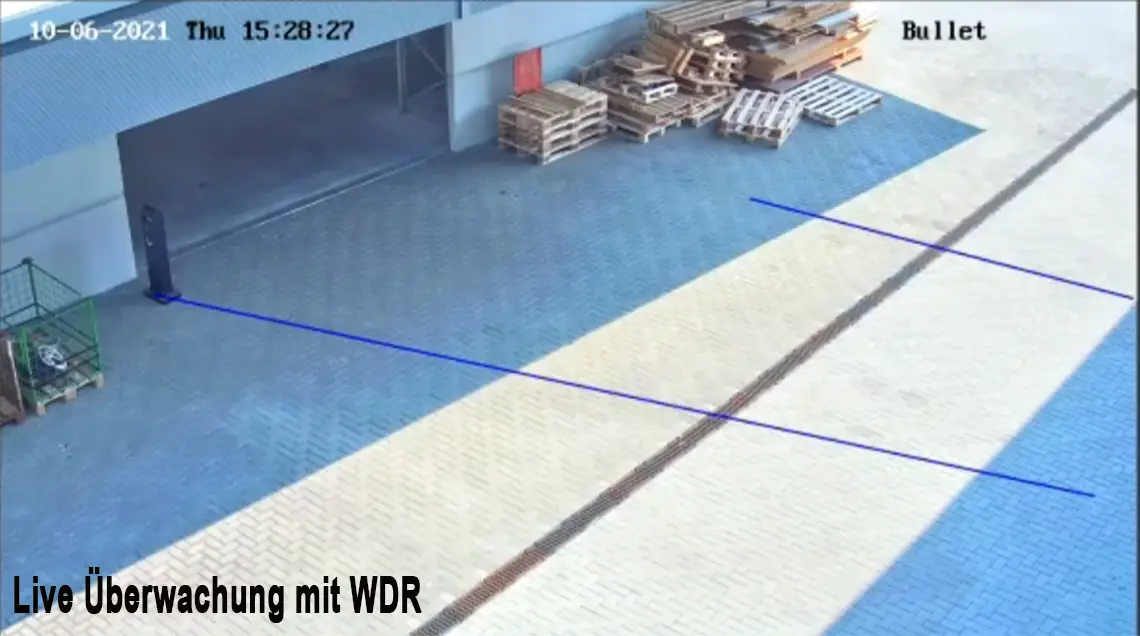
Camera height 3 meters/ camera tilt angle 29.2°/ fixed focal length 2.8mm/ target distance 20 meters
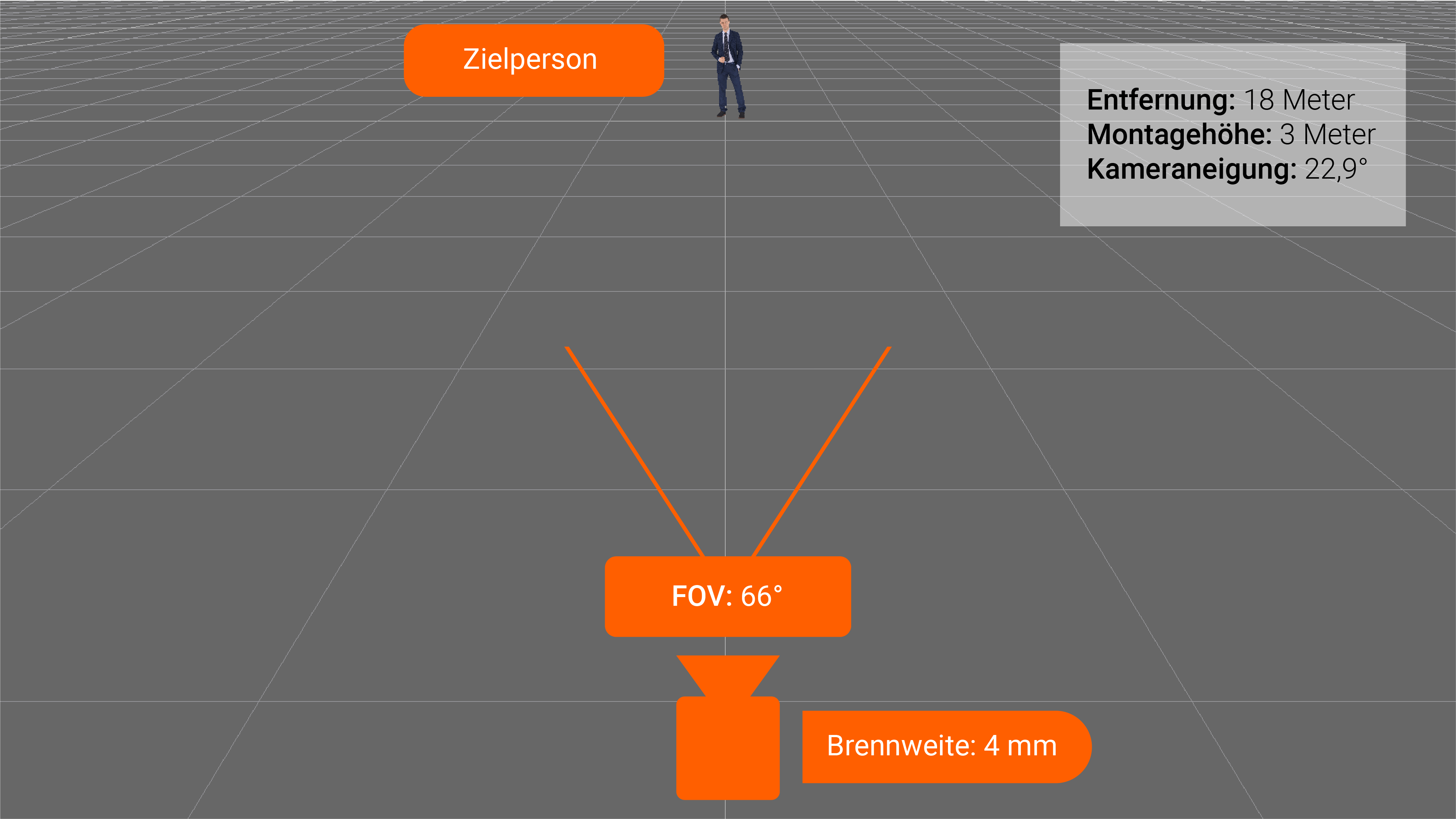
Camera height 3 meters/ camera tilt angle 21.7°/ fixed focal length 4mm/ target distance 20 meters
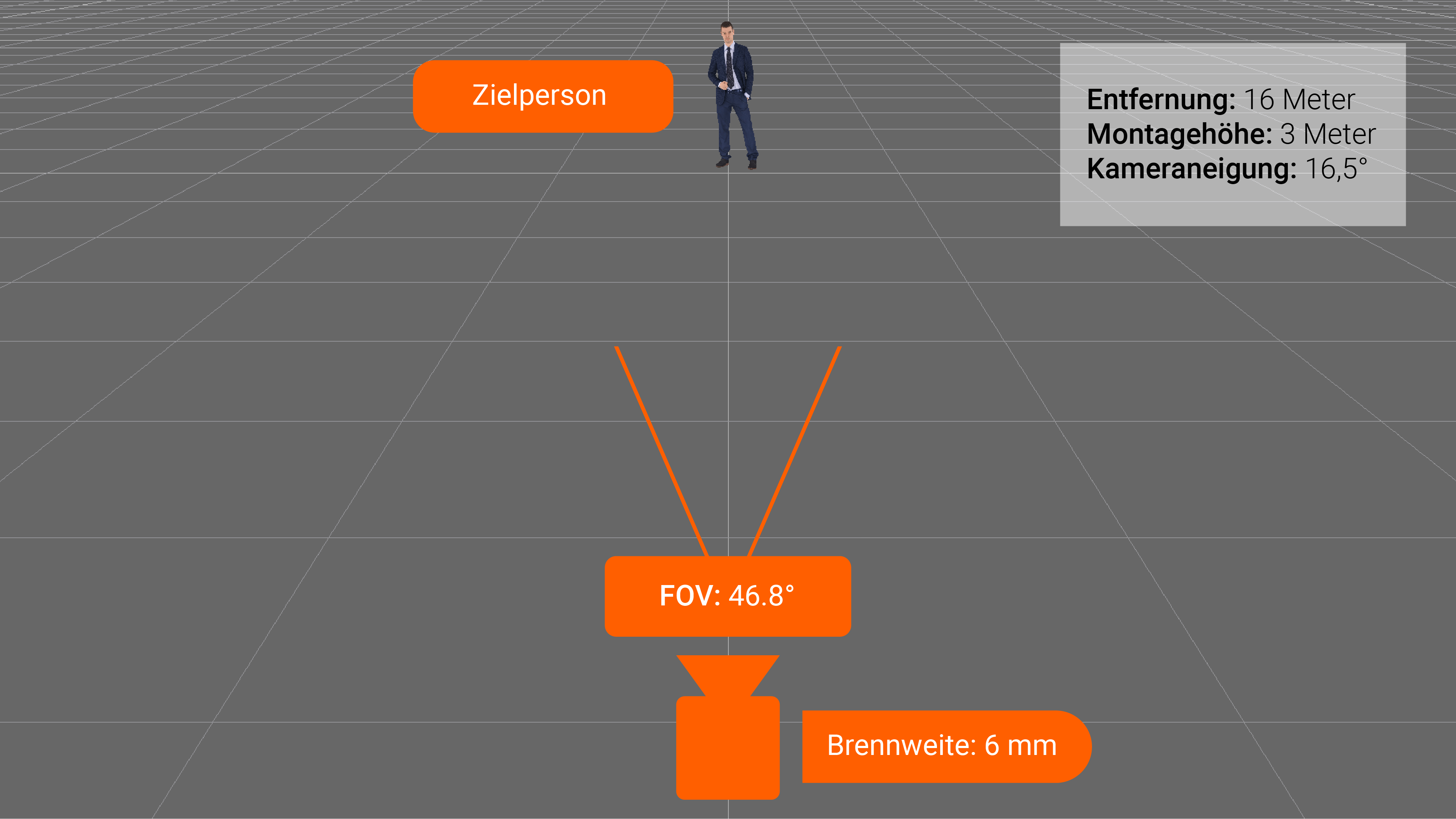
Camera height 3 meters/ camera tilt angle 15.3°/ fixed focal length 6mm/ target distance 20 meters
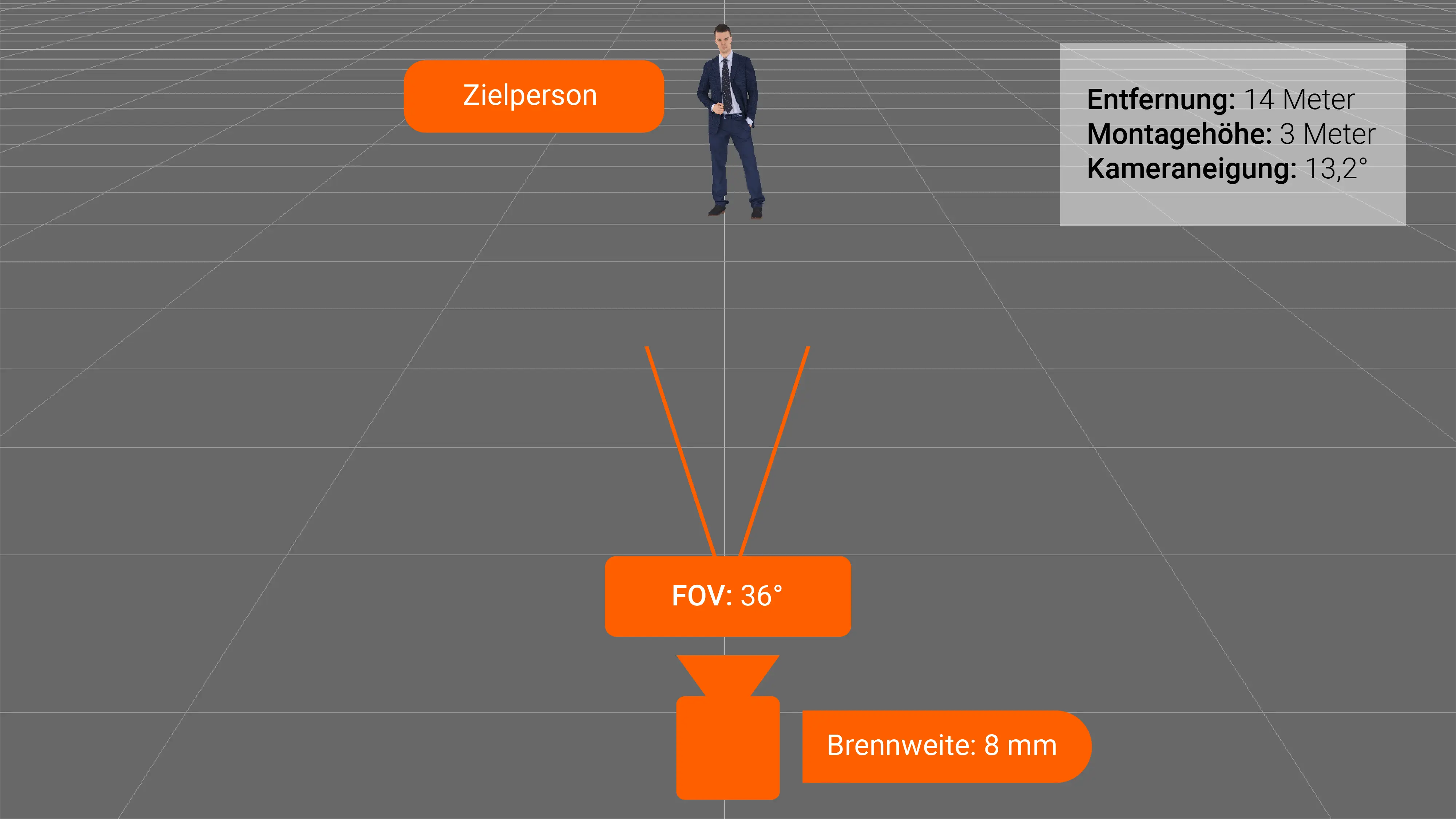
Camera height 3 meters/ camera tilt angle 12°/ fixed focal length 8mm/ target distance 20 meters/
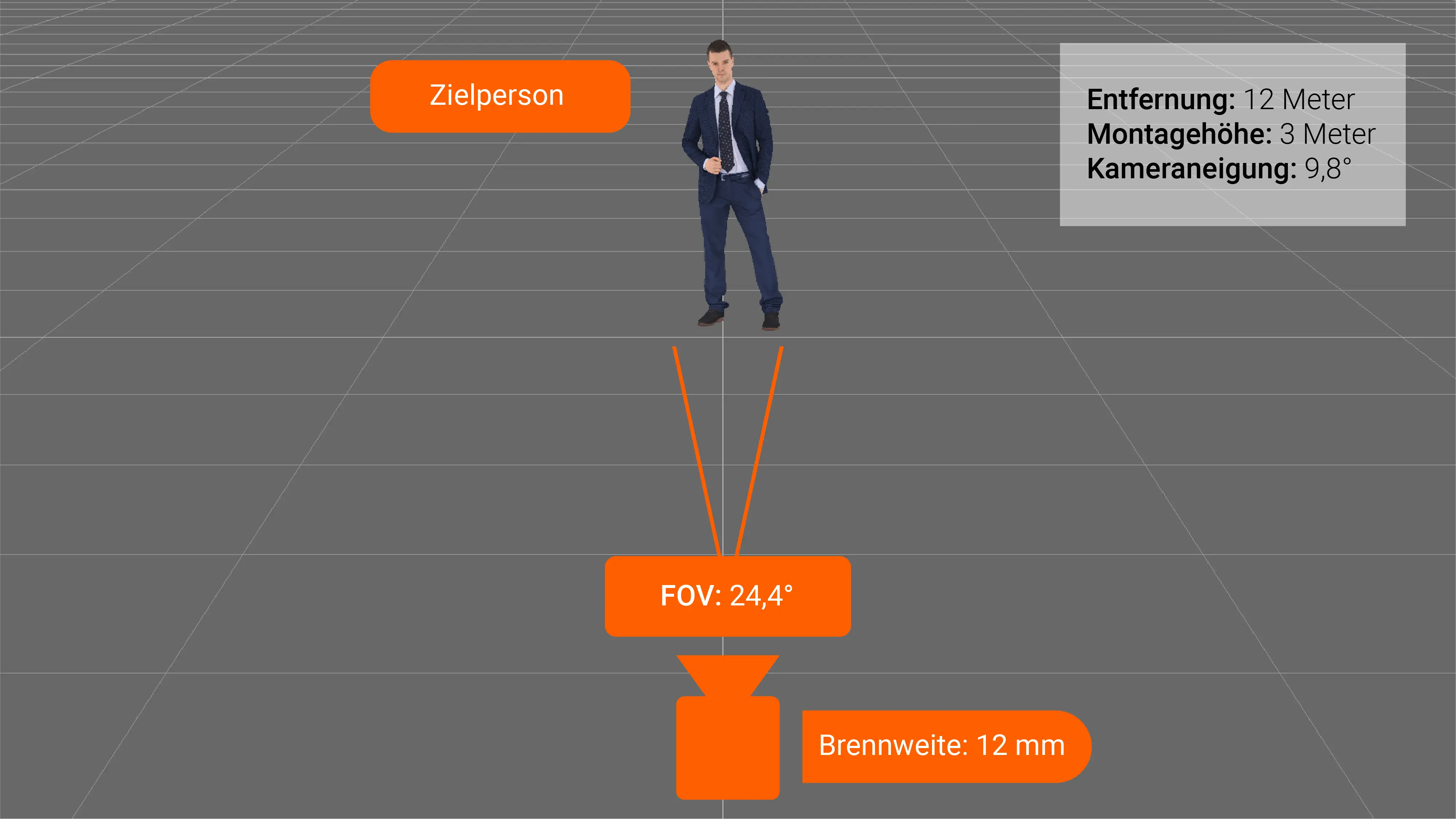
Camera height 3 meters/ camera tilt angle 8.6°/ fixed focal length 12mm/ target distance 20 meters
With the Focal Length of a Surveillance Camera
More Details
The focal length of a surveillance camera refers to the distance between the lens and the image sensor. Technically speaking, this is the distance between the optical principal plane of a lens and the focal plane of the lens, onto which the captured image is focused.
Together with the sensor size, the focal length is extremely important for the FOV (Field of View), i.e., the image section captured by the surveillance camera, in video surveillance.
Depending on the application requirements for a surveillance camera's image section, the focal lengths are selected and the required lens is calculated accordingly.
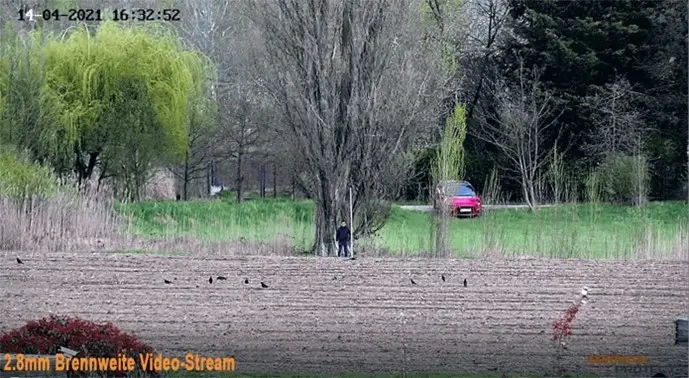
The following rules apply to lens calculation:
The following rules apply to lens calculation:
- The shorter or smaller the focal length, the wider the angle, i.e., the broader the captured image section.
With short focal lengths, surveillance cameras produce very wide image sections of up to 130° However, the wider the image section, the more pixel density may be lost at the edges of the image.
Such wide-angle image sections are suitable for general video surveillance, such as overview images of squares, courtyards, schools and larger surveillance areas where person identification is not required.
- The longer or larger the focal length, the narrower, i.e., the smaller, the captured image section. With a longer focal length, the surveillance camera produces magnified and sharp images at greater distances from the target. The FOV of the image section is accordingly smaller, because the surveillance camera is in zoom mode. A long focal length can be achieved with a surveillance camera equipped with a vario lens, i.e., zoom. Long focal lengths are used in professional video surveillance for targeted monitoring of predefined security areas, enabling person identification, license plate recognition and many algorithm-based video analytics.
The figure below shows the difference between general video surveillance (short focal length) and targeted video surveillance (long focal length).
Surveillance cameras equipped with vario lenses, i.e., long focal lengths, allow precise adjustment of the image area without requiring privacy masking under the GDPR, such as blacking out the street, for example.
The next figure shows the advantages and disadvantages of a short focal length with a large image area compared with a long focal length with a vario lens, which enables a precise image section of the area of interest. The tedious but important GDPR privacy masking of the surveillance camera's image section is no longer necessary with a vario lens, i.e., a long focal length.