

Image Sensors and Image Sensor Sizes
Image Sensors in Video Surveillance
Image Sensors in Video Surveillance
Image sensors contain photosites (pixels), each of which represents one piece of image information on the image sensor. The light entering the camera through a lens is focused onto the image sensor. Each pixel on the image sensor detects the available light intensity and converts it into electrons. The higher the light intensity hitting an individual pixel, the more electrons are produced.
Various image sensors have been developed for video surveillance:
CCD image sensor (Charge Coupled Device/charge-coupled component)
CMOS image sensor (Complementary Metal-Oxide-Semiconductor/complementary metal-oxide semiconductor)
The Right Image Sensor Size for Your IP Surveillance Camera
The precise and accurate performance of the surveillance camera under different lighting conditions and surveillance applications depends heavily on the size of the image sensor.
A small image sensor with small pixels reduces image quality at night by 80%. A large image sensor with large pixels handles all lighting conditions and circumstances without difficulty, but it is correspondingly much more expensive, which is reflected in the final price of the surveillance camera.
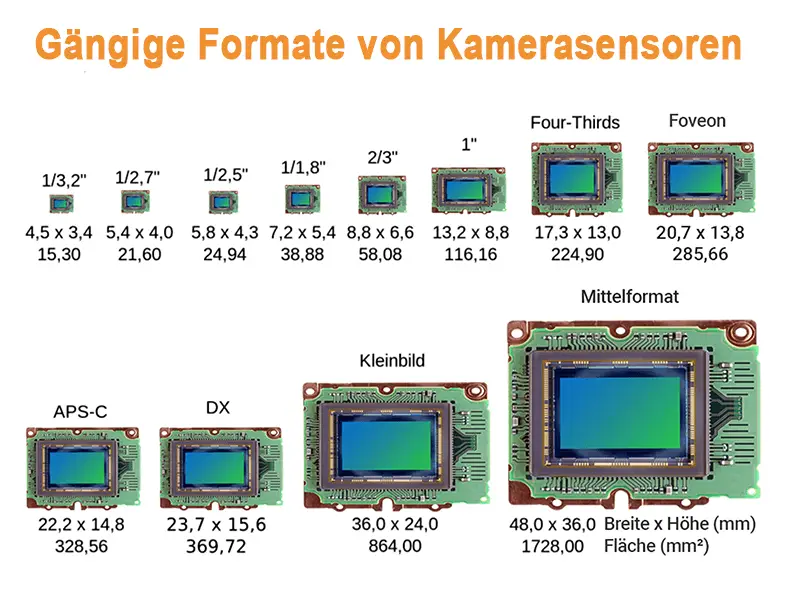
Which Image Sensor Size Is Right for My IP Surveillance Camera?
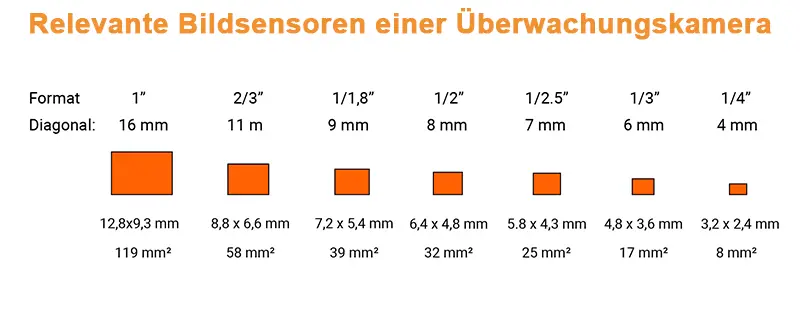
A 1/3 inch sensor therefore has only 40% of the area of a 1/2 inch sensor and is correspondingly much cheaper. Sensors in consumer surveillance cameras with 6 to 12 megapixels in a price range of up to 150 euros usually have pixel sizes of 1.7μm. This results in a light-sensitive area per image point, i.e., per pixel, of 3μm.
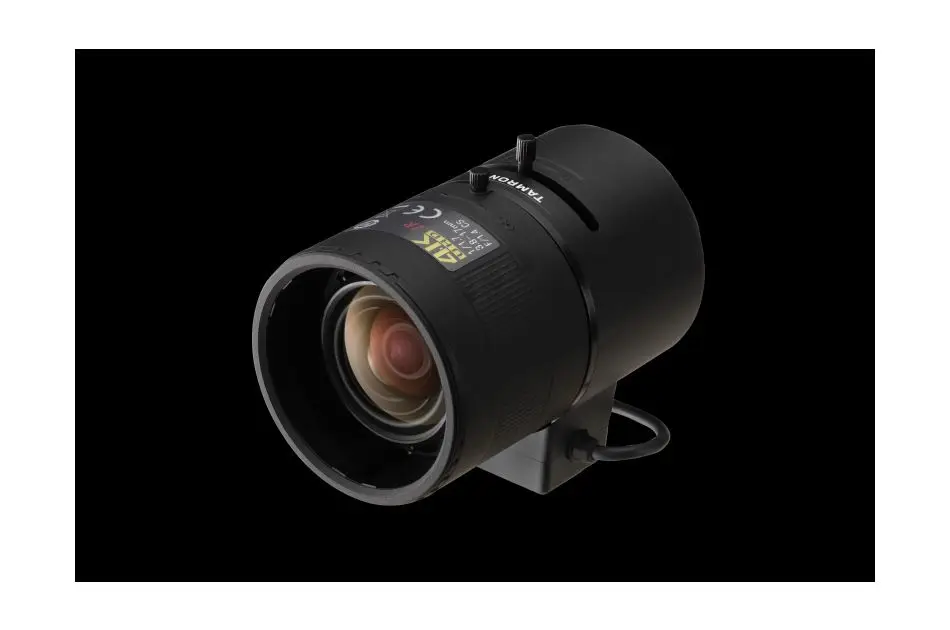
For quality control, for example under poor or changing lighting conditions, these results are not sufficient for effective video surveillance.
In professional machine vision cameras, depending on the surveillance camera model and resolution, different sensors are fitted with so-called C-mount or CS-mount lenses.
The C-mount lens has a mounting thread with a diameter of 1 inch, or 25.4mm, and is very well suited to a professional surveillance camera, but also expensive.
But why should you, as a “layperson,” prefer this lens depending on your budget?
That's because behind it there is usually a large, high-performance image sensor.
Of course, these IP cameras are also larger, because technology needs space. However, such a surveillance camera handles all requirements very well, continuously and without compromises.
An IP surveillance camera is primarily installed to capture forensic surveillance images in the event of an incident, i.e., images on which you can actually recognize something, so that they can be provided as evidence to the police or a court.
Differences in resolution based on missing pixels in the video recordings can make the decisive difference here.
A video surveillance image that is very good during the day under optimal lighting conditions (clear sky and sunshine) but very poor at night or on rainy days ultimately does nothing for a well-functioning video surveillance system.