


Video Surveillance: Guide & Online Shop
Video surveillance is an essential component of security concepts and is used in a wide variety of situations and for a large number of applications.
A video surveillance system consists of components from the following four categories:
- Surveillance cameras: capturing video data
- Recording systems: network video recorders and data storage
- Network technology: data transmission
- Video technology: useful accessories (e.g. lenses or camera control)
For certain applications, complete video surveillance kits are also suitable, as they already include the required components. To ensure video surveillance that meets your specific needs, it must first be clarified which exact application scenarios are to be covered and what requirements exist on site. The required system components can then be determined based on this.
Please note: No single system component, such as a surveillance camera or a network video recorder, is capable of covering all scenarios and applications. Therefore, selecting the right components for video surveillance is an essential step, and as a specialist installer of surveillance systems, we are happy to advise you based on our many years of experience.
THE PERFECT VIDEO SURVEILLANCE – FROM GERMAN PROTECT
Video surveillance is an essential component of security concepts and is used in a wide variety of situations and for a large number of applications.
A video surveillance system consists of components from the following four categories:
- Surveillance cameras: capturing video data
- Recording systems: network video recorders and data storage
- Network technology: data transmission
- Video technology: useful accessories (e.g. lenses or camera control)
For certain applications, complete video surveillance kits, which already include the required components, are also suitable. To ensure video surveillance that meets your specific needs, it must first be determined which exact application scenarios are to be covered and what requirements exist on site. The system components required can be derived from this.
Important note: No system component, such as a surveillance camera or a network video recorder (NVR), is able to cover all scenarios and applications. Therefore, selecting the right building blocks for video surveillance is an essential step, and as a specialist installer of surveillance systems, we can advise you based on our many years of experience.
Is video surveillance permitted?
Video surveillance is permitted on your own property or in a private setting. Video surveillance may also be permissible in businesses and in public places if there is a need for it. This should be reviewed and documented on a case-by-case basis. It must therefore be clarified whether there is a legitimate interest in video surveillance and whether there are less intrusive means of satisfying that interest.
Audio recordings are not permitted.
Is video surveillance with audio permitted?
Under §201 of the German Criminal Code (Strafgesetzbuch), video surveillance recordings with audio are prohibited and seriously violate the personal rights of the person being monitored.
Modern surveillance cameras are often equipped with an integrated microphone that enables audio transmission and thus video recording with sound.
This creates the possibility of recording conversations in addition to the images intended for surveillance, which directly or indirectly violates the privacy of the people present. Directly, because the spoken content is mostly unrelated to the surveillance task. Indirectly, because people who happen to be within the detection area of the surveillance camera, such as neighbors or passersby, as well as customers who are talking on their mobile phones and are in fact uninvolved and therefore irrelevant to the surveillance, have their personal rights violated by the audio recording.
Please keep in mind that modern surveillance cameras are often equipped with integrated high-performance microphones that allow audio recording even outside the image area of the IP camera. For example, neighbors sitting on their terrace can be recorded with sound, even though the surveillance camera is aimed in a completely different direction to carry out its surveillance task.
Do I need to indicate video surveillance?
It is recommended to inform visitors to a monitored property of the surveillance using a clearly visible sign.
How much does a video surveillance system cost?
A video surveillance system consists of various components. These mainly include surveillance cameras, recording systems, cabling, and accessories such as monitors or spotlights. In addition, there are the costs for planning and installing the system.
Depending on the intended use and the conditions on site, the components required may differ, which affects the price. For these reasons, it is not possible to give a more precise price range.
Are there government subsidies for purchasing a video surveillance system?
Yes, there are subsidies from KfW. For the first 1,000 euros, the subsidy is 20 percent, for each additional euro 10 percent, up to a maximum subsidy of 1,600 euros.
Why should I buy my video surveillance system from a specialist dealer?
Video surveillance systems are complex systems made up of a large number of components. Each of these components must meet the respective requirements. In addition, the components must be able to interact with one another.
Selecting the right components, installing them and configuring them require specialist knowledge and experience. A specialist dealer such as German Protect can offer all of this to you.
Are audio recordings allowed in the workplace?
Audio recordings in the workplace are generally illegal and punishable by law.
What may be placed under video surveillance?
Private homes and apartments may in principle be monitored, as long as the personal rights of uninvolved third parties, such as neighbors or passersby, are not violated. Public paths and streets must not be captured or recorded by the surveillance camera, as this is not permitted and is punishable. This issue often arises in private settings when the surveillance camera monitors the front yard or the entrance door with a video door intercom system.
Video surveillance in the commercial sector is subject to similar rules, but with important differences. For example, direct video surveillance of permanent workstations is generally prohibited. Separate regulations apply in some cases, serving to protect employees and the company, for security areas such as banks, gas stations or cash register areas. In commercial businesses, the position of every surveillance camera and its purpose for video surveillance must be documented in writing. Surveillance recordings should be deleted after 72 hours at the latest. Recording devices should be secured with a double password to ensure four-eyes verification for viewing video recordings. Video surveillance must not be accessed from outside via an app, except at night when no employees are on site. All publicly accessible areas, such as sales floors or parking lots, must be marked with a sign reading “Warning: Video Surveillance” in a clearly visible location. This applies in particular to restaurants or other establishments, where the warning sign is often not placed in a visible area or is not displayed at all. Above a certain number of employees, commercial businesses are required to appoint a data protection officer for video surveillance. Managing directors may not serve as data protection officers. For commercial applications, we recommend engaging a specialist company to plan and install the video surveillance.
Where is video surveillance prohibited?
In general, video surveillance of public paths, streets and squares is prohibited by law and punishable in both the private and commercial sectors. This also includes parking spaces in front of the house on the street, as well as the sidewalk in front of the house, even if only partially. Pivoting surveillance cameras with zoom functions, such as PTZ 360° cameras, are often very problematic in terms of their orientation toward a street area or toward neighboring properties. For this reason, we recommend setting privacy masks for these areas in the IP camera settings and, as a precaution, having the video surveillance approved by the responsible local authorities, ideally before the surveillance cameras are installed. It is helpful to consult a specialist company before purchase and installation.
Where may surveillance cameras be installed?
In general, surveillance cameras may be installed anywhere on your own property in the private sector, as long as they do not capture or record public areas and do not violate the personal rights of uninvolved third parties, such as neighbors. The private area must not be publicly accessible. In that case, attention should be drawn to the video surveillance by equipping the property with one or more signs reading “Warning: Video Surveillance” in a clearly visible location.
Our Product Recommendations for You:
What is meant by video surveillance?
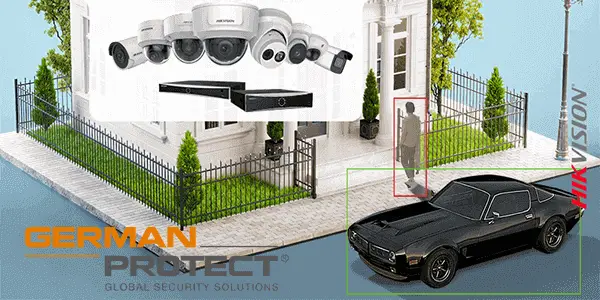
Video surveillance is an umbrella term that covers several sub-areas. Put simply, video surveillance involves recording video data with surveillance cameras and storing it. Special recording technology is used for this. To transmit the data from the cameras to the recorders or data storage devices, suitable network technology is used (see Figure 1).
Video surveillance offers various security functions and features:
- Detection of intruders
- Identification of potential perpetrators
- Warning potential perpetrators before they act
- Documentation of unauthorized activities, and much more.
What is video surveillance?
Video surveillance is the component of a security concept that is primarily responsible for identifying and tracking the perpetrator on the premises or inside the building. Depending on the equipment, continuous further development of all components of video surveillance systems constantly brings new functions in security technology and thus improved protection as well as more efficient and effective prevention against possible hazards.
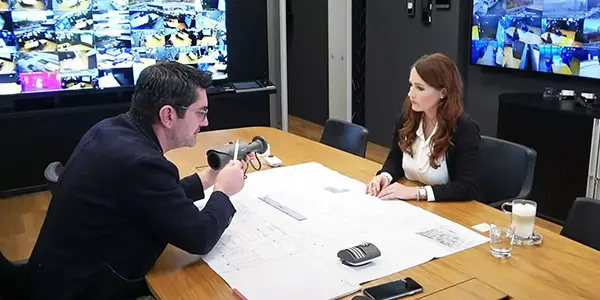
For video surveillance to reliably perform its tasks, the specific requirements of the respective security concept and the various scenarios that are relevant for surveillance must be defined (see Figure 2).
Demanding video surveillance with multiple fields of application, such as perimeter surveillance, automation, parking lot surveillance and identification, requires selecting the appropriate components for each. A certain understanding of their function is essential for this selection.
When designing video surveillance, data protection aspects must also be taken into account. For example, care must be taken to set up the system so that it is GDPR-compliant.
An example of poor video surveillance: A person enters a property and causes damage. The video surveillance system detects the intruder, triggers an alarm through the various surveillance functions and starts recording. The police want to analyze the images so that the perpetrator can be located. However, due to various factors such as insufficient resolution or incorrect camera positioning, identification based on the video material is not possible. The video surveillance has worked partially, but not completely. The system delivered images in which the perpetrator cannot be identified.
What exactly could the problems be in this example?
- The cameras do not achieve the required number of FPS (frames or images per second), so the footage has many gaps.
- The NVR (network video recorder) is overwhelmed by the large number of high-resolution cameras and cannot process the streams properly.
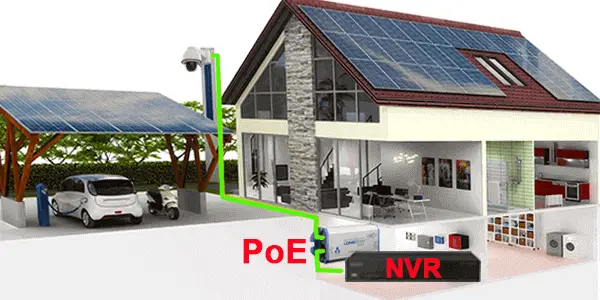
- The components of the video surveillance system do not work together or communicate properly with one another. Problems can be caused by incorrect cabling, missing PoE power supply (Power over Ethernet), misconfigured switches, and the surveillance cameras and recording equipment.
- The selection, configuration and positioning of the video surveillance components do not match. Many manufacturers fail to live up to their product promises. For example, any 4K camera can produce a good image under optimal lighting conditions, but lighting conditions in video surveillance are always variable.
For these reasons, expert advice before setting up video surveillance is especially important and can prevent disappointment and unnecessary expenses. Therefore the optimal selection of components and their configuration matters so that the perpetrator can be identified by the system.
Which components and technologies are there in video surveillance?
The surveillance camera, the eye of video surveillance
The surveillance camera is responsible for capturing the image material. Surveillance cameras come in various designs such as Dome, Bullet, PTZ or multisensor cameras. Depending on the tasks a camera must perform and the local conditions, the suitable model can be selected. For discreet applications, mini cameras are available. They can be placed particularly inconspicuously. For active video surveillance, PTZ dome cameras are suitable (“Pan, Tilt, Zoom”). These are movable cameras that enable active tracking of persons (see Figure 3).
Surveillance cameras can be used both indoors and for outdoor use. The decisive factor is the so-called IP rating: it indicates how well a camera is protected against moisture and dirt.
Depending on the transmission type, the cameras record moving images in analog or digital form with varying resolutions. Thanks to additional infrared illumination, the cameras can deliver images even in darkness without intruders being able to see the illuminated areas. At vulnerable areas thermal imaging cameras are also used for video surveillance, which can identify people or vehicles even at a great distance solely from their heat emission. This is possible even in complete darkness without any lighting and in difficult visibility and weather conditions.
Recording, playback and analysis of video footage – the recording technology
In video surveillance, recording the data is another important component. Only if the data recorded by the surveillance cameras can be evaluated and analyzed later are incident review and forensic investigations possible.
In simple video surveillance systems, components such as surveillance cameras or network video recorders can be connected directly to a monitor by cable. If the monitor has several inputs, or a multiplexer is connected in between, the images from several cameras are shown on the screen.
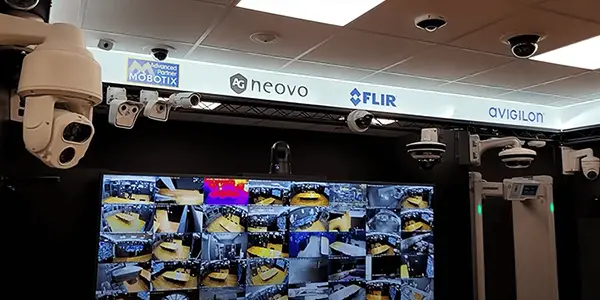
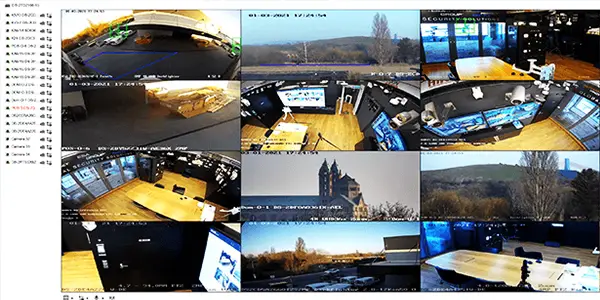
Footage from IP cameras can be viewed on a computer screen and stored in digital form (see Figure 4). For archiving large amounts of footage, analog DVR recorders, IP network video recorders (NVR), hybrid DVR recorders (IP and analog) and NAS (mass storage devices) are available. With specialized recorders, even long-term monitoring can be implemented without great effort. Thanks to powerful H265 compression methods, storage space and unnecessary network load are also saved.
A VMS (video management software) or video analytics software is useful for complex and extensive surveillance systems. It ensures simple and flexible administration of video surveillance, creates unlimited networking options and offers high ease of use. Extensive analysis functions and features such as privacy masking (hiding video areas), motion scrambling (pixelating movements) and targeted search further increase the effectiveness of the system and at the same time protect the privacy of employees and customers.
Transmission of video data and control of video surveillance components – network technology
Depending on the type of camera technology used (analog or digital), the transmission of the video signals differs. For example, digital signals from HD TVI, AHD or CVI cameras can be transmitted over (BNC) coaxial cable alongside analog signals, in professional, high-resolution quality. IP cameras and IP thermal imaging cameras are able to deliver the images of the video surveillance over the network infrastructure (CAT cable). Devices with Power over Ethernet (PoE) support additionally allow power to be supplied over the network cable, which helps to save installation costs. If cabling of the surveillance cameras is not possible, devices with WLAN can be the suitable solution – however, with reduced security.
In addition to transmitting the video material, controlling the cameras is another important feature of video surveillance systems. In this respect, IP cameras are particularly convenient, as they can in principle be accessed from any device with browser software. Thanks to the internet, monitoring and analysis of the video data is even possible from anywhere in the world.
Video technology: supplementary accessories for video surveillance
In addition to the components already mentioned, depending on the field of application, further components are required in a video surveillance system. These include, for example, special power supplies for the individual devices, which can ensure a central power supply.
To illuminate large areas, even in darkness, panoramic floodlights and infrared illuminators can provide valuable service. In addition, lenses with special focal lengths are available.
In our online shop you will find a large selection of video technology accessories from various categories.
Video technology: supplementary accessories for video surveillance
Areas of application for video surveillance
Video surveillance is useful wherever risks and dangers from unauthorized actions are to be prevented, or where corresponding acts are to be recorded and documented in a legally admissible way.
A main benefit of video surveillance is prevention: when potential offenders must expect to be detected and identified, their willingness to commit the act decreases.
Video surveillance systems can be useful and helpful in both private and commercial settings. The list of possible applications includes, for example
- Retail
- Private households: apartments, single-family and multi-family homes
- Public squares and facilities
- Logistics
- Industry
and many more.
Video surveillance in retail
Retail is particularly affected by theft, but also by fraud and vandalism. Customers, but also employees, suppliers and other persons, can be considered as possible perpetrators.
Due to theft and organizational losses, retailers in Germany suffered damages totaling EUR 4.2 billion in 2020 (2019: EUR 4.4 billion).
To prevent this, businesses rely on various measures, such as deploying store detectives. However, staff for monitoring is expensive. It is therefore advisable to additionally rely on video surveillance.
Retail stores have many sensitive areas that are relevant to shoplifting and for which video monitoring is therefore recommended. These are:
- Entrance and exit
- Storage areas
- Checkout areas
- Aisles between the shelves
- Outdoor displays.
In this context, video surveillance in retail can fulfill various tasks that go beyond simply detecting shoplifting. It also helps prevent offenses before they occur. Video surveillance in retail can therefore help to
- detect and clarify thefts,
- to identify perpetrators,
- to prevent theft and vandalism in advance,
- to optimize processes, for example by detecting gatherings of people,
- to protect customers and employees from assaults.
Video surveillance is therefore a valuable aid in retail and is hardly dispensable today.
Video surveillance in private households
Video surveillance systems can also provide valuable service in private households such as single-family and multi-family homes as well as apartments. This is not only about the buildings themselves, but also about the surrounding properties (see Figure 5).
When selecting potential targets, perpetrators also pay attention to how easy or difficult it is to gain access to a building and how high the risk of being discovered is. A surveillance system can significantly raise the threshold for a break-in, so that the crime does not even occur.
The following areas are relevant for video surveillance:
- Driveway to the property
- Garden
- Entrance doors
- Garage
- Access to the basement
- Indoor use
Logistics
In logistics and warehousing, effective video surveillance can help not only to detect theft or prevent it; handling goods involves many interactions in which damage can occur, such as when loading onto a truck.
Video surveillance is very helpful for reconstructing how damage occurred after the fact.
Industry
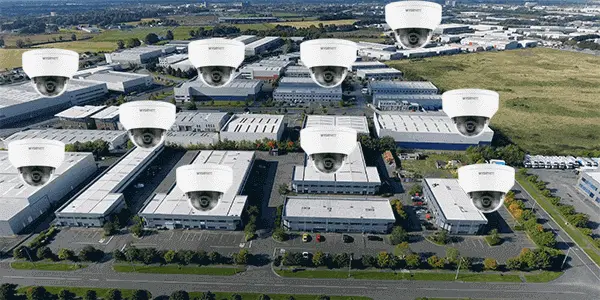
Video surveillance in industry is an indispensable tool, particularly in hazardous areas, for quickly recognizing problematic situations and responding accordingly (see Figure 6). It can support plant personnel in their work and ensure that critical processes are quickly detected.
Of course, access control must not be forgotten: it ensures that only authorized persons can enter certain areas. In addition to entrances and exits, parking lots, loading and unloading areas, access roads and high-risk areas are also well suited for video surveillance.
Public Places and Facilities
Due to the high volume of visitors and the large number of people present there, public squares, parking lots, parks and other facilities may also be subject to video surveillance. Public transportation, events, and cultural institutions such as theaters and museums are also included.
Video surveillance can increase people's sense of security. It can also be used to detect emerging problems early on, for example in traffic management to predict traffic jams or to identify critical crowds before a mass panic can occur.
USEFUL ADDITIONAL FUNCTIONS OF VIDEO SURVEILLANCE IN SECURITY SYSTEMS
Thermal Video Surveillance
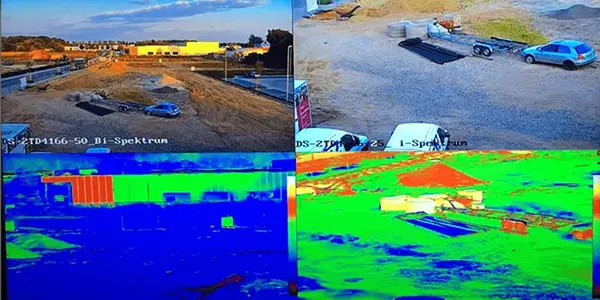
Thermal technology opens up new paths for early detection in video surveillance technology, whether it is a potential perpetrator at a great distance or the detection of fire sources on the property (see Figure 7).
Using bispectral technology, a surveillance camera can simultaneously deliver an optical and a thermal image, each captured through a dedicated lens. In this way, the camera can both detect and identify. This technology provides additional security features and thus enables perimeter surveillance.
Real-Time Video Surveillance
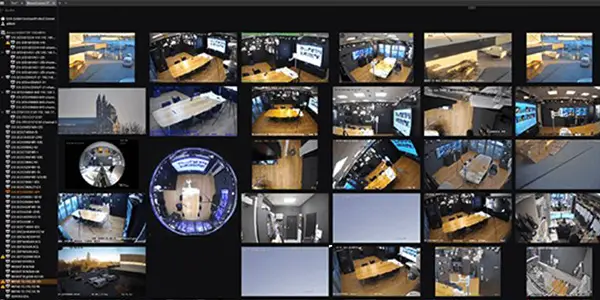
Real-time monitoring is, for active video surveillance such as at a police dispatch center or with security services, amajor advantage that can reduce intervention time. To this end various manufacturers have developed intelligent systems based on artificial intelligence (AI). For example, such video surveillance systems are able to use an image of a perpetrator on a large site to locate them within fractions of a second and create a map showing where they have been. The operator in the control center therefore no longer has to carry out a complex and time-consuming search of the system (see Figure 8).
Real-time video surveillance improves response time and, where there is imminent danger, can save lives within minutes.
Automation Through Video Surveillance
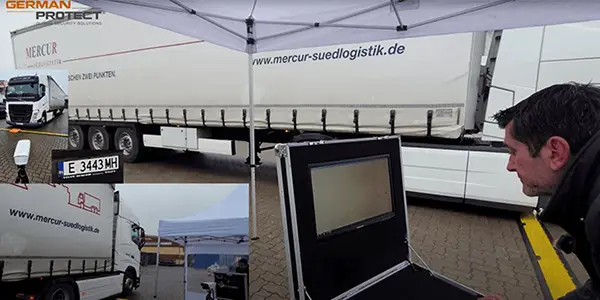
License plate recognition systems make it possible, for example, to open barriers on a large industrial site so that authorized vehicles can enter without waiting (see Figure 9).
Systems with facial recognition can open doors in a hospital, such as to the operating room, for authorized persons.
In an emergency, this saves valuable time for patients who may be in life-threatening danger. Such systems also reduce the risk of infection from germs, because door handles no longer need to be touched.
Early Warning System for the Healthcare Sector Using Video Surveillance
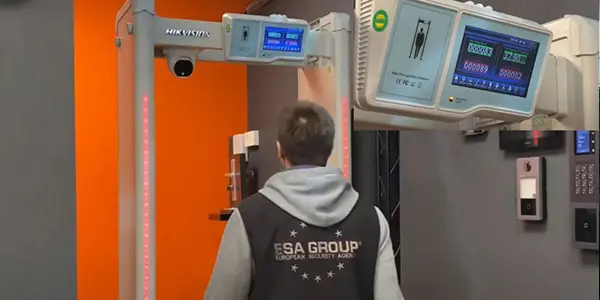
As early warning systems in the healthcare sector, thermal cameras as well as special terminals and gates can be used (see Figure 10). They are able to scan people's body temperature from a distance and trigger an alarm if the temperature is elevated before the persons concerned can enter a certain area. This is particularly important in connection with the COVID-19 pandemic, which is still ongoing.
This type of video surveillance makes the work of control staff considerably easier, especially in heavily frequented buildings and areas such as airports, and greatly increases efficiency. The personal safety of passengers is thereby enormously increased.