Wired Alarm Systems
- Categories
-
Product
range - Guide


WIRED ALARM SYSTEMS AND HYBRID ALARM SYSTEMS
THE MOST RELIABLE WAY TO PROTECT HOMES AND BUSINESSES
Table of Contents
- What is a wired alarm system?
- How does a wired alarm system work?
- What types of wired alarm systems are there?
- Which alarm detectors can be connected to a wired alarm system?
- What are the advantages and disadvantages of a wired alarm system compared to a wireless alarm system?
- Where should I buy my wired alarm system, and what should I look out for?
1. What is a wired alarm system?
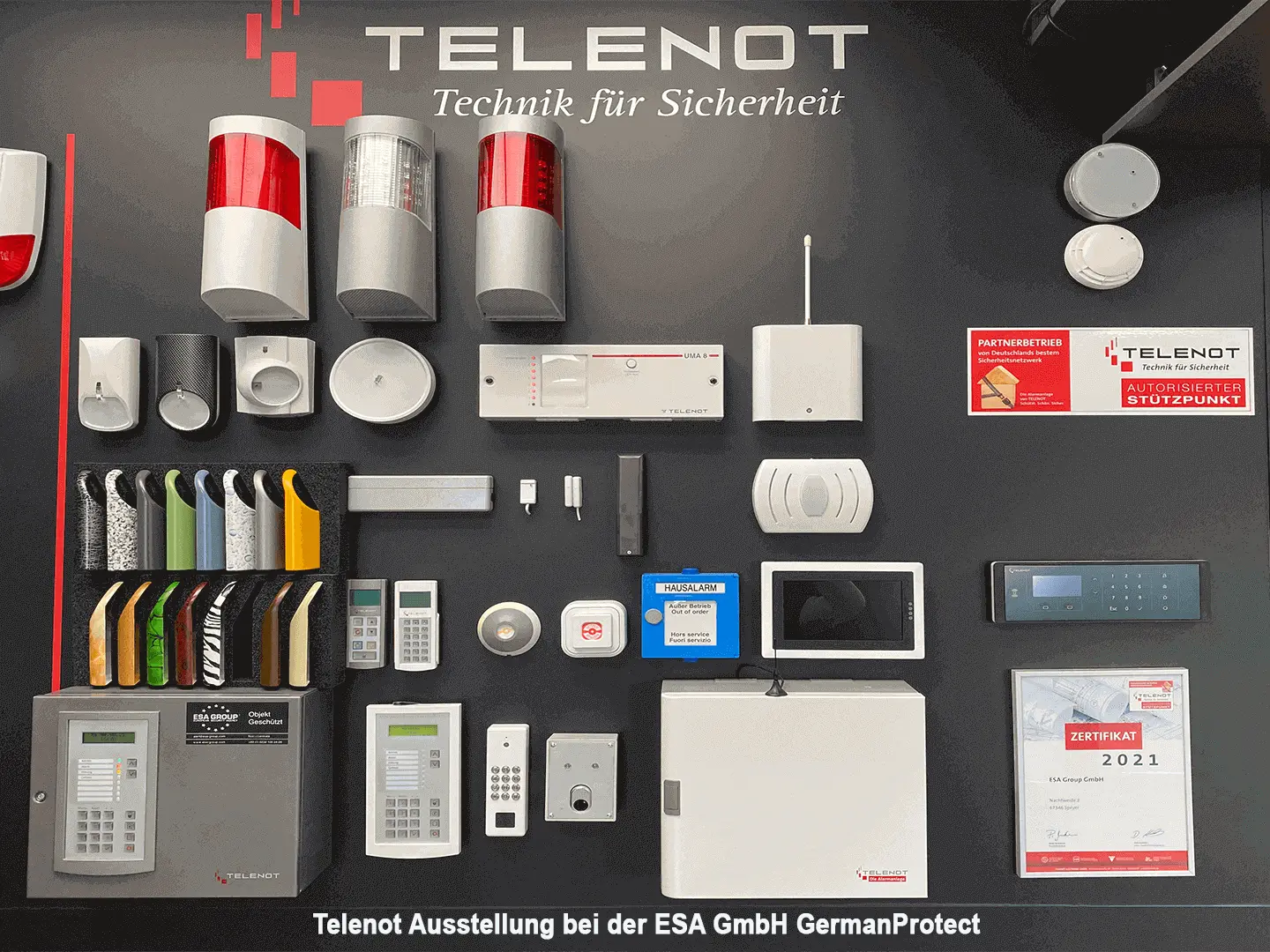
A cabled alarm system is referred to in the trade as a wired alarm system. All alarm components present in a wired alarm system, such as motion detectors, glass break detectors, sirens, etc., are connected to the alarm control panel by cable. The control panel to which all of these alarm components are connected acts as the central control unit and brain of the entire alarm system. This means that the control panel actively monitors not only the detectors for correct operation, but also the lines in between.
The secure cable connection between the individual alarm components and the control panel ensures interference-free and very fast communication, which is not possible with wireless, for example. The entire alarm system therefore operates much more stably and, above all, more reliably. Most alarm systems from renowned manufacturers are based on a BUS system, which makes it possible to control several detectors with a single line.
Outbound communication for transmitting alarm messages to an emergency call and service center (NSL) is also usually handled by the control panel by means of an integrated dialer or transmission device. For security reasons, alarm transmission in a wired alarm system uses two different paths: IP via the network and GSM via the mobile network.
This means that if, for example, the alarm cannot be transmitted via the IP network for any reason, the second path via the GSM mobile network is selected automatically. In a wired alarm system, the dialer can be mounted at a different location in the building, independent of the control panel. This mounting option for the dialer is useful if there is no mobile reception, or only weak reception, in the room where the control panel is located.
2. How does a wired alarm system work?
The alarm control panel is the heart of the system and receives the information from the various detectors. The detectors recognize specific events, such as a door being opened or a glass pane being broken, and are connected to the control panel either by wire or via a wireless connection.
The control panel processes the information delivered to it and sounds the alarm when necessary. The alarm is either triggered via audible and visual signaling devices or, if needed, can also be forwarded as a so-called silent alarm to any designated persons or a security service.
For easy operation, the control panels either have a keypad directly on the housing or can be controlled via remote control. In addition to being powered by the normal 230-volt mains supply, wired alarm systems generally also have a battery-backed power supply, which makes them independent of power outages and protects them against possible sabotage.
3. What types of wired alarm systems are there?
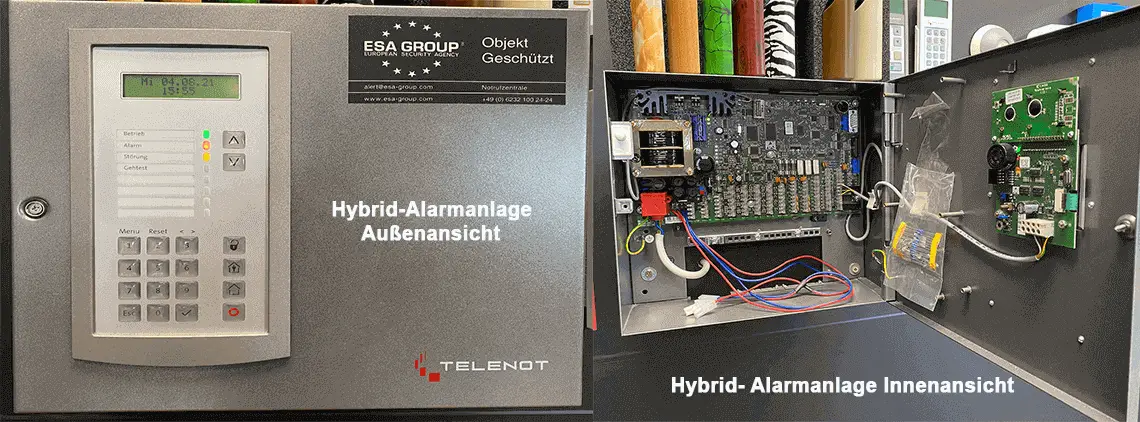
Wired alarm systems are available from various manufacturers either as purely wired systems or as so-called hybrid alarm systems. Technically speaking, a hybrid alarm system is also a wired alarm system, with the difference that it offers the option of installing additional boards in the alarm control panel, such as a wireless expansion board.
This means that a purely wired alarm system becomes a mix of wired and wireless.
This mix makes it possible, for example, to integrate wireless components such as a wireless motion detector or wireless sirens in areas where wiring is not possible or only possible with considerable effort.
But be careful! With a hybrid alarm system that requires VdS certification, please note that as soon as a wireless component is integrated, the VdS approval immediately becomes void.
Our tip! Consult your insurance company beforehand about which requirements it places on the alarm system for securing the property and whether a combination of wireless and wired is permitted. To avoid trouble and misunderstandings later on, have the insurer's requirements given to you in writing.
Conclusion: The hybrid system offers the greatest flexibility because it combines the advantages of wireless and wired technology. It can be equipped with both wired detectors and wireless detectors. This makes it possible to install detectors quickly and cost-effectively even in locations where no wired installation is available.
In addition, the hybrid alarm system is highly cost-effective, as it can be optimally adapted to the requirements of a constantly changing operation. If needed, it can be expanded with additional modules, adding more wired alarm zones or more wireless detectors, without having to replace the control panel.
4. Which alarm detectors can be connected to the wired alarm system?
One of the advantages of the wired alarm system is the flexibility of the alarm detectors, which can be connected to the alarm control panel according to any need. In contrast to a wireless alarm system, all alarm detectors can be implemented for specific applications, which greatly increases the efficiency and reliability of the alarm system.
In addition, wired alarm systems and hybrid alarm systems can be equipped with professional surveillance technology such as video surveillance, light barriers, and temperature or vibration detectors. The individual detectors are grouped into alarm zones by the control panel.
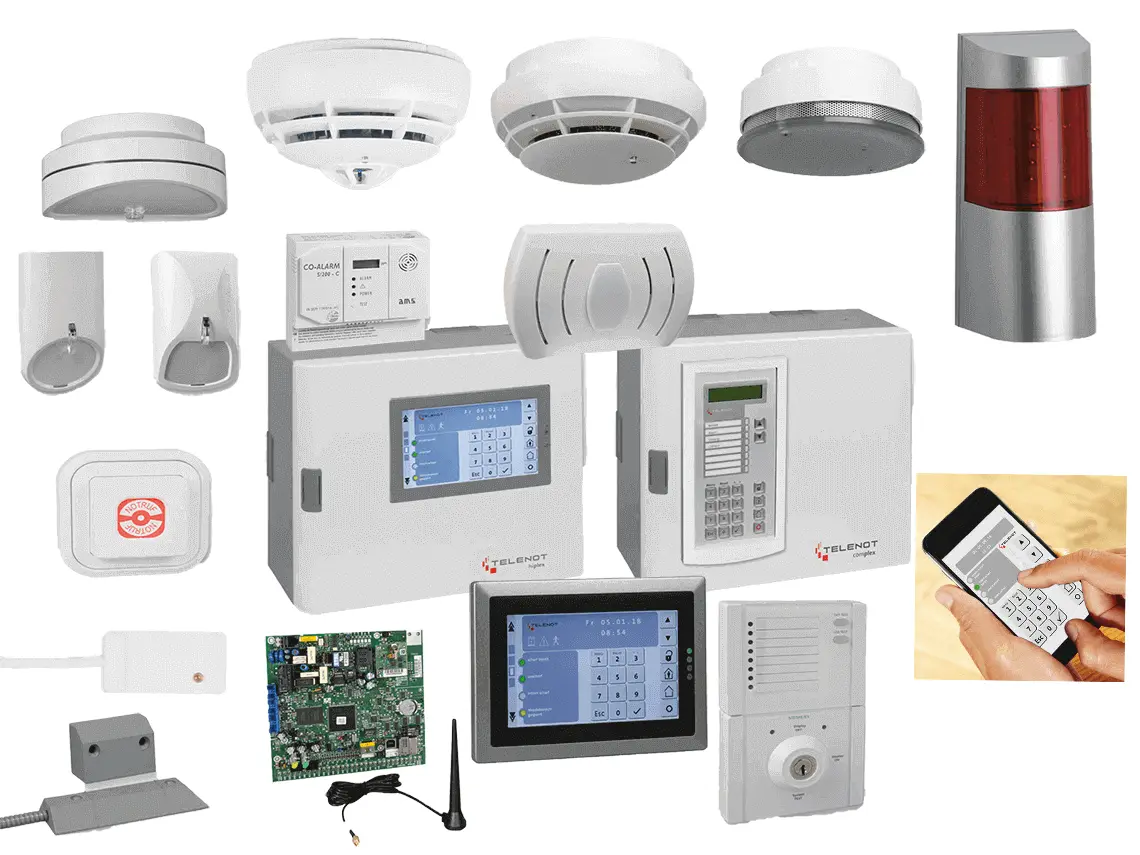
The type of alarm control panel determines the number of possible zones and the maximum number of detectors that can be connected. The alarm systems from Telenot and Jablotron can be expanded with modules that offer additional wired or wireless connection options. Ranging from motion detectors of all kinds, closing contacts, magnetic contacts, seismic detectors, smoke detectors, fog machines, and light and laser barriers to surveillance cameras, the world of wired alarm systems is flexibly open to all areas of application.
5. What are the advantages and disadvantages of a wired alarm system compared to a wireless alarm system?
Advantages:
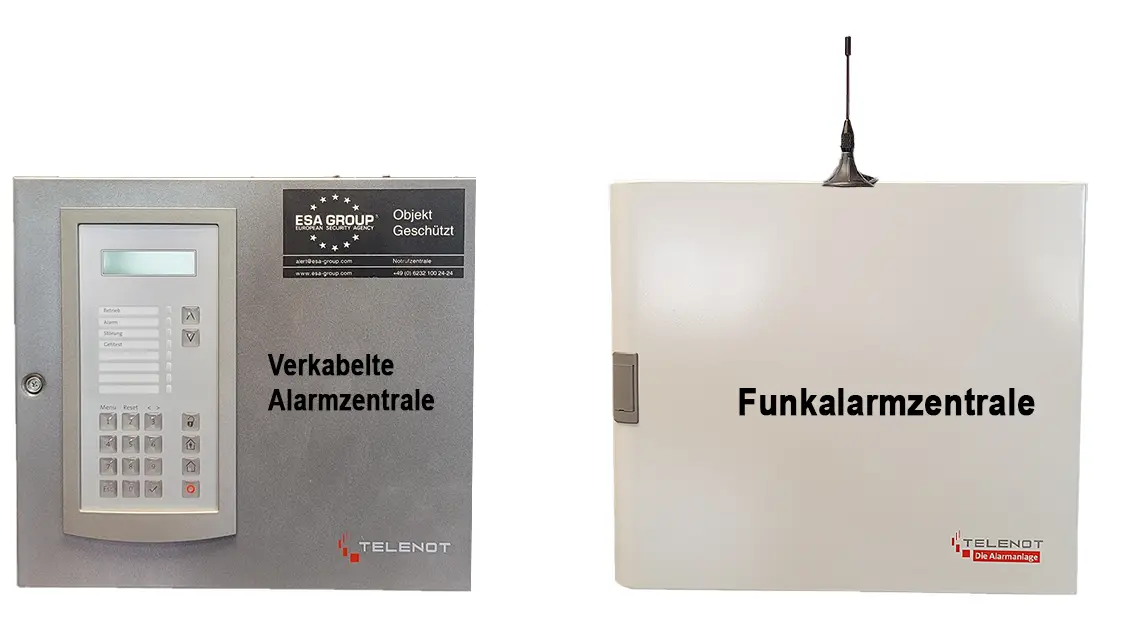
Compared to a wireless alarm system, in which the detectors are connected via a radio link, the wired alarm system has the advantage that the wire provides an exclusive and interference-resistant signal path. It is suitable even for very long distances and makes it possible to secure large sites such as industrial facilities or public institutions.
In addition, wired detectors are usually less expensive to purchase and can also be powered in a decentralized manner. Seen in this light, a wired alarm system is far more reliable and trouble-free than a wireless alarm system.
For these reasons, VdS approvals for alarm systems, which are required for securing commercial properties or high-value assets, can only be found for wired alarm systems. Despite rapid technological development, a wireless alarm system will never be able to match the continuous reliability against interference and the security against tampering of a wired alarm system.
A wireless alarm system is also inferior to a wired alarm system with regard to the variety of different alarm detectors, which are often necessary for professional protection. When it comes to false alarms, wired alarm technology, when installed correctly, is many times more reliable and is by far the preferred choice of the police.
Disadvantages:
Installing a wired alarm system is much more labor-intensive than installing a wireless alarm system, simply because of the cabling. Retrofitting it in an existing building often proves to be costly. The programming and configuration of a wired alarm system is also often much more complicated and requires the solid expertise of a specialist company.
But be careful! A wireless alarm system is indeed easier to program and install, but it likewise requires solid knowledge of alarm technology.
Conclusion: As a specialist security technology company, we, ESA GmbH German Protect, always advise our customers to choose a wired alarm system for new construction, or, as a compromise for difficult cases, a hybrid alarm system. This opinion is also shared by the police and the trade press.
6. Where should I buy my wired alarm system and what should I look out for?
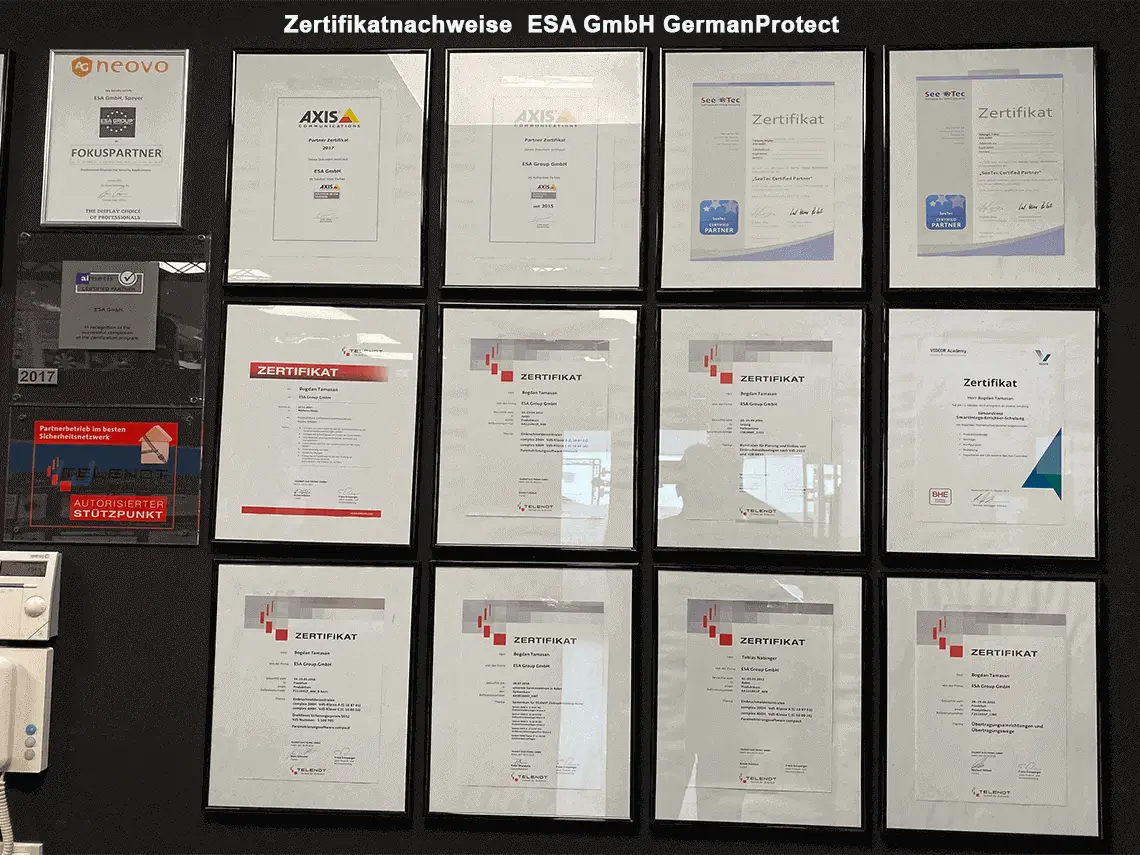
An alarm system is not a toaster that you can simply replace. The alarm system is a security device intended primarily to protect your family or your belongings. For the alarm system to perform this task reliably and continuously, there are important points to keep in mind:
6.1. When buying online, always purchase the alarm system from a specialist company or online shop that also has the necessary expertise to help with any problems that may arise and to provide support. Avoid buying from Amazon, eBay and the like, where wholesalers are usually behind the listings and only want to sell. You have to be clear about one thing: the seller you bought from will accompany you through numerous problems that arise over the years. Is the seller able to do so, or do they have the necessary expertise? Most of the time, probably not.
Price isn't everything. Of course, a knowledgeable and certified dealer or online shop is a little more expensive, because it has to pay the specialist staff who are supposed to help you competently later on.
Call the dealer before you buy and get detailed advice.
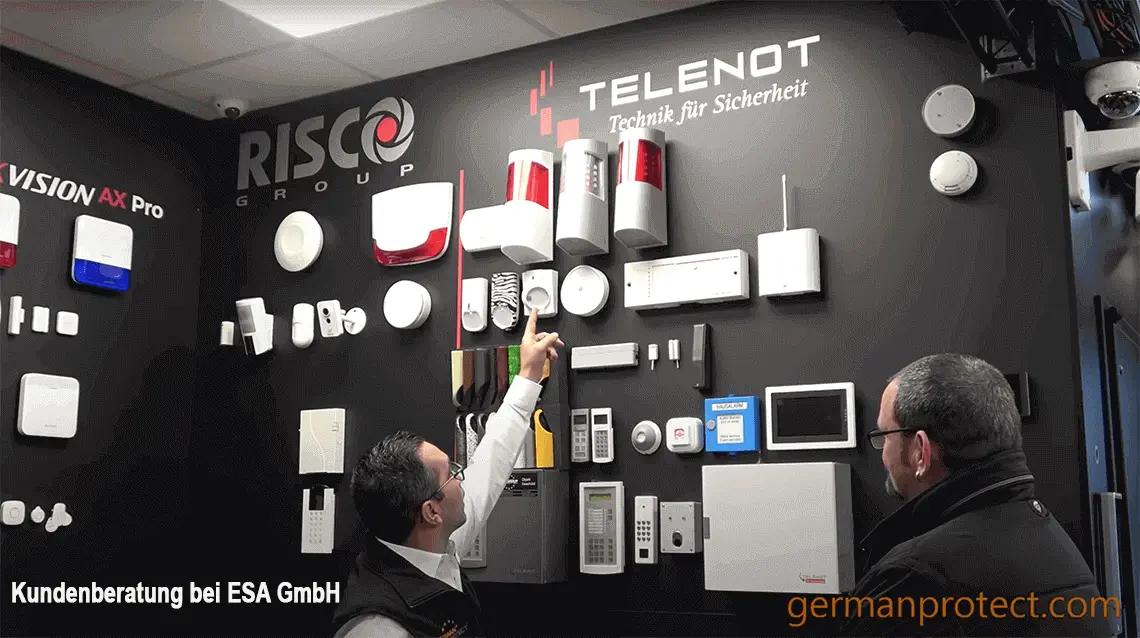
We consider the configuration tools for purchasing an alarm system that are often offered online to be unreliable, misleading and focused solely on making a sale. After all, if you as a customer had the technical expertise, you would no longer need a configuration tool and would already know what you need to buy.
6.2. The police, the trade press and we, as a certified specialist installer of security technology, always recommend buying an alarm system from a specialist company.
An alarm system is not a toy; it is meant to protect your life.
It starts with the project planning and, accordingly, the correct selection of the security components for an efficiently functioning alarm system. If the alarm system is planned incorrectly because the forced sequence of the system was not taken into account, it will only cause false alarms and frustration.
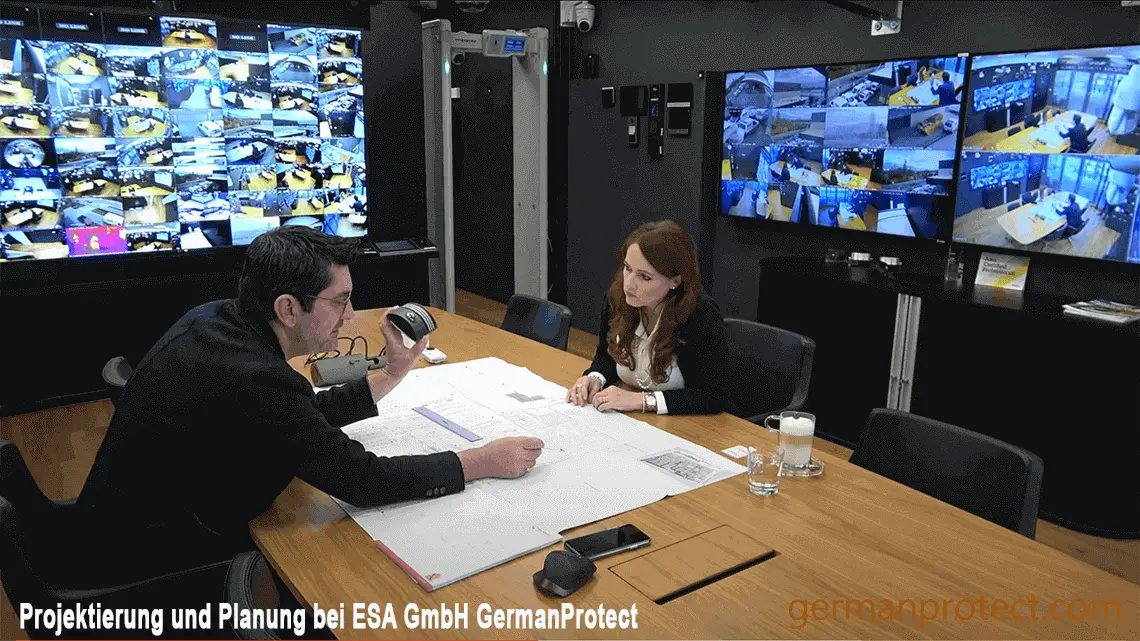
The expected protection fails to materialize when the alarm system is no longer armed at all out of fear of error messages.
Correcting faulty planning afterwards with another company becomes very expensive and annoying.

6.3. The installation of the alarm system should always be carried out by a qualified professional. Many customers believe they can handle the installation themselves. In alarm technology there are many criteria that must be observed in order to ensure that the alarm system functions flawlessly.
We have often inspected customers' alarm systems that would not have triggered an alarm properly, or at all, in the event of a break-in. The customers were very dismayed.
6.4. An alarm system is like a car and should be serviced once a year and checked for proper functionality. To ensure this, having a specialist partner at your side is extremely helpful.
Having the right specialist partner at your side from the start, who can answer your questions and step in on site when technical problems arise, such as replacing defective components, is a great added value.
Having your alarm system looked after by a specialist partner gives you a good sense of security.

That way, you can be sure that your security alarm system is secure.
Our Service for You
Do you have questions about choosing a suitable alarm system and need expert advice from a qualified professional?
We are happy to help and, as a certified alarm system installer, are here to support you with advice and practical assistance.
Simply give us a call, our technicians look forward to hearing from you!