

GDPR-compliant Video Surveillance: Data Protection and Security
GDPR-compliant Video Surveillance: Data Protection and Security
GDPR-compliant video surveillance places high demands on planning, technology and data protection. Especially with professional video surveillance systems, it is not enough to simply install a high-quality surveillance camera. What matters is that planning already takes into account which areas may be monitored, what purpose the video surveillance serves, how long recordings are stored, and who has access to the video surveillance system.
The topic of video surveillance and data protection affects private and commercial applications as well as cities, municipalities and public institutions. Modern technology now offers ways to combine data protection and professional video surveillance without losing sight of the actual security purpose.
More Current Topics on GDPR-Compliant Video Surveillance
More Current Topics on GDPR-Compliant Video Surveillance

GDPR - The Legal Framework Also Governs Video Surveillance
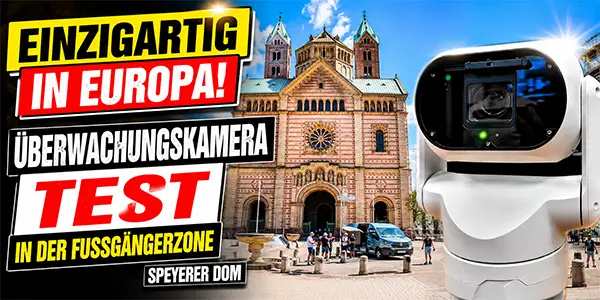
Surveillance Camera Test 2026: GDPR Video Surveillance
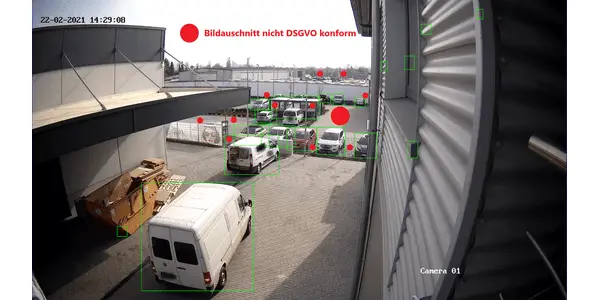
Video Surveillance GDPR-compliant and professional from ESA GmbH, explained simply by German Protect.
What Does GDPR-Compliant Video Surveillance Mean?
For GDPR-compliant video surveillance, it must first be precisely defined which area is actually to be monitored and for what reason the video surveillance is required. Typical purposes can include, for example, protection against burglary, theft and vandalism, or protection of particularly vulnerable areas.
A surveillance camera on a private or commercial property must not simply capture public areas or neighboring properties. Therefore, already when planning a video surveillance system, attention should be paid to the camera position, viewing angle, focal length and the surveillance area actually required.
The principle of data minimization begins already with the selection and positioning of the surveillance camera. Areas that are not required for the actual surveillance purpose should, where possible, not be captured at all. In addition, privacy zones can be set up and certain image areas permanently masked.
Labeling Requirement for Video Surveillance
A GDPR-compliant video surveillance system also requires clearly visible signage of the monitored area. Data subjects must be able to recognize that they are entering an area where active video surveillance is taking place.
A simple surveillance camera symbol is not always sufficient. Within the framework of the information obligations, in particular details of the controller or operator as well as information on the purpose of the video surveillance must be provided. Depending on the application, further information pursuant to Art. 13 GDPR is required or must be made readily accessible.
Especially in commercial and publicly accessible areas, signage is an important element of video surveillance data protection. Information obligations can also be relevant in the private sector, depending on which areas and persons are captured by the video surveillance.
Audio Recording and Live Access in Video Surveillance
A particularly important point concerns the audio function of modern surveillance cameras. Recording conversations is legally very sensitive. It is not only a matter of whether the sound is actually stored by the video surveillance system.
Live access to the microphone of a surveillance camera must also be taken into account. Modern surveillance cameras can transmit ambient sound simultaneously with the video image. Even if this sound is not recorded, eavesdropping on conversations can be relevant under data protection and criminal law and is generally impermissible.
This also affects video surveillance in private areas. If, for example, the microphone of a surveillance camera picks up conversations on the neighboring terrace or neighboring property, the privacy of the people present there can be significantly impaired.
The situation is even more sensitive with video surveillance in commercial premises. Employees may not be monitored through the microphones of surveillance cameras without an appropriate legal basis.
If an audio function is not required for the intended purpose or is not legally permitted, it should be fully disabled and protected against unauthorized activation.
No free access to privacy functions
Especially with privacy-compliant video surveillance, care should be taken that configured privacy functions cannot be arbitrarily changed or removed by the operator of the video surveillance system.
If privacy zones are set up, for example to hide public areas, neighboring properties, windows or other sensitive areas, these settings should be protected against unauthorized changes.
The same applies to deactivated audio functions. The operator should not be able to remove privacy zones or re-enable a previously disabled audio function of a surveillance camera on their own at any time.
A professional video surveillance system therefore works with clearly defined user rights and different access levels. Access to system settings relevant to data protection can be reserved exclusively for the responsible specialist installer or an authorized administrator.
This means the originally defined privacy concept remains technically protected even after the video surveillance system has been put into operation.
Document and log access
Traceability of access is also part of a professional authorization concept for a video surveillance system. Depending on the system used, relevant processes can be logged.
For example, it can be traced which authorized user accessed certain video surveillance recordings or used privacy-relevant functions, and at what time.
Especially in sensitive applications for companies, authorities, cities and municipalities, such logging can be an important component of legally compliant video surveillance.
Video surveillance for cities and municipalities
GDPR-compliant video surveillance is particularly demanding for cities, municipalities and public institutions. Pedestrian zones, public squares, train station areas and event venues are used daily by numerous people.
Here, the interest in security and the individual's right to privacy meet directly. Modern video surveillance systems open up new technical possibilities for this.
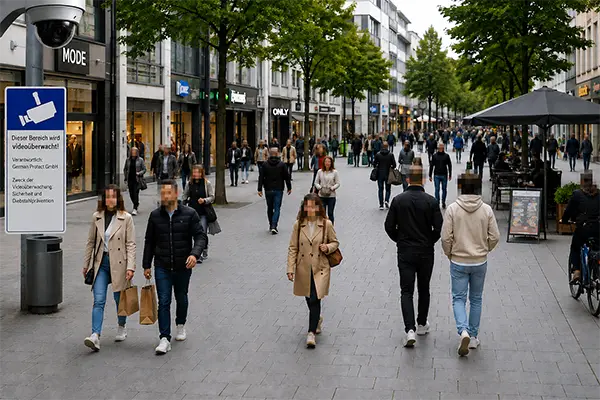
People can already be automatically pixelated in the live image of a surveillance camera. Depending on the technology used, for example, only the face or the entire person can be made unrecognizable.
Static and Dynamic Pixelation
German Protect offers modern solutions for privacy-compliant video surveillance, in which people, faces or specific image areas can be selectively pixelated or masked out.
With a static surveillance camera, i.e. a fixed-mounted, non-movable surveillance camera, static pixelation can be used. In this case, previously defined areas of the image are permanently pixelated or masked out. These can be, for example, public footpaths, neighboring properties, windows of adjacent buildings or other areas that are not to be captured by video surveillance.
Depending on the video surveillance technology used, people or faces can also be automatically detected and anonymized. One option is to pixelate only a person's face while their clothing remains visible. In a dangerous situation, emergency responders can thus identify what jacket or clothing a wanted person is wearing, without the person's face having to be visible during normal operation of the video surveillance system.
Static and Dynamic Pixelation
German Protect offers modern solutions for privacy-compliant video surveillance, in which people, faces or specific image areas can be selectively pixelated or masked out.
For a static surveillance camera, i.e. a fixed, non-moving surveillance camera, static pixelation can be used. Here, previously defined areas of the image are permanently pixelated or masked out. These may include, for example, public footpaths, neighboring properties, windows of adjacent buildings, or other areas that should not be captured by video surveillance.
Depending on the video surveillance technology used, people or faces can also be automatically detected and anonymized. One option is to pixelate only a person's face while their clothing remains visible. In a dangerous situation, emergency responders can thus identify what jacket or clothing a wanted person is wearing, without the person's face having to be visible during normal operation of the video surveillance system.
Interesting Products for GDPR-Compliant Video Surveillance
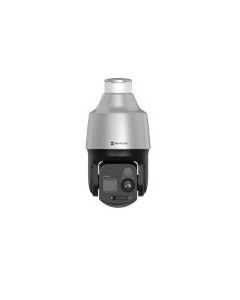



Alternatively, the entire person, including the body, can be pixelated.
For a movable PTZ surveillance camera, purely static pixelation is not sufficient for certain applications. Since the PTZ surveillance camera can pan, tilt and zoom optically, the pixelation of the person concerned must be able to follow the person while the surveillance camera is moving.
This is where dynamic pixelation comes into use. If the PTZ surveillance camera detects a person and tracks them within the monitored area, the pixelation moves with the person. Depending on the technology used, only the face or the entire body can be dynamically pixelated. Even while the PTZ surveillance camera pans, tilts or zooms, the person concerned remains anonymized accordingly.
Especially for cities, municipalities, pedestrian zones, public squares and larger event areas, the combination of static and dynamic pixelation opens up new possibilities for GDPR-compliant video surveillance.
Depixelation Under the Four-Eyes Principle
If a security-relevant incident occurs during video surveillance, it must be clearly regulated who is permitted to access non-anonymized footage.
One option is an authorization procedure based on the four-eyes principle. Depixelation can then only be carried out with appropriate authorization. Combined with logging, it is also possible to trace when and by whom such access to the video surveillance system took place.
The combination of pixelation, clearly defined access rights and controlled depixelation creates new technical prerequisites for legally compliant video surveillance.
How Long May Video Surveillance Recordings Be Stored?
An important aspect of video surveillance data protection is the storage period. Video surveillance systems often operate with a storage period of up to 72 hours. However, these 72 hours do not represent a blanket permissible retention period for every video surveillance system.
In principle, video data may only be stored for as long as necessary for the defined purpose of the video surveillance. Any storage beyond that must be justifiable accordingly.
If a specific incident creates a further need for the recordings from the video surveillance system, a longer retention period may be required. The respective requirements must be checked on a case-by-case basis.
For legally compliant video surveillance, a storage and deletion concept should therefore be defined as early as the planning stage of the video surveillance system.
AI supports professional video surveillance
Modern AI video analytics can support security personnel in monitoring a video surveillance system and automatically detect unusual situations or defined events.
In a pedestrian zone, for example, conspicuous movement patterns, altercations or other unusual situations can be detected by the video surveillance system. The responsible staff member receives a notification and can immediately review the image from the relevant surveillance camera.
It is particularly important to note that AI does not replace human judgment and should not make final decisions in its place. It serves as a tool that supports people in their daily work, draws attention to relevant events and can enable a faster response. The final assessment of a situation remains with the human operator.
Movement patterns that may occur, for example, in connection with pickpocketing can also be analyzed, depending on the video surveillance technology used. However, the specific use of such AI functions must always be legally reviewed and configured accordingly.
Data protection impact assessment for extensive video surveillance
For extensive or particularly sensitive video surveillance projects, a data protection impact assessment under Art. 35 GDPR may be required. This can become especially relevant for systematic and extensive video surveillance of publicly accessible areas.
Cities, municipalities, authorities and larger companies in particular should therefore review, already during the planning of a video surveillance system, which data protection requirements apply to the planned video surveillance.
Data protection also means IT security
Modern GDPR-compliant video surveillance does not end with privacy zones and pixelation. IP surveillance cameras, network video recorders and video management systems are components of the IT infrastructure and must be protected accordingly.
This includes secure user rights and passwords, up-to-date firmware, protected network structures, encrypted communication and secure remote access to the video surveillance system.
A surveillance camera that is poorly protected from a technical standpoint can pose a significant security and data protection risk, even if privacy zones are set up correctly.
German Protect: professional and data protection-compliant video surveillance
At German Protect, we plan professional video surveillance individually based on the specific area of application. We consider not only the individual surveillance camera but the entire video surveillance system.
From selecting the right surveillance camera, through camera position, focal length and privacy zones, to static and dynamic pixelation, user rights, retention periods, labeling, IT security and AI video analytics, we develop a concept tailored to the specific application.
Data protection-relevant settings of the video surveillance system can be secured so that only appropriately authorized persons have access to the programming.
In this way, we create the technical prerequisites for professional and data protection-compliant video surveillance, from private and commercial properties to demanding video surveillance systems for cities, municipalities and public facilities.
The specific legal admissibility of video surveillance always depends on the respective area of use and the individual framework conditions. For complex applications, the planning should therefore additionally be coordinated with the responsible data protection officer or a corresponding legal expert office.
For us, GDPR-compliant video surveillance means: planning data protection from the very beginning, protecting privacy and, at the same time, enabling professional security with modern video surveillance.
Do you need support with GDPR-compliant planning or implementation of your video surveillance? Simply fill out the following form. Our security experts will review your inquiry and advise you individually on a suitable, data protection-compliant solution.