WDR - Wide Dynamic Range
Surveillance cameras equipped with WDR functions are very well suited for recordings in difficult lighting conditions. With strong contrast and varying levels of brightness, WDR surveillance cameras can use special technology to balance out the differences and still produce sharp, high-contrast images. The WDR function is an indispensable tool for professional video surveillance.
WHAT IS A WDR FUNCTION?
What is a WDR function?
The abbreviation WDR comes from the English "Wide Dynamic Range" and in German means the extent of the dynamic range in an image. The term "dynamic range" describes the physical bandwidth, i.e. the difference between the darkest and the brightest part of a video image. This difference is called brightness contrast in video surveillance technology.
The greater this brightness contrast within an image section, the more difficult it is for a surveillance camera to produce an evenly exposed image. The dynamic range, i.e. the WDR strength of a WDR-equipped surveillance camera, is specified in dB (decibels).
One speaks of true WDR only from 100dB. The latest WDR technologies offer a dynamic range of 120dB to 150dB and are referred to as WDR-PRO.
Surveillance cameras with WDR functions use various technologies to balance out these dynamic ranges and thus achieve good recordings under different lighting conditions.
Which WDR technologies are available?
Which WDR technologies are available?
Surveillance cameras from different manufacturers may be equipped with different technologies, depending on price.
One of the most widespread technologies, which is usually found in the lower price segment of surveillance cameras, is DWDR technology (Digital Wide Dynamic Range). This WDR technology is based on purely digital contrast enhancement in darker areas of the image and often does not achieve the desired results.
Another, far more efficient WDR technology for increasing the dynamic range of a surveillance camera is combining multiple images with different exposure times into one video stream. Using existing internal algorithms in the surveillance camera, the best-lit image section is calculated from this combination by the processor and applied to the video stream.
Bright image areas are exposed only briefly, while darker areas are exposed longer.
These selected image sections are combined to create an overall image that is evenly lit as a whole.
Which WDR Technologies Are Available? 2
Also efficient, but unfortunately mostly only provided by renowned manufacturers, is the use of an image sensor, whose light sensitivity can be adjusted or switched pixel by pixel. The pixels on the image sensor that receive a lot of light are regulated with lower light sensitivity, and the pixels that receive less light have their light sensitivity increased. In this way, sensitivity can be reduced for brighter areas while being raised for darker areas.
WHICH WDR TECHNOLOGY IS THE MOST EFFICIENT FOR A SURVEILLANCE CAMERA?
WHICH WDR TECHNOLOGY IS THE MOST EFFICIENT FOR A SURVEILLANCE CAMERA?
In video surveillance, with regard to actual efficiency, one speaks of true WDR (True WDR) only from 100dB onward. The latest WDR technology offers a dynamic range of 120dB to 150dB and is referred to as WDR-PRO. The designation DWDR is used below 69dB.
With intensive and continuous WDR processing within the video stream, depending on the processor installed in the camera, the frame rate may be significantly reduced. Reducing the frame rate due to insufficient computing power often results in undesirable side effects such as latency in the video stream. For this reason, prices of surveillance cameras equipped with WDR functions often differ considerably despite almost identical features.
APPLICATIONS OF WDR CAMERAS
APPLICATIONS OF WDR CAMERAS
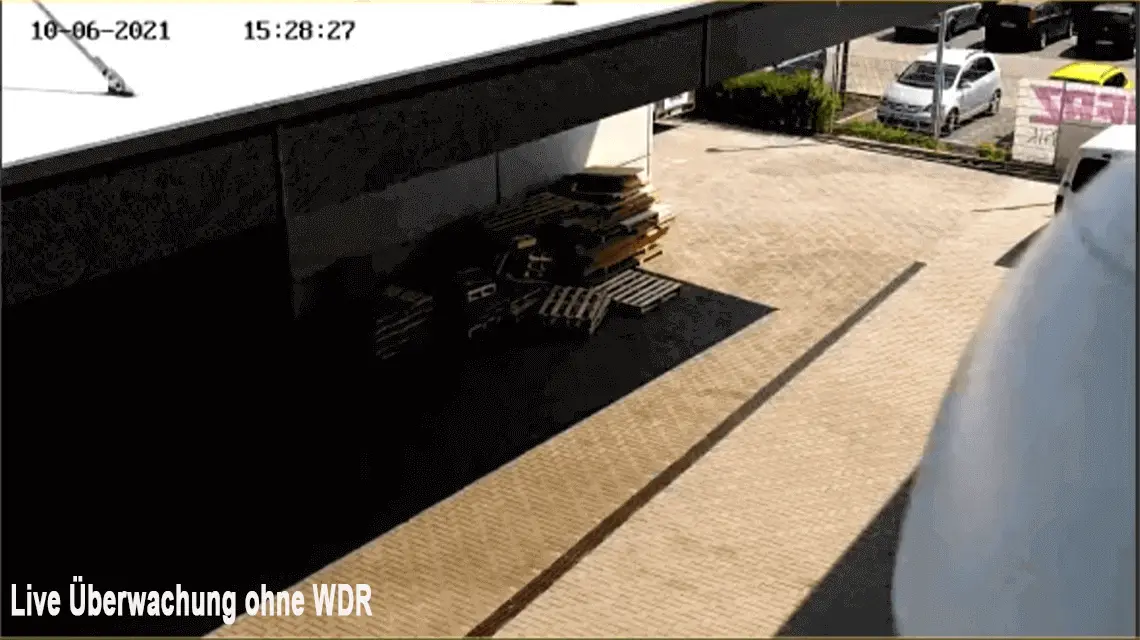
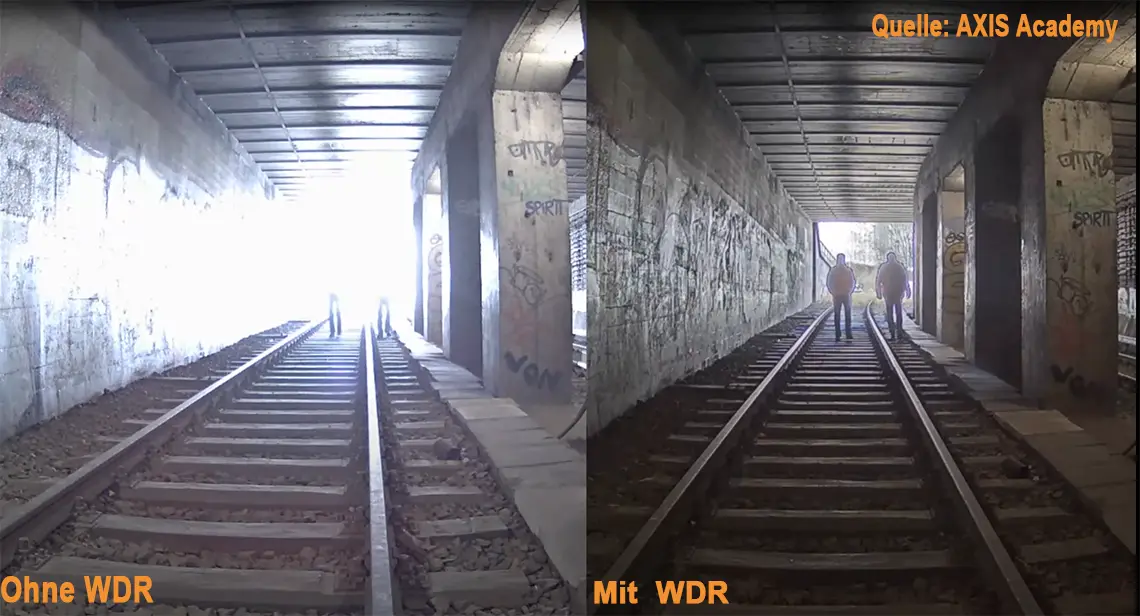
Most people have probably encountered the problem of filming an object or person against backlight. The contrast between a dark foreground and a bright background, i.e. the dynamic range, is too large for most cameras. As a result, either the person or object in the foreground is correctly exposed but the background is overexposed, or the foreground is shown too dark.
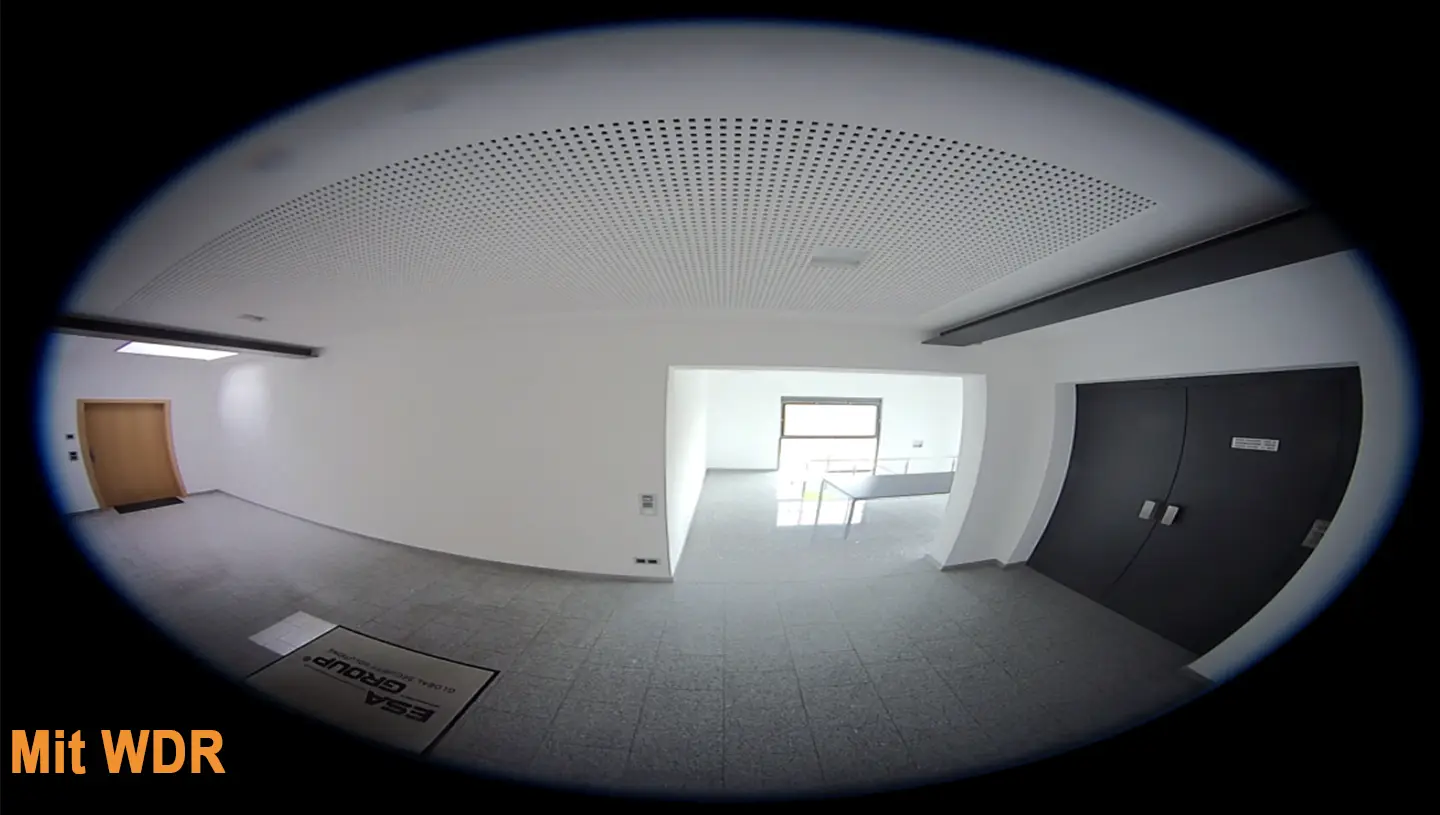
Applications of WDR Cameras 2
Surveillance cameras equipped with WDR can be used anywhere a wide dynamic range is needed, where extremely bright and very dark areas usually appear in the camera's field of view.
Possible areas of application include:
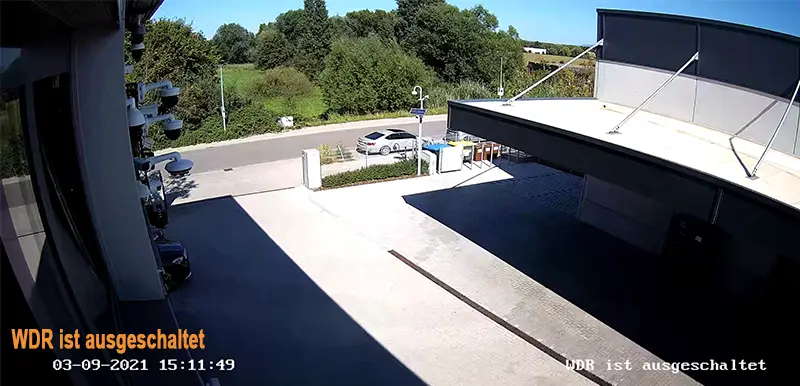
- Parking lots with two different lighting conditions caused by shadows and strong sunlight.
- Parking garages at the entrance and exit areas, where two different lighting conditions are also found: dark inside and bright outside.
- Entry and exit areas of tunnels.
- Buildings with large glass facades or shop windows.
WHAT SHOULD BE CONSIDERED WHEN BUYING A WDR SURVEILLANCE CAMERA?
WHAT SHOULD BE CONSIDERED WHEN BUYING A WDR SURVEILLANCE CAMERA?
To achieve clear recordings under large differences in light, a good surveillance camera should support genuine WDR (True WDR) from 100dB.
Some mostly cheaper surveillance cameras use only Digital WDR (DWDR).
With this system, the image is merely processed by the camera's signal processor.
However, no different exposure takes place. Accordingly, the results of DWDR cannot be compared in quality with genuine WDR recordings.
It is also recommended to pay attention to the appropriate size for the respective resolution of the image sensor.
A sensor that is too small often means the surveillance camera is only equipped with DWDR.
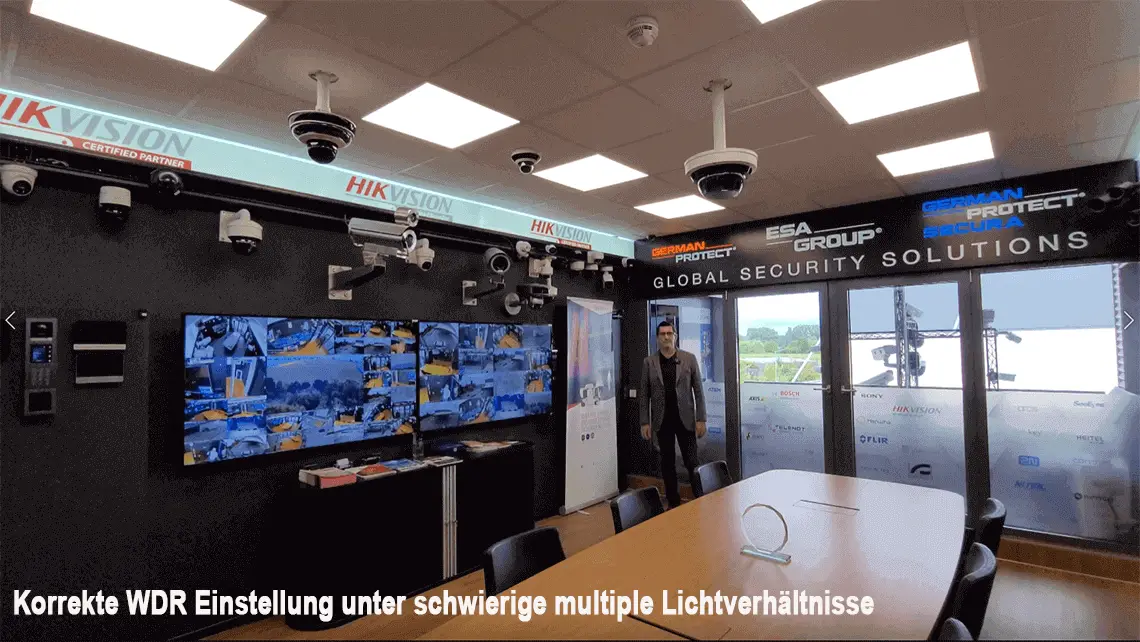
Here is an example of a 150 dB WDR setting under difficult multiple lighting conditions from German Protect. Difficult multiple lighting conditions means the following:
The surveillance camera receives sunlight from outside.
At the same time, the camera is illuminated vertically from above by LSD lighting.
The light falling from the left through the monitors is bluish and greenish due to the Hikvision light track. The person in the image is wearing dark clothing.
Despite these multiple lighting conditions, the image is evenly lit and the person is clearly recognizable. The outdoor area in the background is also very clearly visible thanks to WDR.