

Video Surveillance System
Video surveillance systems are systems for the visual monitoring of rooms and properties. They provide additional security in both private and commercial settings. Video surveillance systems are a combination of one or more surveillance cameras for indoor and outdoor use, as well as other components such as recording equipment and monitors.
In English, the abbreviation CCTV is often still used for video surveillance systems. It stands for "Closed Circuit TV," which is meant to express that the system is closed and that only certain people have access to it. In German-speaking countries, the abbreviation VÜA for video surveillance systems is also common.
When using video surveillance systems, various legal framework conditions must be observed.
Tasks of a Video Surveillance System
A video surveillance system serves two purposes:
- Clarifying committed crimes and offenses
- Preventing crimes and other unlawful acts.
With the help of a video surveillance system, crimes can be recorded and saved as evidence. This makes it possible, for example, to identify suspected perpetrators. In addition, the recordings from the surveillance cameras allow the sequence of events to be reconstructed, which can also help clarify what happened.
Another important goal that can be achieved with a video surveillance system is the prevention of crimes and other unlawful acts. Clearly visible video surveillance makes it evident that violations carry a high risk of being solved. This has a deterrent effect and helps significantly reduce the number of such offenses.
What Components Does a Video Surveillance System Consist Of?
Depending on the tasks a video surveillance system is to perform, the number and type of system components can vary.
In most cases, a video surveillance system contains at least these components:
- One or more surveillance cameras
- One or more monitors
- A recording device such as a network video recorder (NVR) or a server with special software
- If no wireless transmission via radio or WLAN takes place: network or coaxial cable.
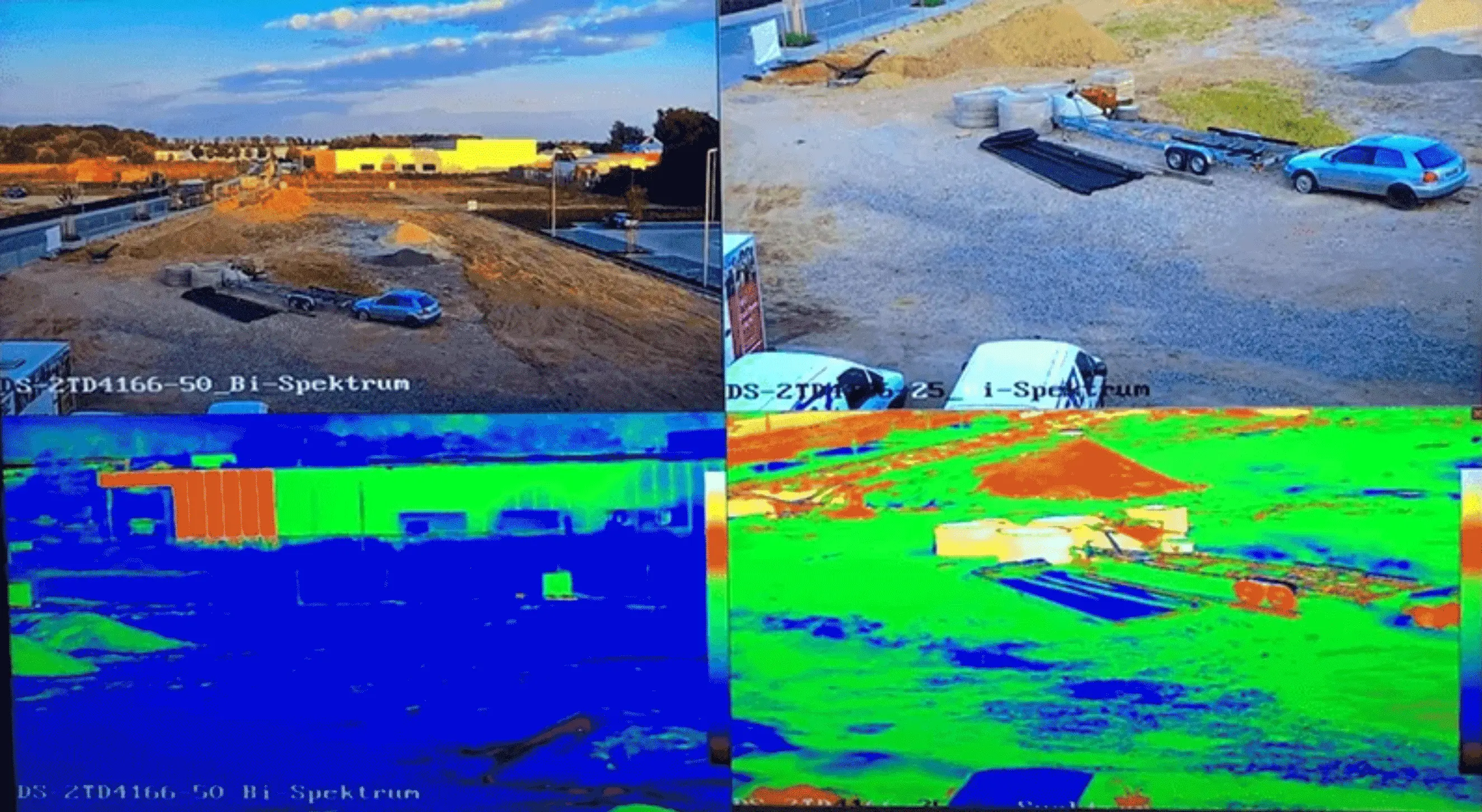
For more complex systems, additional components may be added, such as special floodlights, infrared illumination, video management software for analysis purposes, and specialty cameras that enable thermal imaging, for example.
From a technical perspective, there are various types of video surveillance systems. Depending on how data is captured and transmitted, the following categories can be distinguished:
- Analog video surveillance systems: The signals from the analog surveillance cameras are converted into digital data for recording.
- Digital video surveillance systems: digital data transmission over a local network such as an Ethernet
- IP-based video surveillance systems: transmission of data over an IP network and, if needed, also over the internet.
Numerous other criteria may also apply, which can vary depending on the components used, such as the resolution of the surveillance cameras and the storage capacity of the recording devices.
Legal Framework for Operating a Video Surveillance System
Various legal regulations apply to the operation of a video surveillance system. For example, under the GDPR, a legitimate interest must exist for video surveillance, because the processing of personal data conflicts with the right to informational self-determination of the persons being recorded.
Depending on where the video surveillance takes place, different legal bases apply. For example, a private individual generally has the right to monitor their own house, property and apartment. However, the situation is different if public areas such as the street or a sidewalk also fall within the field of view of the surveillance cameras.
Additional, particularly strict rules apply to video surveillance in the workplace. These stipulate, for example, that employees must be informed about the video surveillance and its purposes.
Because of the various laws that may apply to video surveillance, it is always advisable to seek legal advice before installing a video surveillance system.
Video Surveillance System as a Complete Kit
Setting up a video surveillance system depends on various factors, such as the desired applications and the conditions on site.
For many purposes, there are ready-made complete kits consisting of surveillance cameras, recording devices and accessories. However, there are also differences here, for example regarding the design and operating principle of the cameras.
For this reason, even before purchasing a complete video surveillance kit, it is always advisable to contact a specialist dealer and seek professional advice.