

Motion Detection
The motion detection function of a surveillance camera is provided by VCA (Video Content Analytics), which means analysis of video content, and belongs to the automatic analyses in video surveillance. VCA evaluates changing contrast ratios in the image section of the surveillance camera that are caused by pixel changes . This type of motion detection is not as efficient, because pixel changes can also be triggered by heavy rainfall, and therefore false alarms are often activated.
Another motion detection method, also based on VCA, differing only in that the surveillance camera can compare pixel change scenarios using stored algorithms, is motion detection through AI – Artificial Intelligence.
The surveillance camera accesses the database and uses mathematical algorithms to determine whether the image just captured shows an animal, a person or a vehicle. This type of motion detection is far more accurate in analysis and drastically minimizes false alarms. Meanwhile, AI-based motion detection has advanced technically to the point where AI can not only recognize colors, different genders and vehicle types, but also distinguish them from one another.
The Ferrari among motion detection types is AI – Artificial Intelligence with self-learning algorithms. Should the surveillance camera nevertheless make a wrong decision despite the built-in AI and trigger a false alarm, the user can correct it manually by marking the alarm as false in the alarm log. The AI – Artificial Intelligence learns from this and avoids recognizing such scenarios as alarms in the future.
The advantage of surveillance cameras equipped with AI – Artificial Intelligence is that they are not only extremely fast in reaction time compared to conventional surveillance cameras, but can also work autonomously. Such surveillance cameras do not first have to send the video data to the network video recorder or video server for analysis, but can independently decide on a scenario. For decentralized video surveillance, such as street or city surveillance, this type of motion detection offers many times the added value in intervention time. The surveillance camera can immediately initiate measures on site, for example by activating a strobe light or playing a preset voice message.
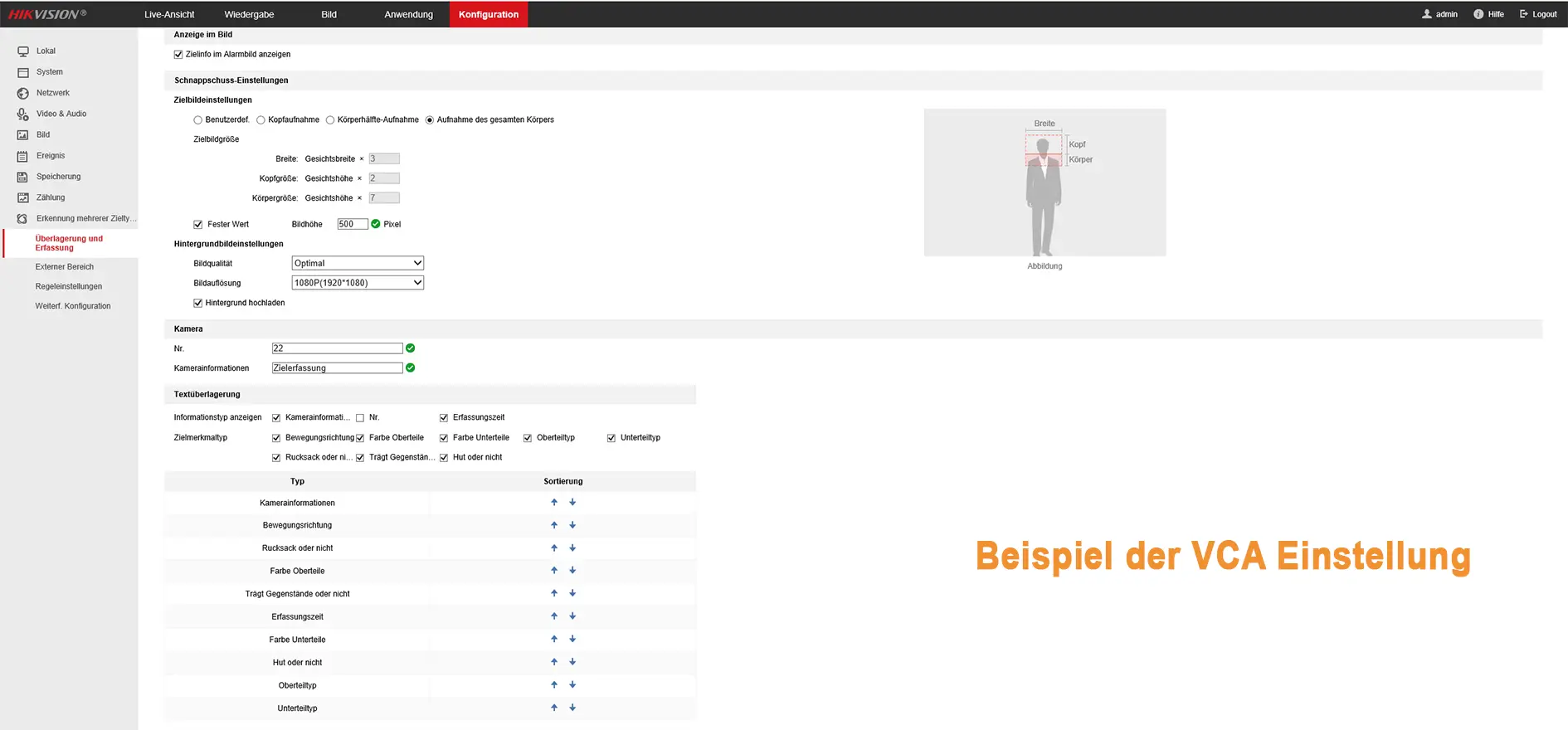
Of course, it is possible to connect a "dumb" surveillance camera to an intelligent network video recorder, video server or surveillance software.
In this case, the central station decides on further measures, which in turn increases the intervention time in the event of an alarm.
Important note! There is a major difference between the motion detection of a surveillance camera and an alarm system. An alarm system has active as well as passive motion detectors that trigger an alarm based on infrared. This type of alarm triggering is more precise, but at the same time also more basic. The alarm is triggered reliably, but you cannot see what is happening on site from a distance. For this reason, various alarm system manufacturers have combined video surveillance with alarm technology. Renowned manufacturers such as Videofied, Ajax, Jablotron, or Risco offer motion detectors for indoor and outdoor use with an integrated camera. This combination is of great value, as the infrared motion detectors reliably trigger an alarm and the camera provides a video stream for alarm verification.
But be aware! The cameras built into the motion detector are not surveillance cameras. In the event of an alarm, they only send a video stream of up to 10 seconds long. A live view (viewing the current surveillance images) via the infrared motion detectors is not possible.