

Media Converters
-
Product
range - Guide
GUIDE
Media Converters for Various Applications
Media converters enable communication between different transmission media, such as IP network over BNC coaxial cable or analog, as well as analog HD over network cable and fiber optic (FO) within a network. For example, network cameras normally communicate via network cable or fiber optic (FO) within a network-based video surveillance system. By using a media converter, an IP network camera can also be connected over a BNC coaxial line. Even over two-wire cable, the transmission of network devices is possible thanks to the media converter.
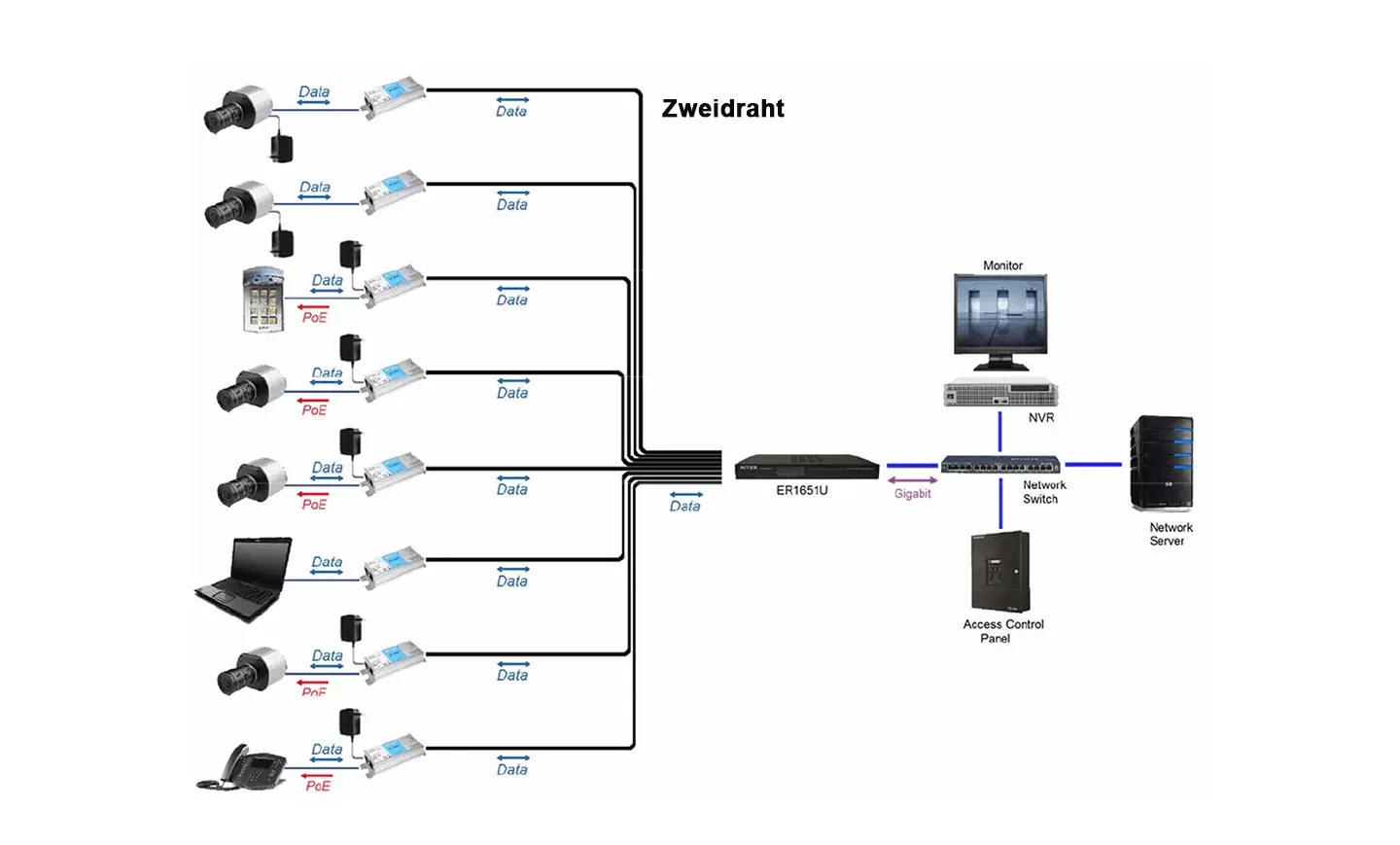
The rapid development of IP cameras and network technology opens up new horizons in video surveillance, which put an analog surveillance camera in the shade, not only technologically but also from a cost-effectiveness standpoint. In recent years, this development has increasingly contributed to a veritable displacement of analog surveillance cameras from video technology.
The initial difficulties and challenges that operators of analog video surveillance faced when upgrading their surveillance system to IP, which required costly conversion measures, now belong to the past thanks to the media converter. Especially for large analog surveillance systems, where cable routes already span kilometers with BNC cable, the media converter is an extremely efficient component of video technology for saving costs on new network cables as well as on disposing of the existing BNC cables. The use of media converters makes it possible to transform an analog video surveillance system into a network-based surveillance system without great effort.
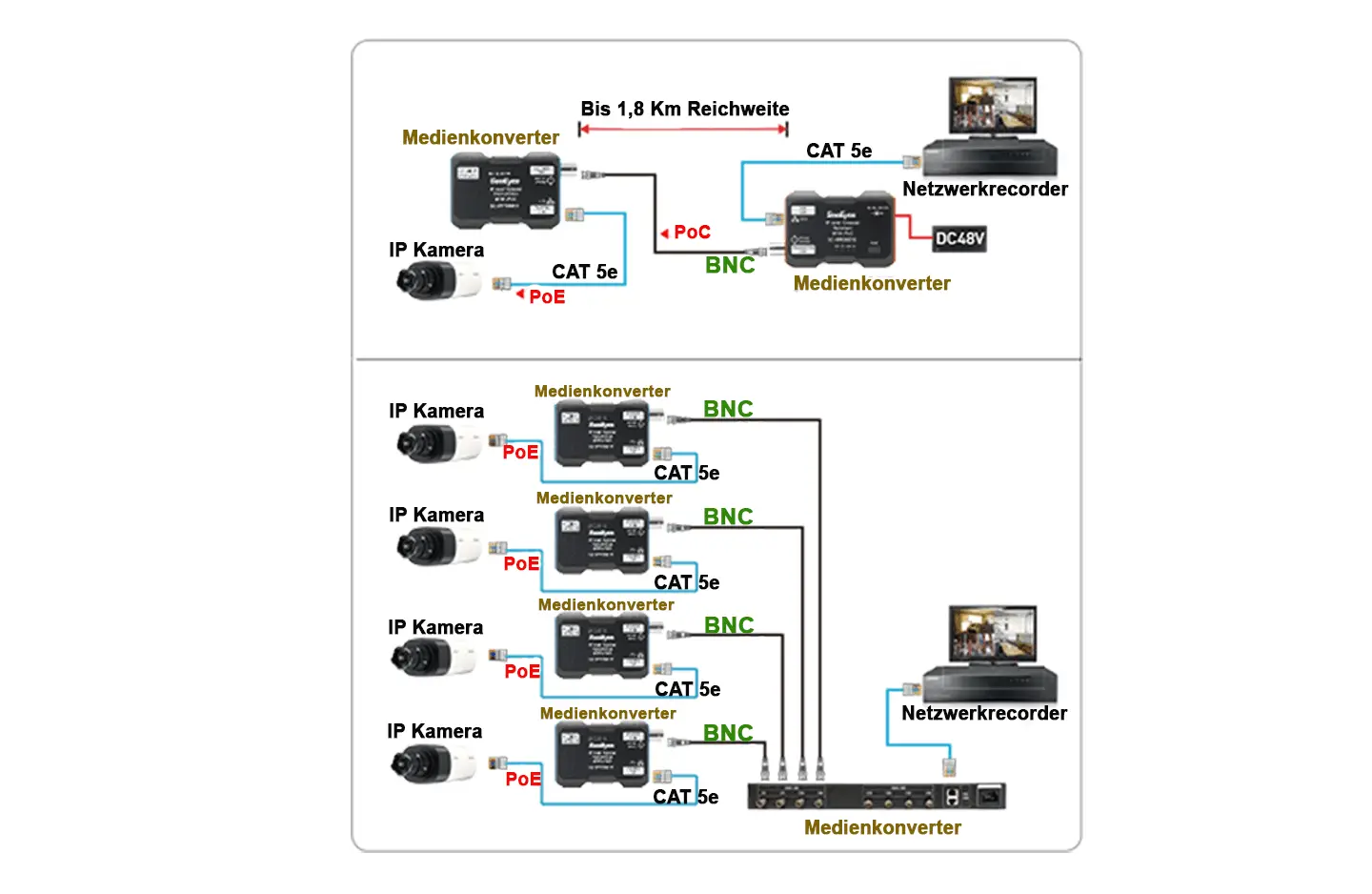
Analog surveillance cameras are simply replaced with IP cameras without having to replace the BNC cables. Buildings such as museums that are under heritage protection, where any conversion work requires complex special permits, can be equipped with the latest IP cameras without special effort with the help of media converters, thus benefiting from network technology.
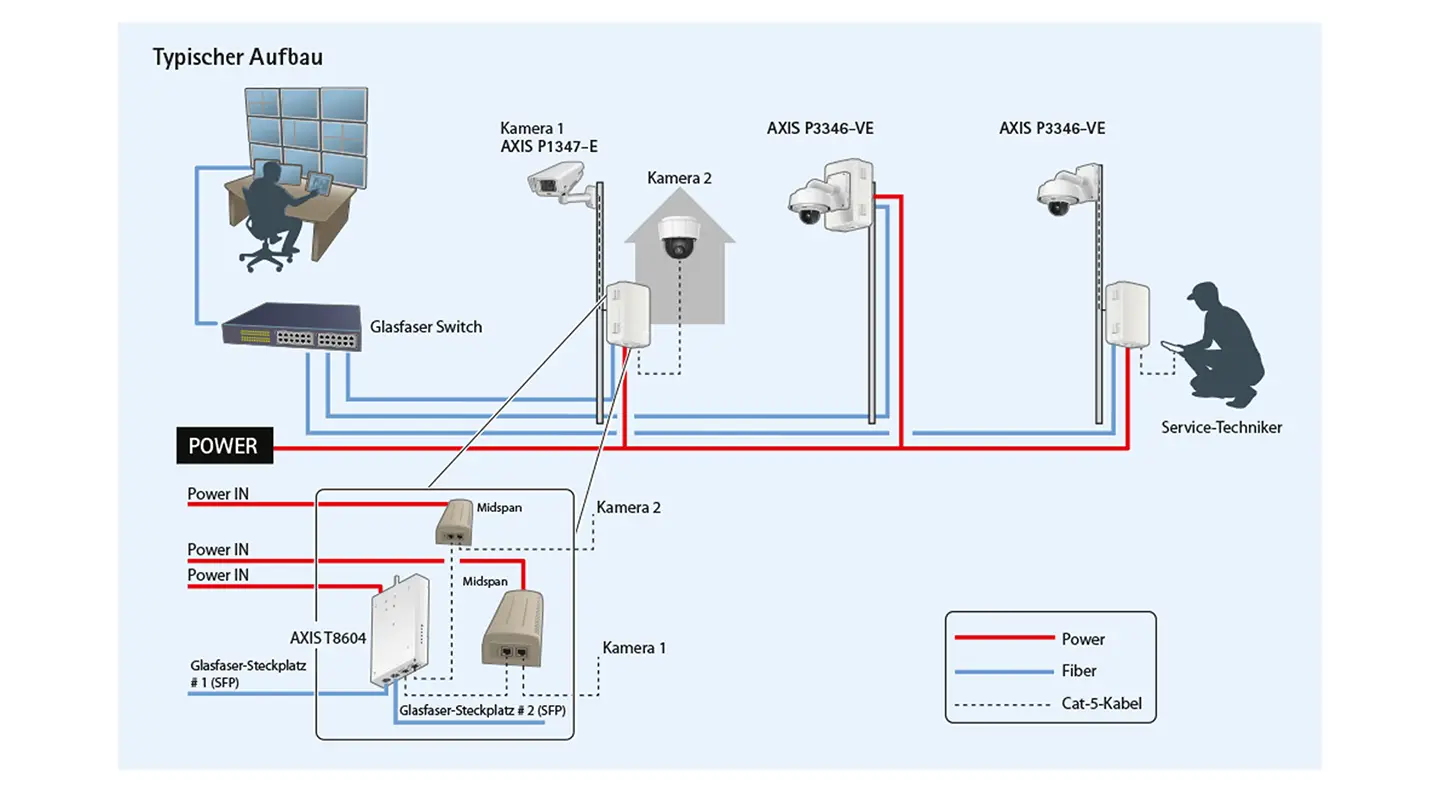
Conversely, the media converter also enables a network-based surveillance system to be equipped with fiber optic (glass fiber) to ensure fast communication and control of several IP cameras spread across a wide area of the premises.
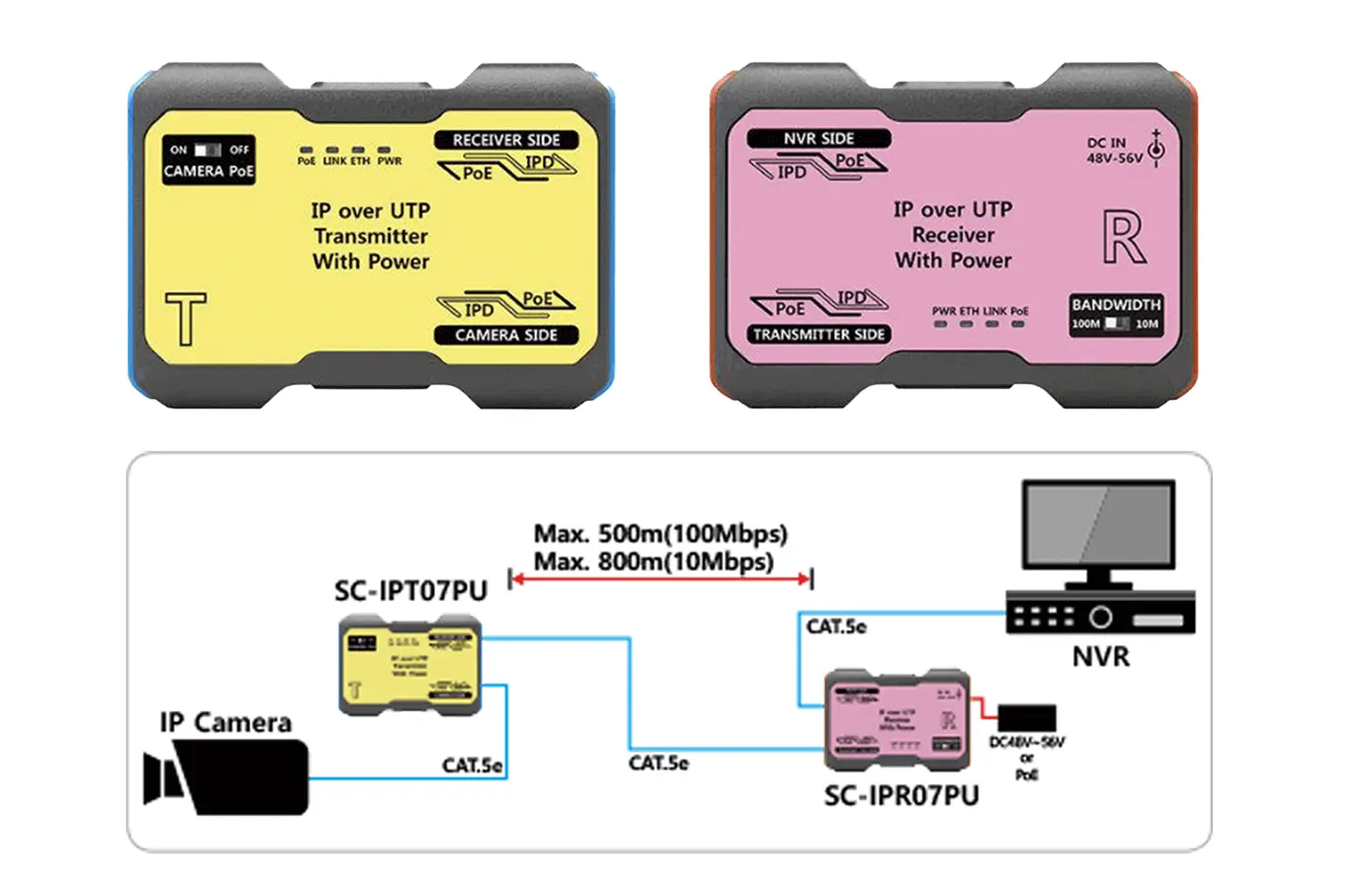
Special media converters can not only provide PoE (Power over Ethernet) and PoC (Power over Coax) transmission over long distances of up to 800 meters via CAT5 UTP network cable or coaxial cable to power the IP camera, but also enable data transmission of up to 10/Mbit over the same distance. Special video surveillance applications, for example for large industrial halls such as shipyards, can thus be implemented professionally.
The German Protect online shop for security technology offers our customers a professional range of media converters from renowned manufacturers such as Axis, Bosch, SeeEyes, Nitek, Comnet, IFS, Eneo, Veracity and AMG so that we can adequately cover every requirement.
Our expert tip! Investing in analog surveillance cameras is now completely pointless, because surveillance cameras are not getting any better. To upgrade outdated analog video surveillance systems to the latest state of the art, we always recommend using media converters, depending on the local conditions. Our technical team is happy to help you choose the right media converter. We help you save costs on the one hand and upgrade your video surveillance to the latest technology on the other.