GUIDE
Coaxial Cable for Video Surveillance
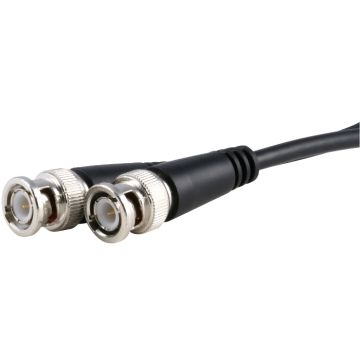
 For video surveillance, video technology offers several ways to connect a surveillance camera directly to the DVR - Digital Video Recorder via coaxial cable. In most cases, video transmission over a coaxial cable involves analog surveillance cameras or Analog HD such as TVI, AHD, CVI or SDI.
However, by using media converters, an IP camera including PoE power supply can also be connected via a coaxial cable. In general, video technology distinguishes three different types of coaxial cable: RG59, RG6 and RG11, which are relevant for video surveillance.
All three types fulfill the same transmission functions for video surveillance, differing only in their shielding and in their fields of application.
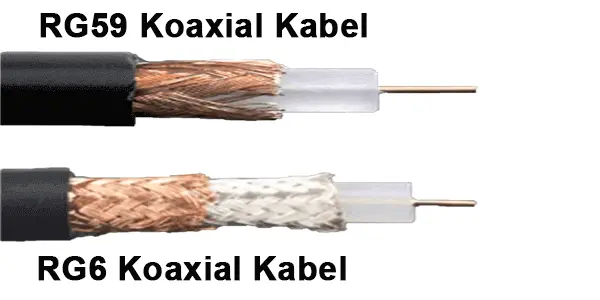
The RG59 cable is one of the most widely used coaxial cables in video technology and features a single braided shield. Due to the simple shielding with an impedance of 75 ohms against electromagnetic interference, it is not recommended to route RG59 coaxial cable on cable trays together with regular power lines, in order to avoid interference in the video transmission.
Coaxial Cable for Video Surveillance
For video surveillance, video technology offers several ways to connect a surveillance camera directly to the DVR - Digital Video Recorder via coaxial cable. In most cases, video transmission over a coaxial cable involves analog surveillance cameras or Analog HD such as TVI, AHD, CVI or SDI.
However, by using media converters, an IP camera including PoE power supply can also be connected via a coaxial cable. In general, video technology distinguishes three different types of coaxial cable: RG59, RG6 and RG11, which are relevant for video surveillance.
All three types fulfill the same transmission functions for video surveillance, differing only in their shielding and in their fields of application.
The RG59 cable is one of the most widely used coaxial cables in video technology and features a single braided shield.
Due to the simple shielding with an impedance of 75 ohms against electromagnetic interference, it is not recommended to route RG59 coaxial cable on cable trays together with regular power lines, in order to avoid interference in the video transmission.
 The RG6 coaxial cable has a double-braided shield with an impedance of 75 ohms compared to the RG59 coaxial cable, which makes it more resistant to electromagnetic interference.
That said, the RG6 coaxial cable can certainly be routed together with other cables in a cable tray, although power lines should be avoided despite the shielding. RG59 coaxial cables are suitable for video applications up to 3Ghz.
As a basic rule in video technology for video surveillance, power cables should always be kept away from the video cable.
The RG6 coaxial cable has a double-braided shield with an impedance of 75 ohms compared to the RG59 coaxial cable, which makes it more resistant to electromagnetic interference.
That said, the RG6 coaxial cable can certainly be routed together with other cables in a cable tray, although power lines should be avoided despite the shielding. RG59 coaxial cables are suitable for video applications up to 3Ghz.
As a basic rule in video technology for video surveillance, power cables should always be kept away from the video cable.
 The RG11 coaxial cable is weatherproof from -30 to +70 degrees Celsius and is therefore suitable for outdoor use. In terms of shielding and impedance, the RG11 coaxial cable is identical to the RG59.
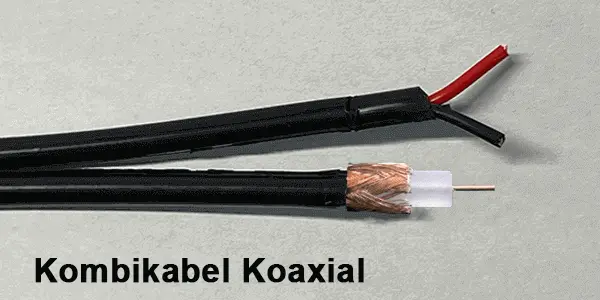
All three coaxial cable types, RG59, RG6 and RG11, are also supplied by video technology specifically for video surveillance as combination cables. In addition to the coaxial cables, the combination cables contain a two-wire +/- cable for powering and supplying the surveillance camera. Both cable strands are connected to each other and thus provide only one line for routing the cable.
Our Expert Tip! For pure analog or Analog HD video surveillance, combination cables are highly recommended. By combining the video line and the power line in one cable, additional costs for powering the surveillance camera are saved.
The RG11 coaxial cable is weatherproof from -30 to +70 degrees Celsius and is therefore suitable for outdoor use. In terms of shielding and impedance, the RG11 coaxial cable is identical to the RG59.
All three coaxial cable types, RG59, RG6 and RG11, are also supplied by video technology specifically for video surveillance as combination cables. In addition to the coaxial cables, the combination cables contain a two-wire +/- cable for powering and supplying the surveillance camera. Both cable strands are connected to each other and thus provide only one line for routing the cable.
Our Expert Tip! For pure analog or Analog HD video surveillance, combination cables are highly recommended. By combining the video line and the power line in one cable, additional costs for powering the surveillance camera are saved.