

Thermal Imaging Cameras
-
Product
range - Guide
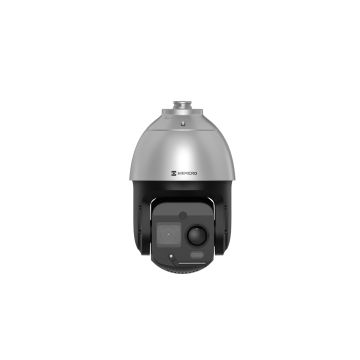

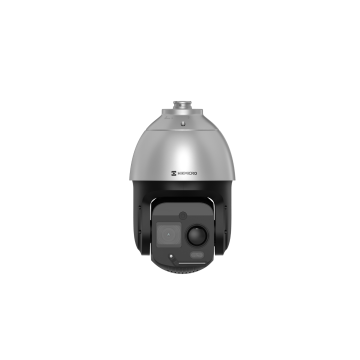
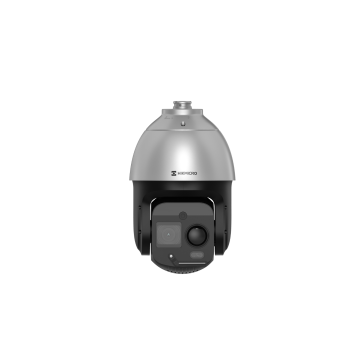
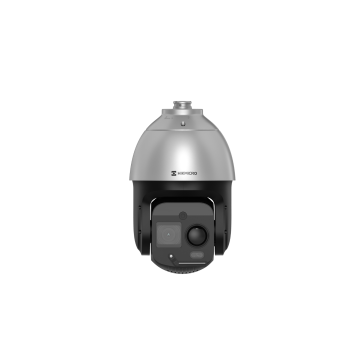
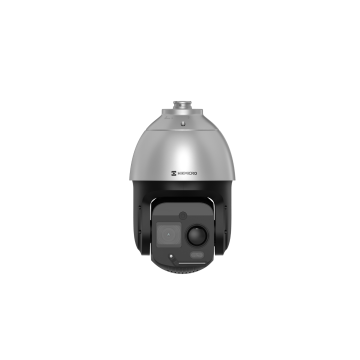
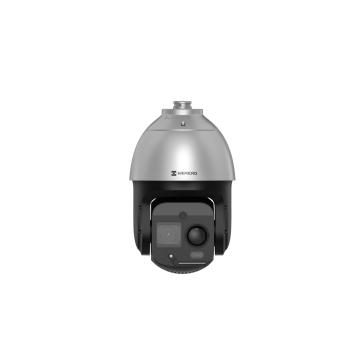
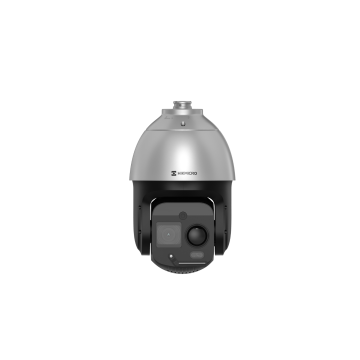
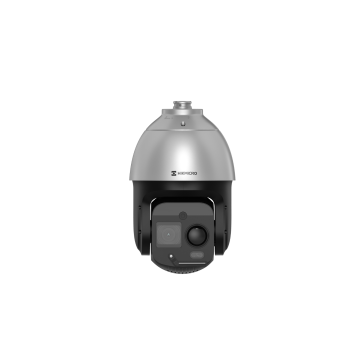
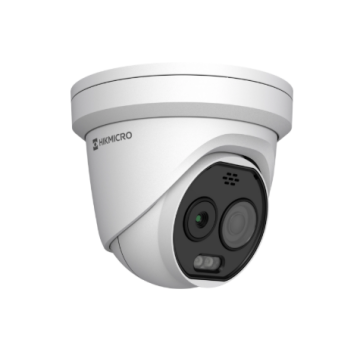

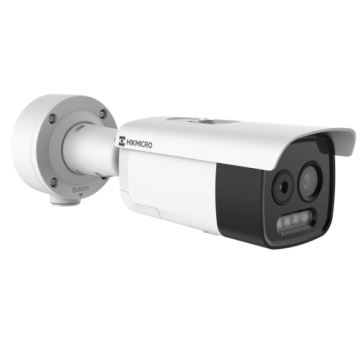

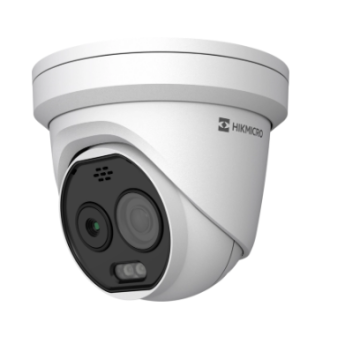

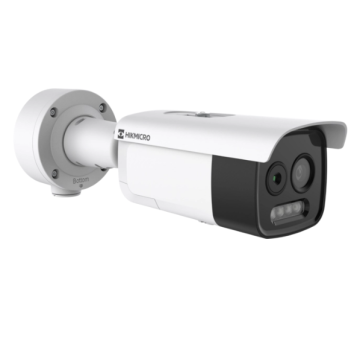
GUIDE
IP Thermal Imaging Cameras - When Conventional Cameras Reach Their Limits.
Thermal imaging cameras ensure reliable detection over long distances, even in complete darkness and difficult weather conditions. Objects, vehicles or people are detected based on the outgoing thermal radiation, so that, unlike conventional surveillance cameras, no ambient light is required. When even the latest technologies such as Lightfinder or software for noise reduction fail in total darkness, IP thermal imaging cameras can provide visibility even under the most unfavorable ambient conditions.
In security technology, powerful surveillance cameras equipped with many functions are now used in various versions (digital/analog). All of them reach their limits when it comes to capturing people or objects in poor lighting conditions (darkness, fog, etc.). The now very easy-to-operate thermal imaging cameras reliably fill this gap and have therefore established themselves in many fields of application.
Structure and Function of Thermal Imaging Surveillance Cameras
In image capture and also in the digital process of image conversion, an IP thermal imaging camera differs in principle only slightly from conventional cameras. The only difference is the wavelength of light. The spectral range of light visible to us is followed by the long-wave range of heat or infrared radiation. An IP thermal imaging camera has the task of capturing this radiation and converting it into an image visible to humans.
The detector for the infrared radiation collected by the lens is a sensor whose material properties also determine the wavelength range in which it is most sensitive. The detector cells of an IP thermal imaging camera are only a few micrometers thick and consist of a material whose resistance changes very strongly depending on the incident heat intensity. This creates a voltage drop, which is registered as a measurement signal by the downstream circuit. The thermal radiation, measured as different intensity values, is initially displayed by the IP thermal imaging camera as a grayscale image with usually 256 gray levels. However, the human eye is not able to perceive these minimal intensity differences. Therefore, the digital signal processor of the IP thermal imaging camera converts the image into a so-called false-color display. The individual gray levels are converted into a color spectrum that is physiologically easier for humans to distinguish. Based on the displayed color of the object, its heat intensity can be inferred.
In practice, the color blue is usually assigned to cold temperature ranges and the color red to warm temperature ranges. This produces the typical image known from film, television and surveillance technology. However, the visualization of infrared radiation can also be done with a different color assignment.
IP thermal imaging cameras that are integrated into a network also offer the features mentioned above. An IP thermal imaging camera also provides functions that are likewise available on conventional cameras. The video streams are therefore transmitted and stored in the standardized H.264 format or as Motion JPEG. IP thermal imaging cameras are available in various designs, for example as Dome Camera or as Turret Camera. Portable models are also available.
Advantages and Disadvantages of IP Thermal Imaging Cameras
The decisive factor for using an IP thermal imaging camera in surveillance technology is the ability to operate in complete darkness. Since thermal radiation penetrates even fog and smoke, objects can still be made visible in this way when conventional cameras fail. Another major advantage is the enormous range of IP thermal imaging cameras. High-performance devices are capable of detecting a person at a distance of up to 10 km. The scannable surface area is very large. In this way, temperature differences can be clearly displayed with an IP thermal imaging camera even at greater distances. .
A disadvantage is the currently still relatively low resolution of IP thermal imaging cameras. Typical image formats range from 160 x 120 to 640 x 480 pixels. Only correspondingly expensive thermal imaging cameras are currently able to display a resolution of 1280 x 960 pixels through micro scanning.
It should also be noted that thermal imaging cameras only permit conclusions about the surface temperature of the measured object.
Tips for the Practical Use of IP Thermal Imaging Cameras
Thermal imaging cameras used in security technology are usually designed for outdoor use. Nevertheless, care should be taken to mount them in a weather-protected position. Rain, snow or dust falling directly in front of the lens of the IP thermal imaging camera leads to incorrect measurements, as these are then misinterpreted as measurement objects.
Furthermore, direct sunlight (thermal radiation) should be avoided. To detect temperature differences, it is advantageous to operate the IP thermal imaging camera in false-color mode. For a simple visual aid at night, on the other hand, grayscale display has proven its worth.
Well-known manufacturers of thermal imaging cameras include companies such as FLIR, Axis and Eneo. Here in the GermanProtect online shop you will find a wide selection of IP thermal imaging cameras from these and more thermal imaging specialists.
FAQs on Thermal Imaging Cameras
How much does an IP thermal imaging camera cost?
Prices for IP thermal imaging cameras depend on various criteria such as the design, the resolution and the available functions. Many models are available in a price range between 500 and 600 euros.
What does FLIR mean?
FLIR has two different meanings. Flir is the name of Flir Systems, a company that manufactures thermal imaging cameras. FLIR is also the abbreviation for “Forward Looking Infrared”. It is an imaging method that can detect, analyze and process infrared waves.
What can thermal imaging cameras do?
Thermal imaging cameras are able to detect and display the infrared or heat radiation emitted by objects, animals and people. The different heat ranges are displayed in various shades of grey, but can also be shown as false colors. Thermal imaging cameras can also be used where it is too dark for normal cameras.
How does a thermal imaging camera work?
A thermal imaging surveillance camera uses thermography to generate images of heat sources in the infrared range. Hence the name thermal or thermal imaging camera. Thermal imagingcameras register thermal energy, i.e. heat from people, animals or vehicles, and present the information as a heat signature. The advantage of a thermal imaging camera in video surveillance is early detection of possible intruders at long distances, where an optical surveillance camera fails. A thermal imaging camera can detect regardless of the weather. I.e., whether there is heavy rain, snowfall or fog, where a normal surveillance camera can no longer see anything, detection with a thermal imaging surveillance camera is still possible. Even with heavy smoke, detection through the smoke wall is possible, which is an enormous help for the fire service and rescue teams, for example. This is also where the slogan for thermal imaging cameras comes from: “making the invisible visible.”
What does a thermal imaging camera measure?
A thermal imaging camera measures the thermal energy (heat emissions) of all heat sources such as people, animals and vehicles in the image area in the infrared range and displays these as visible heat signature images. Thermal imaging cameras can also measure the temperature at predefined points in the image area and, for example, trigger an alarm if the temperature rises rapidly.
What can you do with a thermal imaging camera?
With a thermal imaging surveillance camera, thermography (heat source detection) enables detection of people, animals or vehicles over large surveillance areas and distances, regardless of weather conditions such as heavy rain or snowfall, as well as fog and smoke. Thermal imaging surveillance cameras are also used in video surveillance where temperature measurements and fire detection are required.
Which is better, a night vision device or a thermal imaging camera?
For video surveillance, a thermal imaging camera is better due to its large detection range and independence from the prevailing weather conditions on site. A night vision device cannot see through fog, rain, heavy snowfall or smoke, but thermal imaging cameras can.