

IFOV
IFOV
The abbreviation IFOV stands for “Instantaneous Field of View”, which translates to “momentary field of view”. In connection with thermal imaging cameras the IFOV describes the possible geometric resolution. The IFOV is determined by the detector area or the number of pixels and the focal length of the lens. The focal length of the lens determines the field of view, which is also referred to as FOV (Field of View).
The IFOV is stated in mrad (milliradian), a unit of angular measurement. The rule is: the smaller the number of pixels, the higher the IFOV. The higher the focal length of the lens, the lower the IFOV.
Example: The detector offers a resolution of 320 by 240 pixels. The FOV of the lens is 32 degrees by 23 degrees. Note both the horizontal and vertical pixel count as well as the horizontal and vertical FOV. The result is an IFOV of 1.7 mrad.
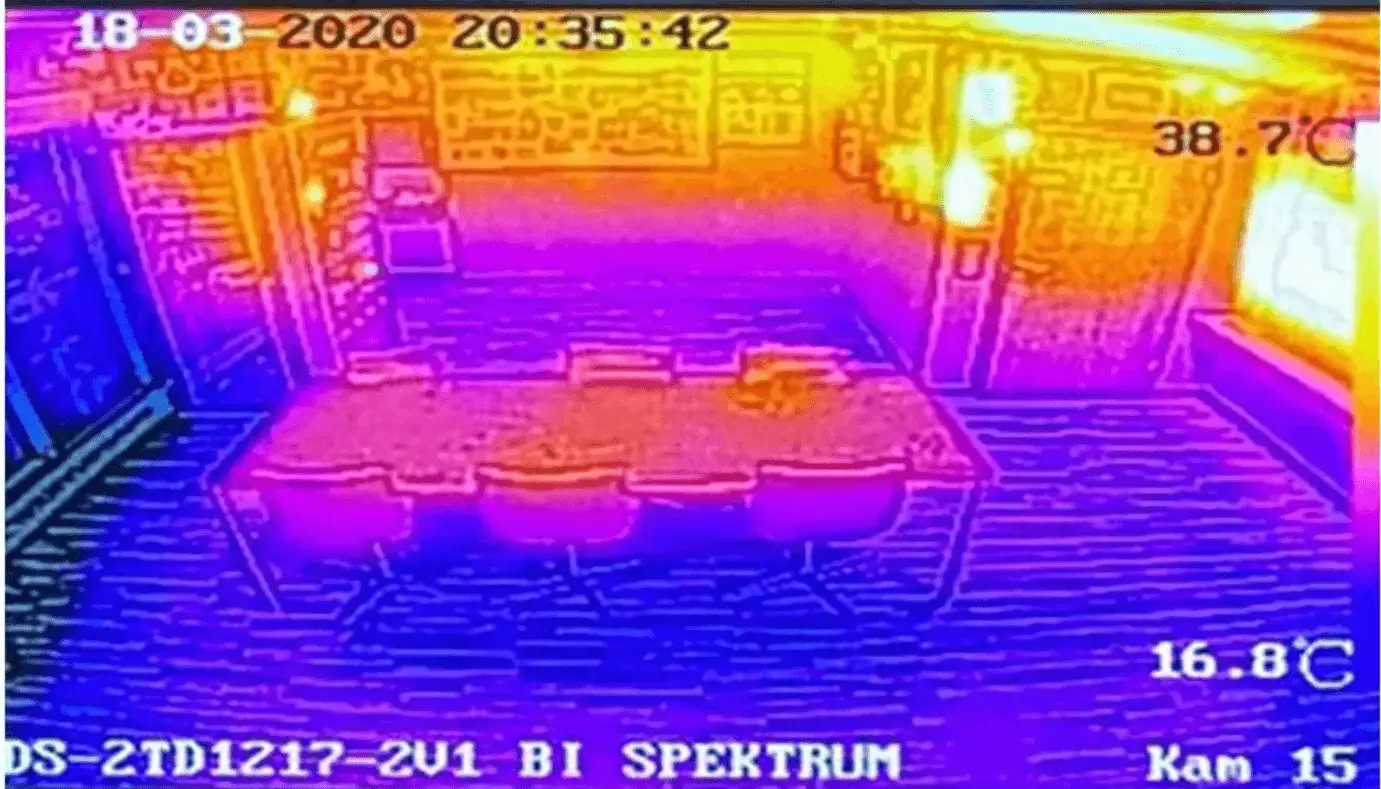
Detector and Lens Determine the IFOV
The field of view of a thermal imaging camera depends on the built-in detector as well as the lens used. The rule is: with the same detector, a wide-angle lens covers a wider field of view compared to a telephoto lens.
With some thermal imaging cameras that have a low pixel count, an attempt is made to compensate for the accuracy by using a telephoto lens and the associated narrowing of the image section. This reduces the IFOV, while the efficiency increases.
A Lower IFOV Is Better
With regard to the efficiency of a thermal imaging camera, a low IFOV is preferable to a higher IFOV. This criterion can be used to compare different thermal imaging cameras. For example, there are cameras with an IVOF of 5 mrad and more. Other devices have a value of only slightly above 3 mrad. The corresponding values can be found in the cameras' data sheets.
The smallest object that the camera can still detect is referred to as the measurement spot. This is also stated in mrad.