

Securing residential and commercial buildings against burglary can be done in several ways.
Windows and walls are especially important to consider.
In addition to mechanical reinforcements, electronic security also plays an important role.
Although the number of break-ins has decreased somewhat in connection with Corona and the longer time people have spent at home due to home office work, offenses of this kind are still widespread and can basically affect anyone, whether they live in the city or in the countryside.
Very little is actually needed to deter burglars from their plans. You simply should not make it unnecessarily easy for them. Various precautions are recommended for this. In this context, the first thing to mention is securing one of the most important points of entry for burglars: the windows.
Resistance class of windows
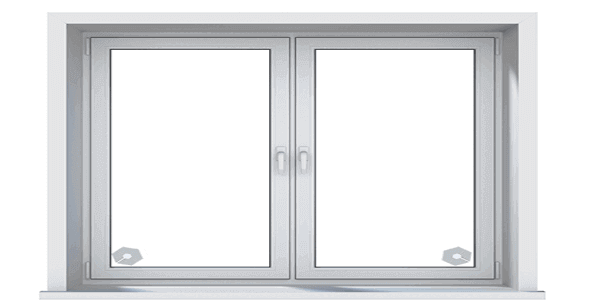 Whether you are planning a new build or considering retrofitting existing windows: make sure you choose a sufficiently high security standard. According to DIN EN 1627, a distinction is made between eight different resistance classes. The abbreviation RC stands for "Resistance Class".
- RC 1
- RC 1 N
- RC 2 N
- RC 2
- RC 3
- RC 4
- RC 5
- RC 6
Classes RC 1 to RC 3 are mainly used in private settings, while classes RC 4 to RC 6 are recommended for commercial properties.
The police recommend at least resistance class RC 2 for private properties, which is characterized by mushroom-head fittings, lockable window handles and burglary-resistant glass of category P4A. In some cases, and when particularly valuable property needs protecting, for example, RC 3 windows may also make sense in private settings; compared with RC 2 windows, they feature additionally reinforced category P5A glass. For upper-floor windows that offer no standing area and that burglars can only reach with a ladder, RC 1 windows are sometimes sufficient. For commercial properties, resistance classes RC 4 to RC 6 should be used.
Protecting with sturdy walls
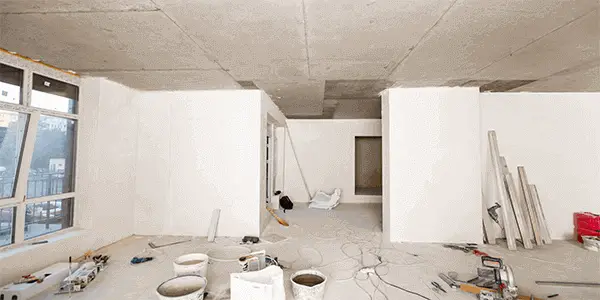
Especially in commercial properties and in agriculture, lightweight construction walls are often used, which offer only insufficient protection against break-ins. Here too, it is important to use at least break-resistant materials of resistance class 2 as described in DIN EN 1627.
If equipping with new elements is not possible, subsequent reinforcement may also be an option. In this case, it is possible to focus on certain particularly vulnerable areas and protect the remaining areas with supporting measures such as burglary detectors.
Alarm system and electronic security
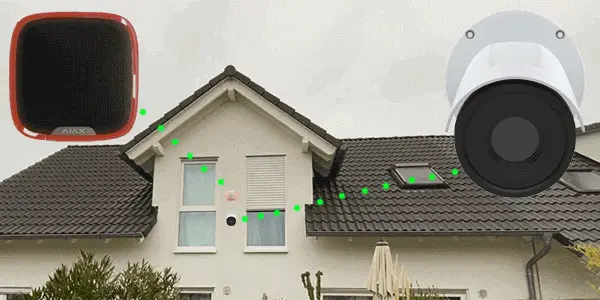
In addition to mechanical protection with burglary-resistant materials, electronic security systems are an important supplement to building protection. Using alarm systems and surveillance cameras not only protects against intruders but also deters potential perpetrators before a crime is attempted.
Intelligent surveillance cameras also make it possible to recognize people, which makes it easier to solve a crime after it has occurred.
Depending on the type of property and the terrain, different kinds of alarm systems and surveillance cameras make sense. If, for example, the goal is to cover large areas over long distances, wireless alarm systems and IP cameras with zoom functions can be useful.
Adding hazard detectors creates a system that effectively protects your building and your grounds against break-ins.
Conclusion
Effective building protection requires both mechanical and electronic measures. In addition to using burglary-resistant windows and walls, alarm systems and surveillance cameras provide a high level of security against break-ins.
We would be happy to advise you on protecting your home and your commercial buildings. Our building security expert team is glad to be at your disposal.


