

Alarm Systems - Online Shop
Alarm System Category Overview:
Alarm Systems - Online Shop
Alarm System Category Overview:




Popular Alarm Systems from Our Range:
Popular Alarm Systems from Our Range:


Alarm System Guide:
Everything About Choosing the Right Alarm System, Features, Costs, and the Best Manufacturers
Alarm System Guide:
Everything About Choosing the Right Alarm System, Features, Costs, and the Best Manufacturers
What Is an Alarm System?
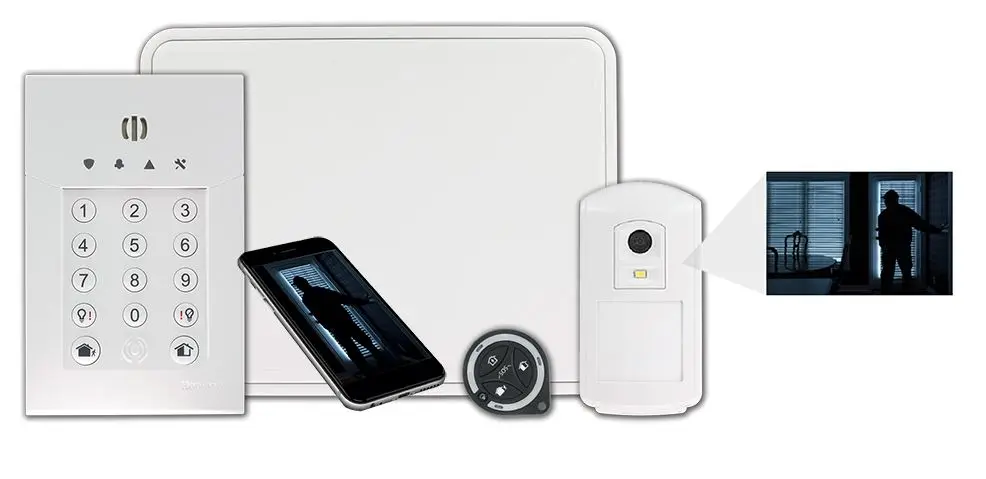
An alarm system, also called an intrusion detection system (IDS), is the umbrella term for several different electronic security components that work together to form a complete security protection system. In an emergency or in the event of a security breach, such as a break-in, this system can not only report the incident in progress to a monitoring center, which then informs the police, but also initiate countermeasures on site to deter the perpetrator by triggering a visual and an audible alarm. In the alarm state, a professional alarm system can not only trigger a siren, but also activate other countermeasures such as a fog machine or switch on the lights inside and outside the building. It is also possible to integrate smoke detectors into an alarm system and thereby create a fire alarm system, provided that the intrusion detection system is connected to a monitoring center. This multiplies the efficiency and response time of fire alerts. Saving lives moves significantly into the foreground in connection with an alarm system.
Conclusion: The main component of an alarm system is the alarm control panel, which acts as a kind of central or control computer in the alarm system and interacts with various detectors based on preprogrammed settings. All security components, including the detectors, dialers, surveillance cameras, and alarm control panel, together form an alarm system.
What Is an Alarm System?
An alarm system, also called an intrusion detection system (IDS), is the umbrella term for several different electronic security components that work together to form a complete security protection system. In an emergency or in the event of a security breach, such as a break-in, this security protection system can not only report the incident in progress to a monitoring center, which informs the police, but also initiate countermeasures on site to deter the perpetrator by triggering a visual and an audible alarm. In the alarm state, a professional alarm system can not only trigger a siren, but also activate other countermeasures such as a fog machine or switch on the lights inside and outside the building. It is also possible to integrate smoke detectors into an alarm system and thus implement a fire alarm system, provided that the intrusion detection system is connected to a monitoring center. This increases the efficiency and response time of fire alerts many times over. Saving lives moves significantly into the foreground in connection with an alarm system.
Conclusion: The main component of an alarm system is the alarm control panel, which acts as a kind of central or control computer in the alarm system and interacts with various detectors based on preprogrammed settings. All the security components, namely the detectors, dialers, surveillance cameras and the alarm control panel, together form an alarm system.
Frequently Asked Questions from Our Customers (FAQ)
What are the costs of an alarm system for a house or an apartment?
The cost of an alarm system depends on many factors. These factors start with the manufacturer. Is it a renowned provider that offers durable security products in line with German quality standards, norms and certifications? Or is it an overseas producer whose compliance with these criteria cannot be verified, but who above all offers the product as cheaply as possible?
Another factor in calculating the cost is the size of the property and how far the owner is willing to go to protect it. A risk analysis by a specialist installer in advance can save a lot of worry and money. Regardless of how many doors and windows a house has and how many of them are to be secured with alarm sensors in order to achieve seamless and efficient alarm monitoring, it makes a difference whether the property is located on a busy street or at the edge of a forest.
As a layperson, you are often not aware of many sources of risk, and if you are, you lack the knowledge of which alarm component to use to counter them. A particular type of motion detector does not always achieve the same effectiveness in all rooms.
That is why, as a specialist security technology company, we consider many providers that offer an online configuration tool for alarm systems, with which the customer can buy an alarm system immediately, to be untrustworthy toward the customer.
Only a few online platforms offer the expertise and know-how to advise a customer remotely. A high-quality alarm system with outdoor sensors and alarm verification for a single-family home of up to 200 square meters starts at 3,500 euros and, depending on effectiveness, number of sensors and installation effort, can cost up to 9,000 euros.
A purely wireless alarm system for this floor area can cost between 1,500 and 5,000 euros. A one-hundred-percent accurate and professional statement is not possible without knowing the conditions and the customer's requirements in advance.
Our staff will be happy to assist you with a precise cost estimate. You have the option of sending us floor plans by email, which allows us to carry out planning and tailor-made project design for you.
You will find all the details on this question in our matching blog post and detailed video on alarm system costs here.
Are alarm systems subsidized by the German government through the KfW?
The Kreditanstalt für Wiederaufbau (KfW) supports homeowners and self-employed people with construction projects such as burglary-resistant doors and windows, as well as the purchase of an alarm system. The KfW subsidizes all alarm systems that are certified according to DIN EN 50131 Grade 2 or better. Depending on the total amount of the renovation and construction measures, grants and low-interest loans can be applied for from the KfW. The subsidy is calculated based on the cost of the investment. For KfW funding to be approved, owners must observe a few important points.
- 1 Applying for KfW funding
To receive KfW funding, it is important to submit the funding application before the renovation or construction work begins. The contract terms of the KfW funding clearly state that "subsequent financing of projects that have already begun or been completed" is excluded. Accordingly, the project may only begin after funding has been approved. - 2 Who can apply for KfW funding?
Funding can be applied for by private individuals who own a single-family or multi-family home with a maximum of two residential units. Tenants of an apartment or a single-family home can also apply for funding, but they need the owner's consent if structural changes have to be made. Funding for commercially used premises is not possible; however, such protective measures can be financed very affordably through KfW programs for start-ups and small and medium-sized businesses. - 3 In which cases does KfW funding apply?
KfW funding applies to services related to the installation of alarm systems or surveillance systems, as well as other measures that contribute to building security and are listed under the funding item with the grant number KfW455-E. This investment grant is funded by the KfW with up to 1,600 euros and applies equally to the owner as well as to the tenant of the residential property.
Our tip: The funding for barrier reduction is listed with the KfW under the same grant number KfW455-E. A combined measure of security and barrier reduction can therefore make a lot of sense in order to receive higher funding. An approved KfW grant does not have to be repaid. As an alternative to the grant, a low-interest loan for age-appropriate conversion can also be applied for under the KfW product number 159.
An important point and requirement for a KfW grant is also that the installation of an alarm system is carried out by a certified specialist company. - 4 What funding is granted by the KfW?
The grant under KfW program 455-E (Age-appropriate conversion) is paid from the first euro invested, as long as the investment amount reaches at least 500 euros. The funding is 20% for the first thousand euros invested and 10% for every additional thousand euros above that. However, the maximum funding amount is 1,600 euros, calculated here from a total investment of 14,000 euros. - 5 Which alarm systems are eligible for KfW funding?
When selecting the alarm system, please note that not all alarm systems are eligible for KfW funding, but only those that meet at least the requirements of DIN EN50131 Grade 2 or better for burglary protection. As a rule, no-name manufacturers and cheap alarm systems do not meet these requirements. Both wired alarm systems and wireless alarm systems are eligible. Ask us, as a specialist company for burglary protection, and we will be happy to help you! - 6 Where do I submit the application for KfW funding for my alarm system?
The application for KfW funding is submitted at the KfW Grant Portal on the KfW website by registering online.
How important is an alarm monitoring connection for an apartment and a house?
The alarm monitoring connection of the alarm system to an emergency call and security service control center (NSL) is the finishing touch for an efficiently functioning security system and the best way to a carefree feeling of safety in your own four walls. The emergency call and security control center (NSL) monitors the system around the clock, 24/7/365 and ensures a quick response in case of danger. Above all, it sends targeted help to those affected.
Nowadays, convenient alerting via an app on your mobile phone is very popular, but for a danger alert system it is not quite as effective as one might think.
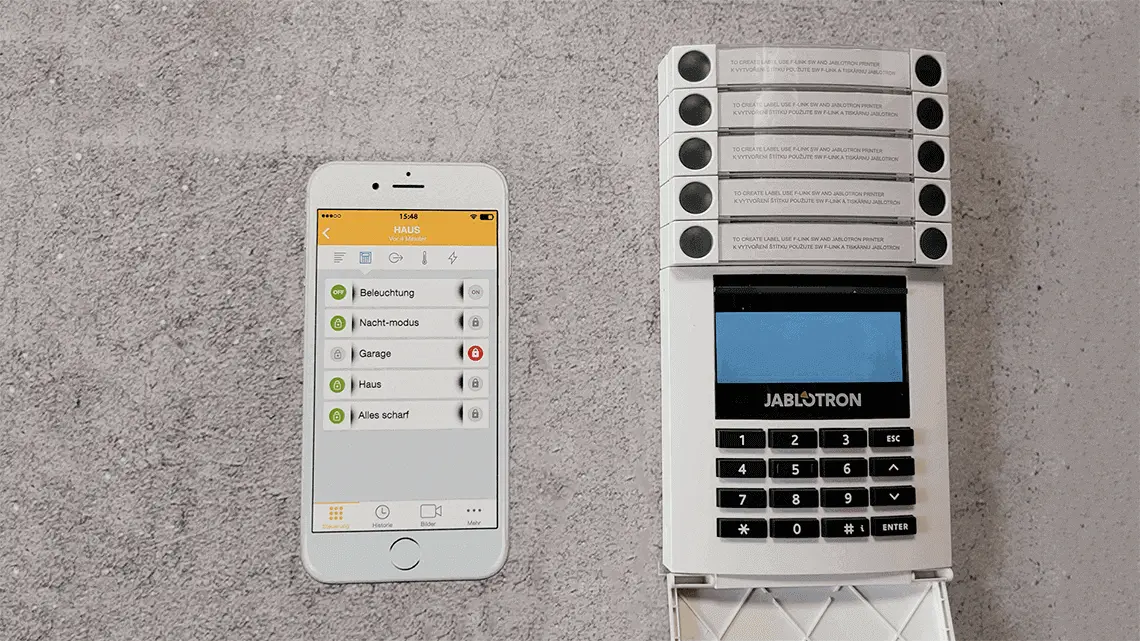
Imagine the following scenario: You are in the sauna, where it is hard to take a cell phone with you. By the time you notice the alarm notification, the house has already been cleaned out or burned down.
Situations like this can happen at any time in everyday life. With an alarm monitoring connection to the emergency call and security control center (NSL), when an alarm comes in, a response is triggered within fractions of a second, and the responsible emergency services such as police, fire department or ambulance are called to help.
With a system featuring video verification, the operator at the emergency call and security control center (NSL) can use the transmitted video stream to see whether it is a burglar or just the cat that has knocked over a vase. The leading alarm manufacturer Videofied offers a very great added value, especially for alarm-protected outdoor use with video verification.
We, ESA GmbH GermanProtect as a specialist company for security technology, offer our customers not only alarm systems but, of course, also an alarm monitoring connection to one of the most modern emergency call and security control centers (NSL) in Germany and Europe at very good terms. This way, we provide our customers with a complete package of security services from a single source. Our staff will be glad to advise you on a tailor-made alarm monitoring connection for your property.
Conclusion: For efficient all-round protection against burglars, an alarm monitoring connection is a must today and is strongly recommended not only by us as a specialist company, but also by the police. It can significantly improve the intervention time and, accordingly, the performance of the security system.
Should I install the alarm system myself or have a specialist company install it?
At this point, we generally advise always having an alarm system installed by a specialist company, the so-called installer, because a security system must not fail! After all, not only the protection of property depends on it, but also people's lives.
When so much is at stake, every factor of the security concept is crucial, such as the selection and reliability of the devices, correct mounting, and proper configuration for the particularities and requirements of the protected property. If even one factor is overlooked, protection against danger is not ensured.
Wireless alarm systems in particular do not look complicated at first glance, because the wireless connection of the individual components is considerably easier than having to run cables specifically for them, and the devices are accordingly ready for use within minutes.
This impression is deceptive, however, because installing an intrusion alarm system involves many mandatory steps. These steps include:
- Risk analysis of the property
- On-site wireless signal survey
- Planning the placement of the components
- Proper installation
- Verification of the detection range
- Setup and testing of the system
- Alarm monitoring connection of the alarm system to an emergency call center
- Customer training
- and finally, handover of the intrusion alarm system to the customer, including documentation.
Even with a wired alarm system, correct installation and the right choice of components are essential for reliable operation, because false alarms can be expensive.
In addition, during the site inspection before planning, the specialist can point out many security gaps and potential hazards and counteract them with a security concept tailored to them.
With regard to the warranty, maintenance and possible malfunctions as well, it is very important that the intrusion alarm system be installed by a qualified specialist company.
We, ESA GmbH German Protect, as a specialist installer for security technology, professionally support our customers with a complete service package from a single source, from consultation and planning to installation, training, alarm monitoring connection and maintenance contracts.
What does the term "forced sequence" mean for a home alarm system?
"Forced sequence" in connection with an alarm system means that an alarm is triggered only in the event of extraordinary occurrences. Forced sequence therefore requires that false alarms be reduced to a minimum
What does "VdS classification" mean for an alarm system, and which classes are there?
The VdS classification for alarm systems and their components indicates that the device has been classified by VdS Schadenverhütung GmbH after a thorough examination and meets not only certain quality criteria but also, depending on the classification from A to C, high security standards and reliability criteria.
VdS classifications
- VdS Home
Certification of an alarm system and its components according to VdS Home largely corresponds to VdS Class A. Classification according to VdS Home confirms to the customer that the product is a reliable security product tailored to the specific risk factors of a private residential environment, and that it differs significantly from cheap offerings in terms of design, security, durability and reliability.
- VdS Class A
The VdS A classification is divided into A-SH1 to A-SH3. Class A intrusion alarm systems (EMA) provide basic protection against attempts to defeat them, and the detectors connected to them meet a medium sensitivity level. Intrusion alarm systems classified according to VdS A are installed in applications such as households with a lower share of material assets.
- VdS Class B
The VdS B classification is divided into B-SG1 to B-SG3. Class B intrusion alarm systems (EMA) provide medium protection against attempts to defeat them, and the detectors connected to them meet a medium sensitivity level. Intrusion alarm systems classified according to VdS B are installed in applications such as households with an increased share of material assets or commercial properties with a basic or increased share of material assets.
- VdS Class C
The VdS C classification is divided into B-SG3 to B-SG6. Class C intrusion alarm systems (EMA) provide enhanced protection against attempts to defeat them, and the detectors connected to them meet an enhanced sensitivity level. Intrusion alarm systems classified according to VdS C are installed in high-risk applications.
In addition to quality and functionality, the advantage of a VdS-approved alarm system is that insurers rate it as reliable. Such alarm systems significantly reduce the risk of the insurance company refusing to pay part of the claim in the event of a burglary, which can definitely happen with an inferior alarm system.
In addition, installing a VdS-approved alarm system leads to a considerable reduction in your homeowners' or renters' insurance premium.
Ultimately, though, thanks to its quality, a VdS alarm system contributes especially to a reassuring sense of security for you and your loved ones around you.
Wired alarm system or wireless alarm system?
Wireless and wired alarm systems both have advantages and disadvantages, in terms of professionalism, efficiency and, of course, cost.
Wireless alarm systems always cost less to install than wired alarm systems and can be quickly fitted in a house or apartment without any special effort. However, the ongoing costs for annual maintenance are considerably higher than for a wired alarm system, because the batteries in the detectors have to be replaced. It is also important to check the construction of the walls inside the building before installing a wireless alarm system, with regard to wireless range and wireless connection stability. If the wireless connection is not stable enough or is insufficient in general, wireless repeaters must be used, which incur additional costs. The wireless range figures given by manufacturers are always guide values under optimal conditions and depend heavily on the construction of the building.
Adding components to a wireless alarm system later on is often quick and uncomplicated.
The reliability of wireless alarm systems varies from manufacturer to manufacturer. Since the market is flooded with "disreputable" manufacturers, you should pay attention to which manufacturer it is and whether the wireless alarm system is sold by a specialist dealer. Compared to a cable connection, a wireless connection is fundamentally more susceptible to interference and, depending on the type of encoding, also less secure against tampering during transmission. It is therefore understandable that, so far, no wireless alarm system has received a VdS certification other than VdS Home.
Wired alarm systems are, of course, more expensive than wireless alarm systems in terms of installation costs because of the cabling. However, a wired alarm system offers significantly more connection options for detectors and door/window contacts, locking contacts and blocking elements, which are very important for compliance with forced sequence control. A wireless alarm system offers none of this.
In return, wired alarm systems offer precisely those security features that are ultimately relevant for an alarm system.
The options for programming multiple partitions are also more varied with a wired alarm system.
In general, wired alarm systems are more secure and more reliable in terms of functionality and false alarm rate, and are therefore superior to wireless alarm systems. Because of the possibility of certification according to VdS as well, a wired alarm system is absolutely unrivaled and the system of choice for professional, certified burglary protection. For this reason, specialists always recommend a wired alarm system when planning a new build.
| Wired Alarm Systems | Wireless Alarm Systems | Hybrid Alarm Systems | |||
| Advantages | Disadvantages | Advantages | Disadvantages | Advantages | Disadvantages |
| More secure than wireless alarm systems | Higher installation costs | Easier installation | Less secure | Can be a good compromise | No VdS certification |
| VdS certification possible | Removal is more labor-intensive, which makes reuse more difficult | More cost-effective installation | No VdS certification | ||
| More connection options than wireless alarm systems | In rental apartments, the landlord's consent is required | Easy to remove and reuse | Higher ongoing operating costs | ||
Conclusion of the comparison between wireless alarm systems and wired alarm systems in the home:
A wireless alarm system is easier to install and therefore more cost-effective than a wired alarm system. However, a wired alarm system offers significantly more detector connection options, which can be highly relevant for professional property protection.
To secure an apartment or a smaller house, a wireless alarm system is often sufficient. For larger houses or commercial properties, however, the decision should always favor a wired alarm system.
For new construction projects, we generally recommend a wired alarm system. Our staff will be happy to provide you with detailed advice.
What exactly is an alarm control panel and what is its purpose?
The heart of an alarm system is the alarm control panel, which manages and controls all alarm detectors connected to the system and monitors them for correct operation. All detectors contact the alarm control panel at regular intervals to report their status. Example: "I am infrared detector 9 on line 1 and am functioning correctly on all parameters."
If the infrared detector's function is impaired or it does not send regular status messages, the alarm control panel switches to fault status and reports it. If the infrared detector is tampered with by external influences, the alarm control panel switches to tamper status, shows the damaged detector on the display and reports it.
The alarm control panel is usually responsible, in the alarm or tamper state, for triggering the alarm and forwarding the information accordingly to the decision-making and response points, such as the emergency dispatch center, police, fire department or owner, which were programmed in the alarm control panel beforehand. The information is transmitted via a so-called dialer, which is located either as a circuit board inside the alarm control panel or as a standalone add-on device outside the panel.
The alarm control panel can have an integrated keypad with a display, which is used to operate it and which can also display messages visually.
In addition to the power supply, all alarm control panels from reputable manufacturers have a battery, the so-called UPS (uninterruptible power supply), which, depending on the make, can continue to power the panel for up to 72 hours during a power outage. In a wired alarm system, the backup battery continues to supply power not only to the alarm control panel, but to all detectors and components connected to it. The duration of the emergency power supply always depends on the quality and certification of the alarm system.
Conclusion: The alarm control panel is the brain of an alarm system and is responsible for controlling all components, triggering alarms and the resulting notifications.
Can I connect a smoke detector to my alarm system?
Smoke detectors used in connection with an alarm system are usually system-specific, which means that smoke detectors from third-party manufacturers cannot be integrated into the system. With almost all manufacturers, the smoke detectors can be integrated into the alarm system via wiring or wirelessly.
The advantage of integrating smoke detectors into an alarm system is that, once they are integrated into the alarm control panel, all smoke detectors are automatically transformed into fire alarm systems and can forward the notifications to an emergency dispatch center, the so-called emergency call and security service control center (NSL), .
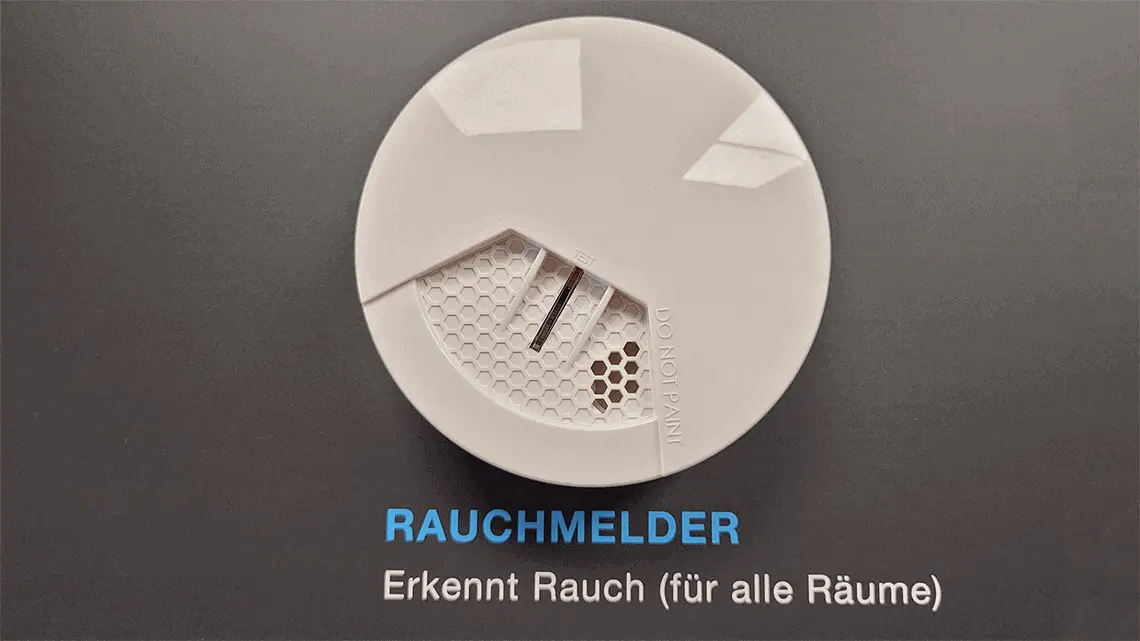
All alarm systems from reputable manufacturers can distinguish between an intrusion alarm and a fire alarm and forward the corresponding message as such to an emergency call and service center (NSL), which significantly shortens the response time of the emergency services and saves lives.
At this point, it is important to note that fire warning systems and fire alarm systems must not be confused with one another.
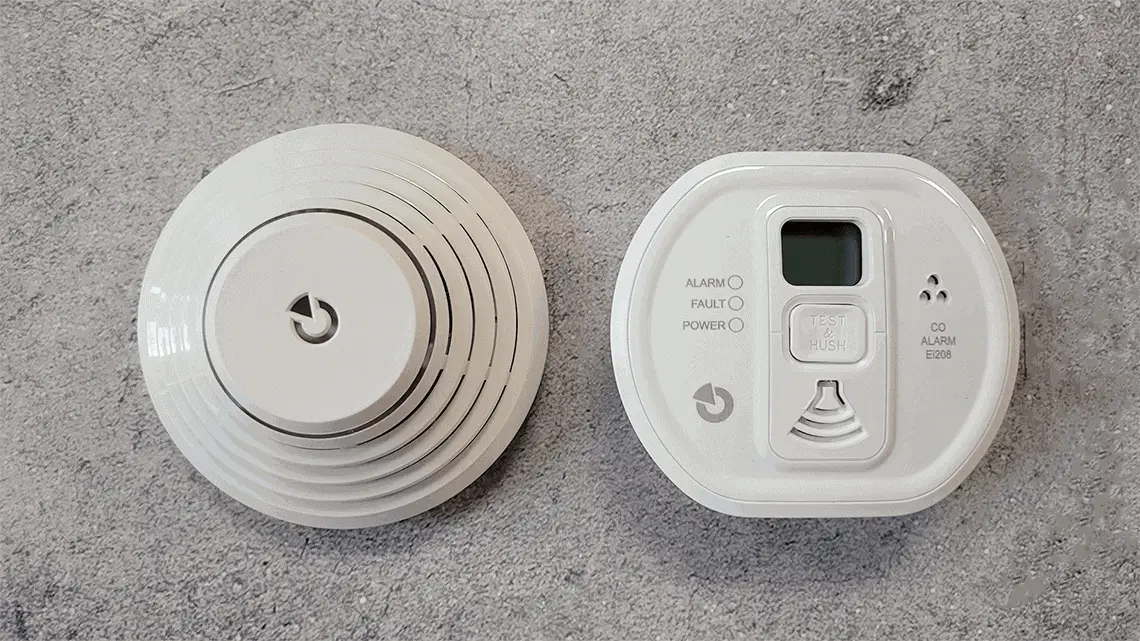
A fire warning system first reports the fire to the emergency dispatch center, which in turn informs the fire department. In the case of a false alarm, this process can usually still be stopped within the first 1-3 minutes.
A fire alarm system is directly linked to the fire department and, when an alarm is triggered, the response can only rarely be stopped, which in the case of a false alarm can result in considerable costs.
Conclusion: integrating smoke detectors into an alarm system, so that a reporting procedure can be carried out in the event of a fire, adds considerable value not only for your own safety, but also for the security of the protected property.
A smoke detector that merely sounds an audible signal in the event of a fire, with no one there to hear it because nobody is home, is of little use.
By contrast, one or more smoke detectors that can report and send notifications via an alarm system, so that help can be called even when you are away, provide a sense of security.
Latest News on Alarm Systems

Preventing Truck Fuel Theft with a Fuel Cap Alarm
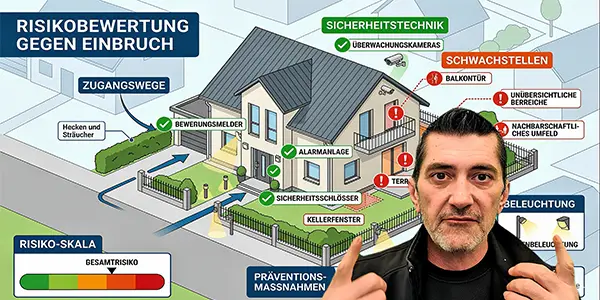
Installing a Home Alarm System Yourself – Part 5: Risk Assessment

Installing an Alarm System in Your Home Yourself, Part 4: Perimeter Surveillance
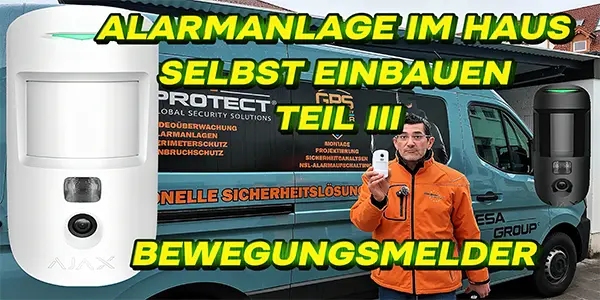
Installing an Alarm System in Your Home Yourself, Part 3: Indoor Motion Detectors
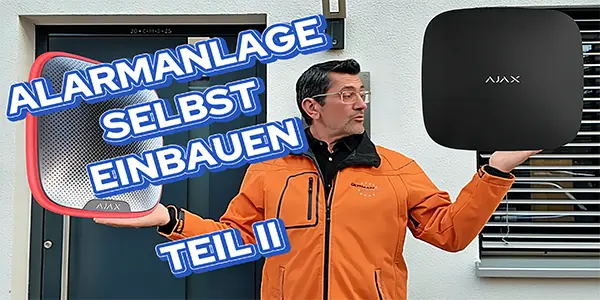
Installing an Alarm System in Your Home Yourself, Part 2: The Alarm Control Panel
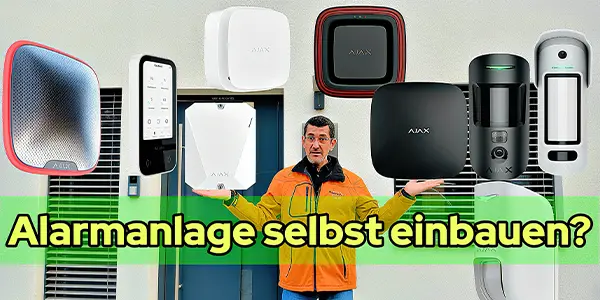
Installing an Alarm System in Your Home Yourself - Explained from A to Z
Types of Alarm Systems for Houses and Apartments
Important Categories of Alarm Systems

Types of Alarm Systems for Houses and Apartments
Alarm systems differ in their operating mode between wired alarm systems and wireless alarm systems. For both types, our online shop offers a wide selection of products from various name-brand manufacturers. As a specialist installer, we always recommend installing a name-brand alarm system in order to ensure the necessary reliability.
Wired Alarm Systems in Houses and Apartments
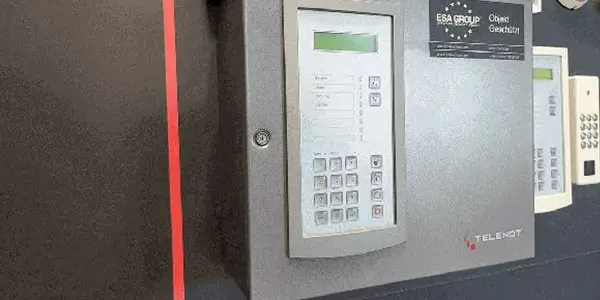
In a wired alarm system, that is, a hardwired one, all components are connected to each other by cable and are usually connected to a BUS system ( see Figure 1 ). All components are powered by the alarm control panel. Communication takes place exclusively over a cable connection and is accordingly more resistant to interference and failure than wireless systems, for example. All VdS-approved alarm systems are exclusively wired.
The advantages of a wired alarm system therefore lie in the reliability of its functionality. Accordingly, the VdS approvals required by insurers can, depending on the classification, only be achieved with a wired alarm system. A disadvantage of wired alarm systems is the higher cost caused by the more complex installation.
Wireless Alarm Systems in Houses and Apartments
A wireless alarm system is a convenient way to secure a property and offers many conveniences, such as control and push notifications via an app. All detectors communicate with the alarm control panel wirelessly and can be mounted quickly and without any special effort.
Programming a wireless alarm system ( see Figure 2 ) is often intuitive and accordingly easier than with a wired alarm system, but it does require technical understanding. A wireless alarm system for a single-family home, for example, can be set up and armed ready for operation within a few hours. However, with a wireless alarm system, you need to pay attention to the wireless range before the final installation, as it can be greatly reduced by the nature of the walls. If the wireless range between the detector and the alarm control panel cannot be consistently guaranteed at an optimal level, the quality of the wireless connection between the individual wireless components should be improved by using a wireless repeater. For rented apartments in particular, wireless alarm systems do not require the landlord's approval, since no structural changes are necessary for installation. When moving out of the rental property, the wireless alarm system can be quickly removed for reuse. A wireless alarm system usually does not have VdS certification, although the individual components sometimes have VdS Home certification, which, however, has no relevance for commercial security.
LEADING ALARM SYSTEM MANUFACTURERS
Leading Alarm System Manufacturers in Our Product Portfolio
As a specialist company, we test every manufacturer in the field of alarm security thoroughly for months before it is added to our product portfolio. We do not recommend components from any manufacturer to our customers, and we certainly do not install them, until we have tested them for functionality and reliability. During the review, which lasts several months, our staff become familiar with the strengths and weaknesses of each system so that we can give customers the best possible advice. Thanks to our broad manufacturer portfolio, we can choose the most suitable manufacturer, the one with the best values for the customer's specific application and requirements. All alarm manufacturers in our range are installed in our showroom and can be tried out by our customers. We don't just talk about it, we demonstrate the products to our customers! Our staff are certified for all the manufacturers we offer, so our know-how ensures that customers receive the best possible alarm solutions.
AJAX SYSTEMS
AJAX Systems - Alarm Systems
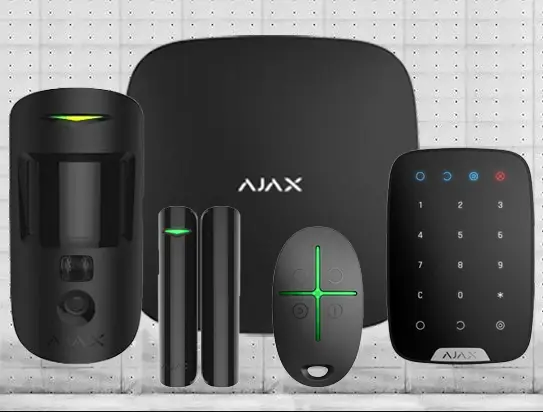
When securing your building, there are a large number of potential weak points. Thanks to Ajax security systems, you can cover them: the DoorProtect door/window contact detects unauthorized opening of doors, and if a window is broken, the GlassProtect system sounds the alarm. Unauthorized entry is detected by MotionProtect, and in the event of an alarm, the MotionCam also takes a photo. The Ajax security system works wirelessly and communicates over four different channels (Ethernet, Wi-Fi, GSM, WCDMA). An encryption algorithm protects the data from interception or forgery by third parties. A backup battery in the detectors supplies the system with emergency power for up to 16 hours during a power outage, and the device authentication of the detectors effectively protects against device spoofing.
Telenot Alarm Systems
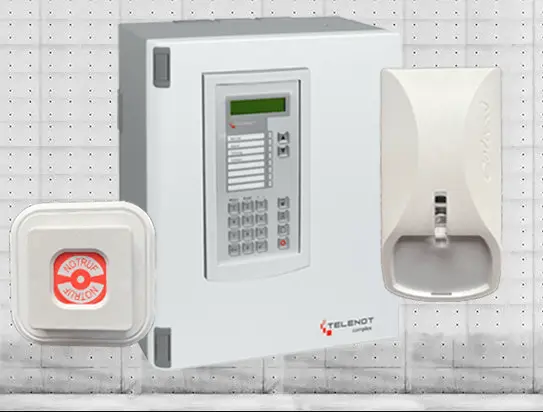
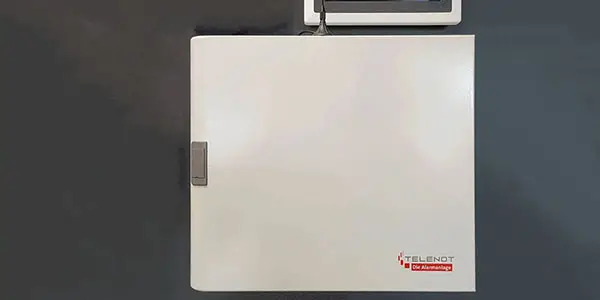
The Telenot product portfolio is very extensive and includes devices and solutions in the areas of transmission technology, emergency call systems, intrusion detection technology, detectors for intrusion alarm systems, signaling devices, switching equipment for access control, wireless intrusion detection technology, fire alarm technology, distributors and accessories, as well as telecontrol technology. In addition to individual components, TELENOT offers a selection of alarm system packages that give customers perfectly matched, certified alarm systems for reliable protection of properties and buildings. Discover the user-friendliness and flexibility of TELENOT security technology now in our online shop.
Jablotron Alarm Systems
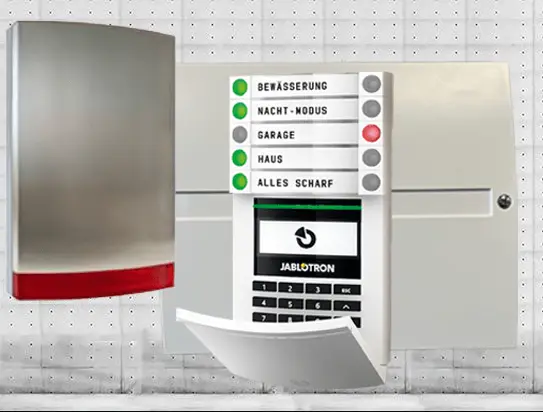
The first step is a high-quality alarm system. Jablotron has been developing and producing unique alarm systems for 25 years now. That is one of the reasons why they are so easy to operate and come with numerous innovative features. Next comes professional installation. This is carried out exclusively by our partners, who are regularly trained and certified. For this reason, everything works exactly as it should. The last recommended step is to connect your alarm system to an alarm receiving center (ARC). The contacts there can get in touch with you if something happens and send a security team to your protected property.