

Biometric Access Control
-
Product
range - Guide
GUIDE
Biometric Access Control
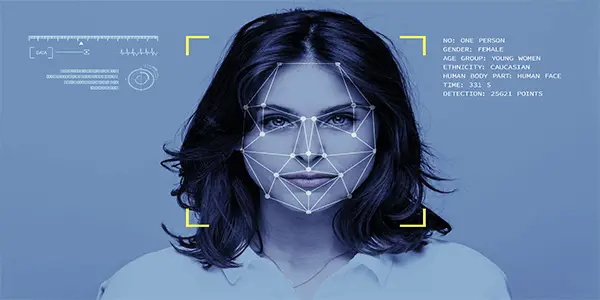
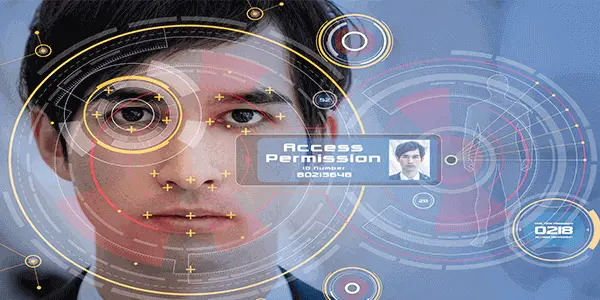
The conventional facial recognition known from video surveillance has undergone an enormous technological evolution over the past two years thanks to biometrics. This new capability of a surveillance camera to recognize a face (see Figure 2) using biometric parameters (see Figure 1) contributes significantly to the next stage of technological development in existing biometric access control systems.
Frequently Asked Questions (FAQ)
What is biometrics?
Mathematical algorithms enable the biometric capture of a person. Based on stored data such as images or fingerprints, a comparison between actual and target values is initiated for verification. If the live values match the stored values, the person is biometrically identified as that person.
Are biometric access control systems secure?
Biometric characteristics are so unique that they are even used worldwide as an authentication criterion for identity cards and passports. Among all modern access control systems in security technology, biometric access control is considered the most secure and most capable. In addition, biometric access control with facial recognition enables touchless access without a key.
Which biometric methods are used in security technology?
The following biometric control methods are relevant for security technology:
1. Most common are fingerprint or hand print identification via fingerprint or hand scanners
2. Facial recognition and identification systems via biometric access control or surveillance cameras
3. Retina and iris scanning via biometric access control
4. Voice identification for access control and safes
5. Vein scanners based on the vein structure of the back of the hand.
Are fingerprints biometric data?
Yes, fingerprints are among a person's biometric characteristics and are often used in security technology for secure authentication at access control points.
Are fingerprints the same on every finger?
No, each fingerprint of the respective finger on a human hand is unique and differs significantly from the other fingers. Accordingly, a person has ten different fingerprints.
Can identical twins have the same fingerprints?
No two people have ever been found to have identical fingerprints. Even identical twins have different fingerprints.
What are the most important biometric features that can be recorded?
A person's biometric features are divided into physiological characteristics and behavioral features.
The physiological characteristics include:
1. Finger geometry or fingerprint image and pore structure of the finger.
2. Hand geometry
3. Facial geometry
4. Eye, iris and retina; structure of the back of the hand.
5. Vein structure of the back of the hand
The behavioral features include:
1. Handwriting and writing characteristics of various letters
2. Lip movement
3. Voice, nuance and pitch
Are biometric data personal data?
Under the GDPR (General Data Protection Regulation), all biometric data that is captured by technical or technological processes and contributes directly or indirectly to identifying a person constitutes personal data.
Who may store biometric data and for what purpose?
Storing and using biometric data outside of government authorities, such as the police, BKA, LKA and BND, in the performance of their sovereign duties, is generally not permitted.
Exempt from this rule are access control systems used in commercial areas and institutions to ensure controlled access to the company's own premises or buildings. In this case, storing biometric images as well as fingerprints may only be used for comparison purposes and requires the written consent of the authorized person. The same rule also applies to biometric time-recording systems.
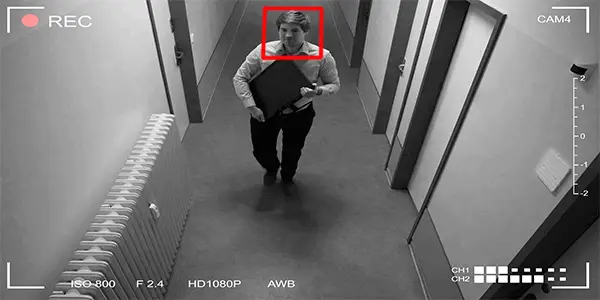
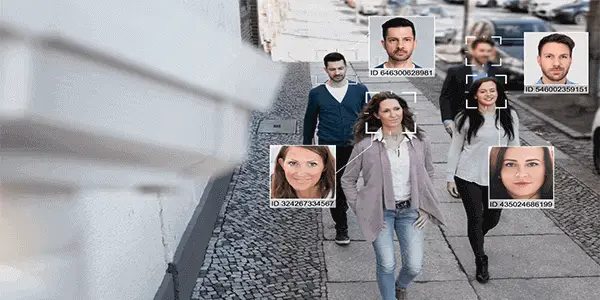
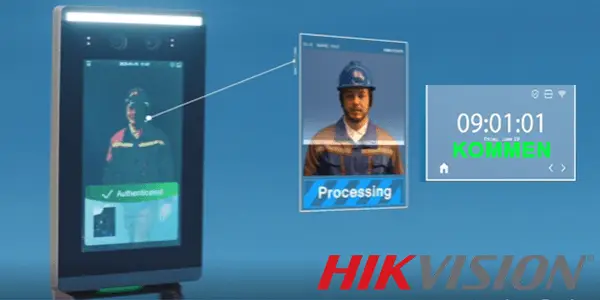
We no longer speak of ordinary facial recognition (see Figure 3), but of exact facial identification (Face Recognition) based on biometric data. Accordingly, modern surveillance cameras are not only able to capture and identify a face, but also to compare it with a stored database (see Figure 4) and trigger processes such as opening a door.
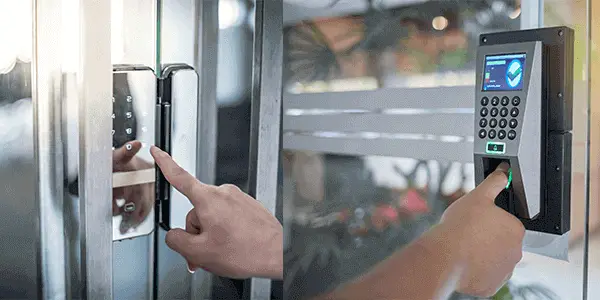
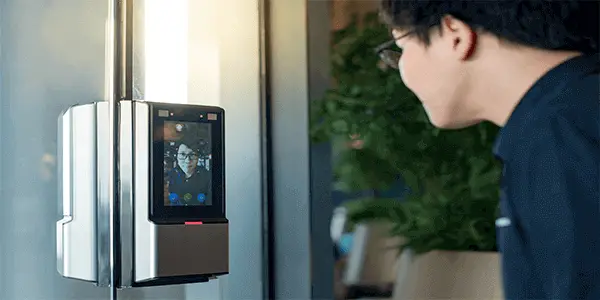
This technological achievement, originally developed for video surveillance, also opens entirely new horizons for security technology. A particularly significant effect on security technology can be seen in access systems, where a new era of modern and secure biometric access control using facial recognition begins. While previous authentication methods such as RFID cards, numeric code entry and fingerprint scanners require touching the access control devices for authentication (see Figure 5), modern biometric access control enables contactless access (see Figure 6) without compromising security-relevant authentication criteria.
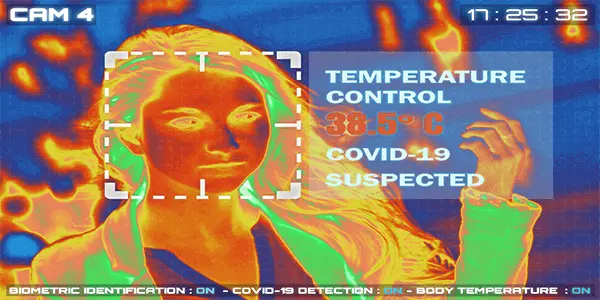
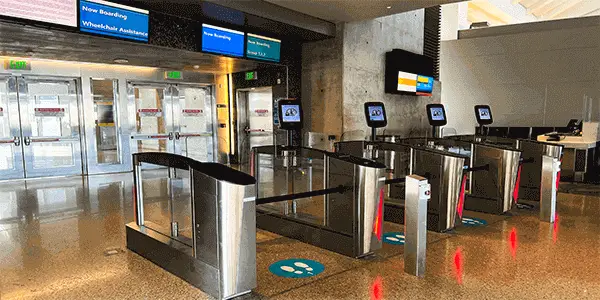
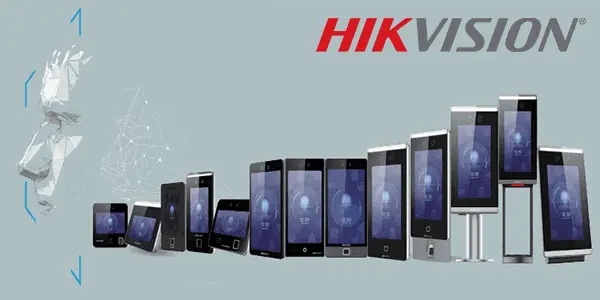
Especially during the pandemic, contactless access has proven to be very important for hygienic reasons compared to other access control systems. Right at the start of the pandemic, well-known manufacturers such as Hikvision and Dahua responded to the threatening situation by thoughtfully equipping their biometric access control terminals with additional significant features such as body temperature measurement and mask detection (see Figure 7) to help ensure compliance with hygiene rules. Especially for public areas such as hospitals, universities, banks, airports or train stations, the need for controlled access using facial recognition terminals has risen sharply. For example, turnstiles (see Figure 8) can be used to implement fully automated access points for multiple access controls, which very effectively prevents crowds from forming.
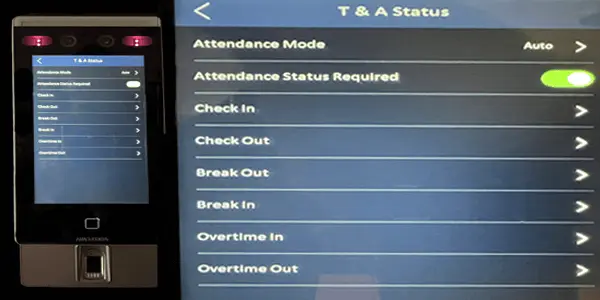
Biometric access control also offers versatile applications in commercial settings such as offices, company buildings or industrial facilities (see Figure 9). In addition to the secure authentication method of biometric facial recognition for contactless, controlled access, biometric access control systems also offer a wide range of additional functions that deliver high value in commercial settings and help save costs. For example, manufacturers such as Hikvision offer the option of equipping biometric access control with time and attendance functions (see Figure 10) for employees.
This means that not only controlled, secure access but also employee time tracking (see Figure 11) can be achieved with just one device. To ensure secure access authorization, biometric access control systems offer up to four different settings for identification, depending on the required security level.
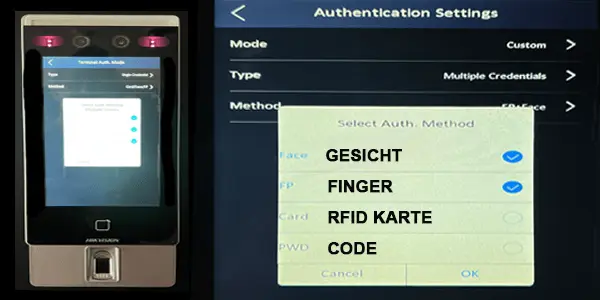
The biometric access control terminal can be set up with biometric facial recognition, numeric code, RFID card or fingerprint scan, either individually or with all four authentication methods (see Figure 12). Quadruple authentication is especially valuable and highly secure for high-security areas such as vaults.
How Facial Recognition Terminals Work
Most biometric access control terminals with facial recognition offer programming and configuration options as well as data storage (see Figure 13) directly on the device. The terminal therefore operates autonomously and can secure a single door. Enrolling a person for the later authentication process is done directly at the device. Biometric data such as images and fingerprints of the person can be quickly and easily enrolled and stored on the device within a few minutes. To create a biometric image for access control, the person must have their photo taken by the device. The fingerprint is also programmed on the device by scanning it over the fingerprint sensor and storing it on the device. Assigning an RFID card and numeric code (see Figure 14) can also be done at the terminal.
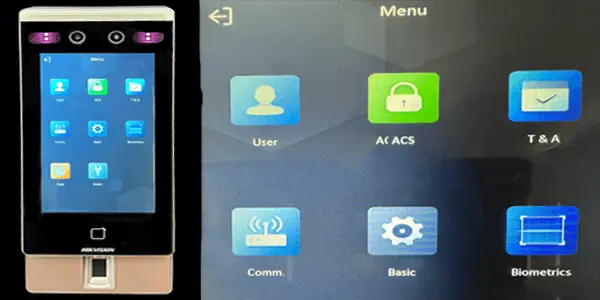
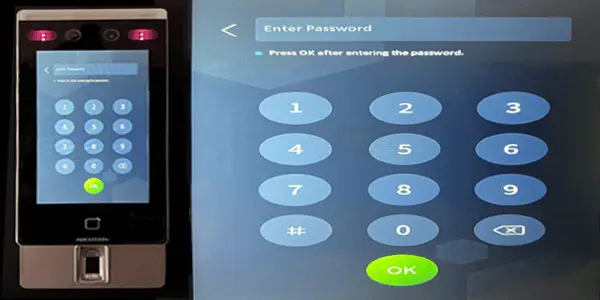
Additionally, it is possible to network several biometric access control terminals via a network and store the data and device settings in one central location in the building.
Centralization allows the settings to be programmed and access authorizations to be stored in one place and then transferred to all biometric access control terminals. Thanks to this intelligent centralization, security solutions and control options can be implemented easily, for example automatically deactivating the alarm system when entering a secured area by means of positive authentication.
How Biometrics Works
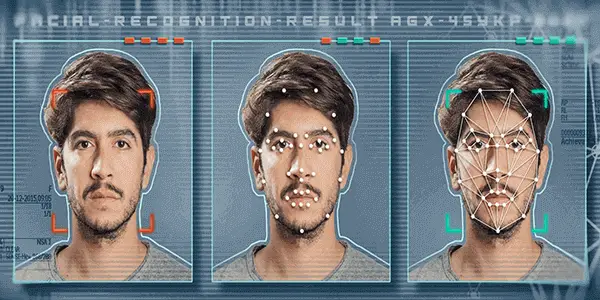
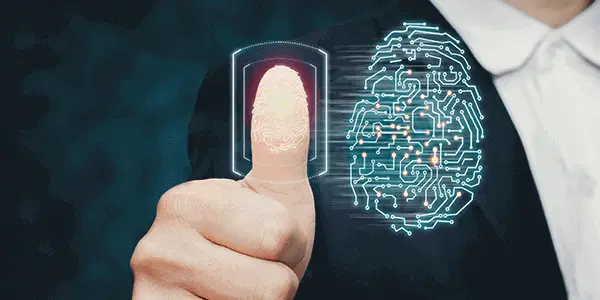
Using mathematical algorithms, the image of a person is assigned biometric parameters (see Figure 15) and digitized as a so-called biometric template in a biometric image. The biometric image is stored in a database and retrieved at the start of the authentication process and compared with the person. If the stored biometric template matches the biometric template of the face that has just been scanned, access is granted. If there is no match, access is denied. The same process also applies to the biometric fingerprint scanner (see Figure 16). Here, the fingerprint is digitized instead of the face and stored for comparison.
Our Expert Tip! Innovative technologies such as biometric access control provide modern, multifunctional security solutions that not only significantly increase the efficiency of a security concept but also add future-oriented value. Let our expert team advise you and give us a call. Our security technology specialists are happy to help.