

What is perimeter protection? Security systems for perimeter protection play a key role in protecting buildings, critical infrastructure and facilities surrounding buildings against unauthorized access and other threats. While fixed barriers such as fences and gates provide the physical infrastructure for perimeter protection, they must be supplemented by active security devices that enable security teams to detect, analyze and respond to any intrusion or other incident.
A comprehensive perimeter protection solution should include surveillance cameras, lighting, motion sensors, an alarm system, intrusion detection systems and access control systems. Businesses should consider perimeter security systems for both indoor and outdoor use.
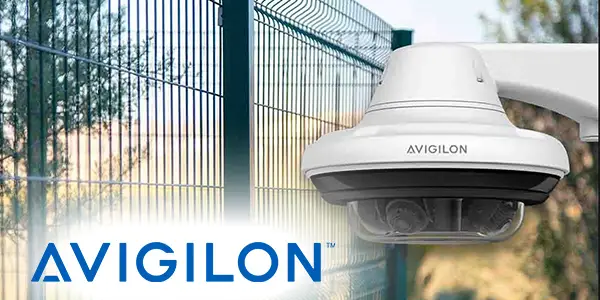
Below, various types of perimeter security that can be used as part of commercial security systems are presented. It is shown how they can reduce risk and improve responsiveness to external threats to the security of sites and buildings. For a highly professional implementation of perimeter protection, the brand Avigilon is an excellent choice. Professional Avigilon security and video technology is used around the globe at many critical infrastructure sites such as airports, government agencies, stadiums, city surveillance and more, wherever efficient real-time analysis is required. As a certified specialist installer, ESA GmbH Germen Protect can offer you comprehensive advice on Avigilon's product range and solutions.
Types of Perimeter Protection Devices
To create strong perimeter protection, security teams need multi-layered solutions that deter intruders and provide the highest level of situational awareness.
Surveillance Cameras
Strategically positioned surveillance cameras, such as permanently installed cameras, enable security teams to monitor vulnerable areas, analyze and record video footage, and detect suspicious activity. Cameras should be positioned to provide the greatest possible coverage of vulnerable areas with as few cameras as possible. Businesses can also invest in panoramic cameras, which provide 360-degree coverage of your site and its perimeter.
A CCTV security system should capture clear images in all lighting conditions. Clear images are important not only for detecting activity, but also for capturing evidence in the event of an incident. Surveillance cameras are available in a wide range of resolutions, including the latest 7K, 30-megapixel models, which are capable of capturing exceptionally fine detail.
To overcome the challenges of poor visibility and low-light conditions, thermal imaging cameras can deliver images even in complete darkness.
Access Control
An access control system enables security teams to verify the identity of employees and visitors who want to enter the premises through doors or gates. Visitors may include contractors, service or maintenance personnel, suppliers, or other individuals conducting official business on the premises.
To gain access, authorized persons can present one of various credentials at an access control reader. The reader transmits the data to a controller, which validates it against a database of authorized users before sending a door release signal to grant access or restrict entry.
Visitors can present different types of credentials, such as temporary access passes. They can also use an intercom mounted at the entrance to request access. Video-capable systems provide additional security by allowing the responsible person to see the visitor requesting entry.
Access control systems can also display details of each access event, making them available for review or investigation in the event of a security incident.
Modern access control systems use cloud-based infrastructure, allowing security teams to process access requests and open entrances remotely from any internet-enabled device, even when they are not on site.
Sensors for Perimeter Protection Systems
Sensors placed at key locations on or near entrances and fences detect movement and other types of disturbances that can alert security teams to an intrusion or other activity. Concealed sensors can be mounted on walls or fences, buried in the ground (ground sensors), or installed above ground at selected locations. There are six main types of perimeter protection sensors:
Fiber-optic detection system: This system detects changes or damage to security walls or fences.
Motion sensors: These sensors detect movement and send notifications when a moving object interrupts emitted infrared beams. They can be placed at various locations between fences and buildings.
Vibration sensors: These sensors (point vibration sensors) are installed on windows, doors, gates, and other entry points. They trigger alarms when vibrations are detected.
Microphone sensors: These sensors can alert security teams when a microphone detects suspicious sounds, such as those caused by climbing or by an intruder damaging a fence.
Radar systems can be installed in large open areas that are difficult to monitor. They can detect the presence of intruders or vehicles at distances of up to 1500 meters.
Seismic sensors: Similar to vibration sensors, these sensors are installed in specific vulnerable areas and detect vibrations caused by an attempted break-in.
Perimeter Alarm Systems
Perimeter alarm systems work together with various types of security sensors to alert security teams to activities that should be investigated. The alarm systems can send notifications via hardwired connections or over the internet.
Physical Barriers
Walls, fences, gates, doors and barriers such as bollards form a physical perimeter protection system that can deter intruders and ensure that only authorized personnel or approved visitors gain access.
Electric fences provide additional protection by sending alerts when an intruder attempts to climb over or cut through a fence. Since they can also cause electric shocks, electrified fences may not be permitted in certain regions.
Microwave barriers create an invisible barrier using microwave emissions to detect movement.
Infrastructure for Perimeter Security Systems
Perimeter security devices require a power supply and suitable infrastructure to transmit, record and store data for verification, response, testing and evidence preservation.
Data Transmission
Surveillance cameras, sensors, alarms and access control data can be transmitted via dedicated cabling or a Wide Area Network (WAN). If a network is used, it must provide sufficient speed and bandwidth to support fast and accurate bidirectional communication.
Speed is essential so security teams can receive alerts quickly and respond rapidly to incidents.
Network bandwidth must be sufficient to support the transmission of video recordings from surveillance cameras or access control systems that generate large file sizes.
Image quality is also crucial. It facilitates analysis and provides usable evidence should an intruder case go to court.
Bidirectional communication supports the signaling required for intercom systems, access control and remote control of door or gate access control systems.
Power Supply
The power supply for perimeter security devices can be provided via dedicated cabling or sourced from a network using Power over Ethernet (PoE) technology.
Data Storage
Data from various devices can be stored on-site on servers or in the cloud.
Cloud storage capacity can be expanded as needed and is managed, maintained and updated by the provider responsible for hosting. Cloud storage also gives the security team greater flexibility. It can remotely monitor activity from any location on any device with an internet connection.
Use of Analytics for Perimeter Security Systems
Security professionals use various types of perimeter security tools to analyze data from surveillance cameras, security sensors and access control systems. They can review the data on dedicated monitors or mobile devices if the security devices are internet-enabled.
To accelerate and improve threat detection, security teams can use video analytics tools to identify suspicious activity and respond to it. Integrating Artificial Intelligence (AI) can further enhance analysis and detection and provide a basis for automated responses.
Integrated Perimeter Security Solutions
Every security device makes an important contribution to protecting the premises. When the devices are integrated, they provide a significantly higher level of situational awareness and give security teams a better way to achieve reliable threat detection.
For example, integrating access control systems with surveillance cameras makes it possible to monitor the activities of people and vehicles on the premises, even when they present valid credentials.
Integrating surveillance cameras such as PTZ cameras outdoors with sensors and the ability to trigger alarms enables security teams to detect suspicious activity in areas not covered by cameras.
Together, the various devices give security professionals a comprehensive overview of activities on a single dashboard, which makes detection easier and shortens response times.
Integrating perimeter security devices with lighting systems also provides a basis for automation that can further improve protection. For example, any device that detects movement at night can automatically switch on the lighting along the fence, allowing nearby cameras to capture images under optimal lighting conditions.
Strategy for Effective Perimeter Protection
An integrated perimeter security strategy combines physical barriers with security technologies and the capabilities of security professionals. An effective strategy comprises a series of key processes:
- Deter
- Detect
- Assess
- Respond
- Communicate
- Log
- Analyze
Deter: Together with access control systems, physical security measures such as barriers, walls, fences and guard posts help prevent unauthorized access and reduce the risk of subsequent threats.
Detect: Surveillance cameras, security sensors and alarm systems notify security teams of intruders or unusual activity at or within the perimeter, so that they are aware of any threat.
Assess: Video analytics and artificial intelligence enable security professionals to quickly and accurately identify potentially critical events.
Respond: The security team can respond to an event by conducting an on-site investigation, contacting law enforcement or initiating procedures such as a site lockdown or other emergency measures.
Communicate: While responding to an event, security teams should also communicate with employees or other people on site who could be at risk if the event escalates.
Log: Data related to an incident should be recorded and stored for detailed analysis, management reporting and evidence preservation.
Analyze: After an incident, security teams should analyze the related data to identify trends or vulnerabilities in the security system. This serves as a basis for strengthening perimeter protection systems and taking proactive measures to prevent a recurrence.
Benefits of a Comprehensive Perimeter Security Solution
A comprehensive perimeter security solution offers a number of important benefits:
Reduced intrusions: The combination of physical barriers, sensors and access control systems ensures that only authorized personnel and vehicles can enter or drive onto the site.
Enhanced situational awareness: Data from surveillance cameras, sensors and alarms, presented on a single dashboard, ensures that security personnel have a 360-degree view of activity along the perimeter and on the site.
Faster incident response: Precise images and notifications transmitted quickly over a high-speed network enable security professionals to assess and respond to situations rapidly.
Better protection: Improved perimeter security provides better protection for the facility, its assets and the people working on the site.
Planning a Perimeter Security System for Your Business
Perimeter security is essential for protecting industrial facilities, utility companies, data centers, business parks, commercial areas, warehouses and logistics centers, as well as sites with critical infrastructure.
However, there is no one-size-fits-all solution. Sites are exposed to different threats depending on the type of business, location, size and layout of the perimeter, and the number of people and vehicles entering or driving onto the site.
Planning should begin with a physical security risk assessment to identify the types of threats and the areas and elements of the site that represent the greatest vulnerabilities.
A detailed survey of the site, its boundaries, access points and physical features provides the basis for planning physical barriers such as fences and the placement of perimeter security devices and supporting infrastructure.
Equipment selection should be based on performance, reliability and protection against local environmental conditions. Surveillance cameras should provide the widest coverage with a minimum number of cameras, and access control systems should combine convenience for employees and visitors with the highest security standards.
Do you have questions about perimeter protection systems and their planning? Feel free to contact us. Our security experts at German Protect look forward to hearing from you.


