

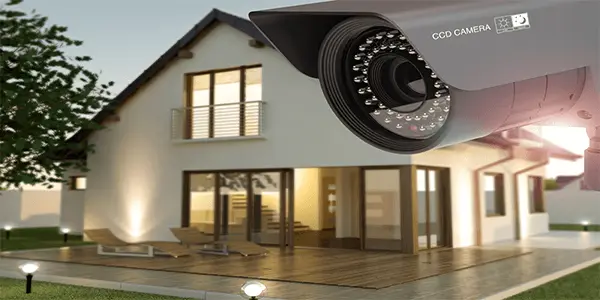
To implement reliable and practical video surveillance for homes and businesses efficiently, a few important factors should be considered before planning:
- What purpose should the video surveillance serve?
- Which surveillance cameras for which surveillance applications?
- Analog cameras, IP cameras or Wi-Fi cameras for efficient video surveillance?
- Which recording devices should I use?
- Is my video surveillance GDPR compliant from the start?
What purpose should the video surveillance serve?
Before purchasing a surveillance system, every operator of video surveillance should consider the purpose for which the camera surveillance will be used and, above all, what they expect from it. A clarifying question: should the video surveillance provide a general overview of the situation, or should it contribute significantly to monitoring and protecting the property precisely and reliably, regardless of the time of day or weather conditions?
To provide a general overview of the situation (Figure 1) of the property, without expecting high demands on the surveillance capabilities, such as reliable alarm triggering through the video surveillance, no special surveillance cameras are necessary. The components required for such an application are usually surveillance cameras with a fixed focal length in the low price range of 90 euros to 150 euros. These types of surveillance cameras are usually offered as complete systems in the form of a video surveillance set from 700 euros. If you decide on such a set, make sure that it is an ONVIF-capable system and that the surveillance cameras do not have an excessively large viewing angle. An overly wide viewing angle often means that the surveillance camera is not GDPR compliant with regard to the neighborhood, and parts of the field of view must be made unrecognizable (privacy-masked).
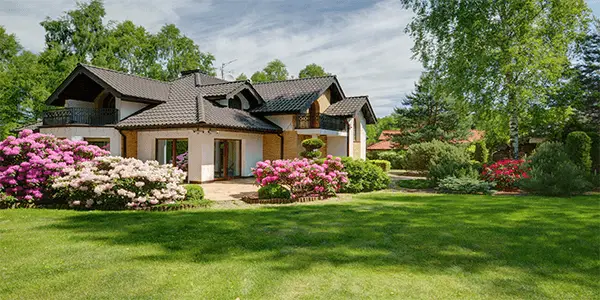
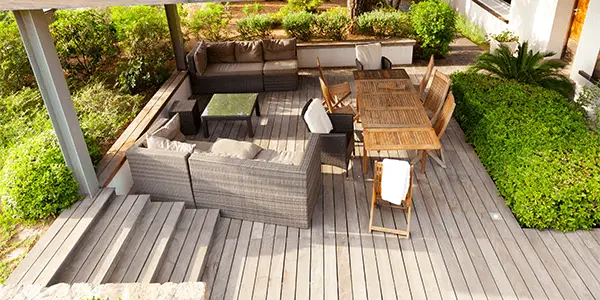
To implement effective and appropriate video surveillance for protecting the property, we generally recommend surveillance cameras from established manufacturers with varifocal lenses (Figure 2). Each surveillance camera should be selected individually for its specific application area, depending on the surveillance task (person recognition, license plate recognition, with or without AI (artificial intelligence), etc.). Identical surveillance cameras can only rarely fulfill different surveillance tasks. Cameras of this type are priced from approx. 350 euros. If you are prepared to invest a certain amount in your video surveillance, we recommend consulting a specialist retailer or a certified installer in advance. This not only ensures the right selection of suitable surveillance cameras for your video surveillance, but also guarantees support in the event of failures or other problems with the surveillance system. Contact us! Our expert team for video surveillance and security technology will be happy to provide you with detailed advice and project planning.
Which surveillance cameras for which surveillance applications?
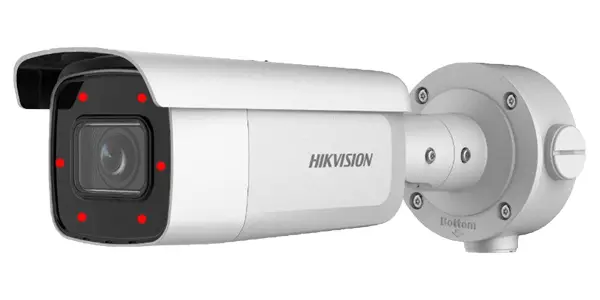
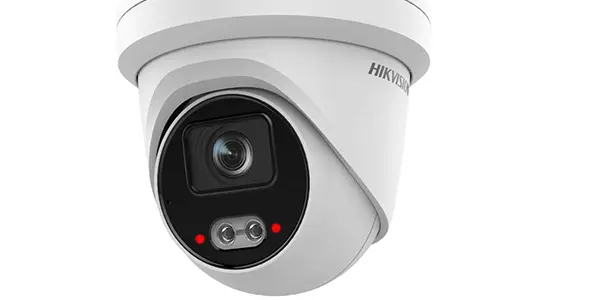
For a surveillance camera for outdoor use (outdoor camera) we generally recommend bullet cameras (Figure 3) or turret cameras (Figure 4), which are equipped with infrared illuminators outside the lens, so that no light reflections occur at night. In addition, we always recommend using an outdoor surveillance camera that is equipped with a variable focal length.
 .
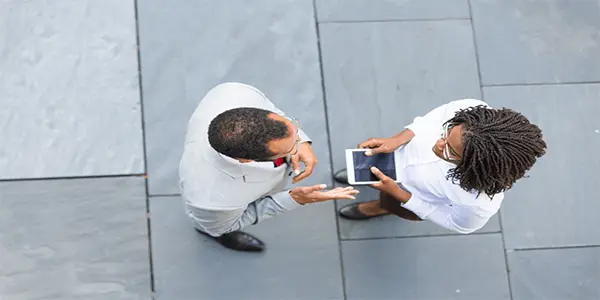
A variable focal length allows the surveillance camera to be precisely adjusted to the surveillance area, thus avoiding privacy-compliant „blackouts“ for private areas within the image. You should also pay attention to the range of the infrared illuminators for night images. Mounting the surveillance camera too high reduces the infrared range (Figure 5). Furthermore, mounting the surveillance camera too high can create a so-called bird's-eye view (Figure 6), which makes it impossible to identify the person.
 .
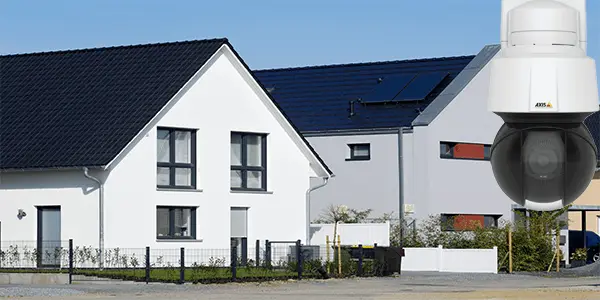
The suitable mounting height for a surveillance camera for outdoor use is a maximum of 4 meters (Figure 7). Exceptions to this recommended mounting height are the PTZ 360° cameras, which are equipped with pan, tilt and zoom functions (Figure 8). Depending on the zoom mechanism, PTZ 360° cameras can certainly be mounted at a height of 10 meters. In doing so, the data protection aspects must be observed, ensuring that the PTZ 360° camera's image does not extend beyond your own property (Figure 8). 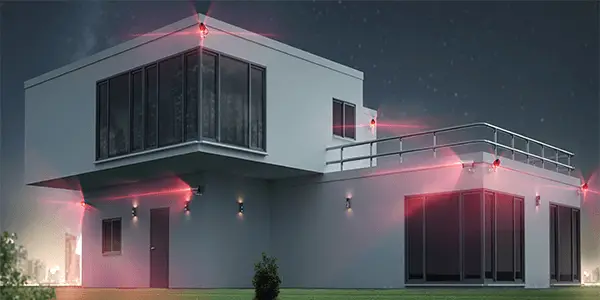
As a general rule, when installing a surveillance camera for outdoor use, we recommend choosing an IP65 protection class or higher against weather influences, and be sure to use the mounting accessories recommended by the manufacturer for outdoor use.
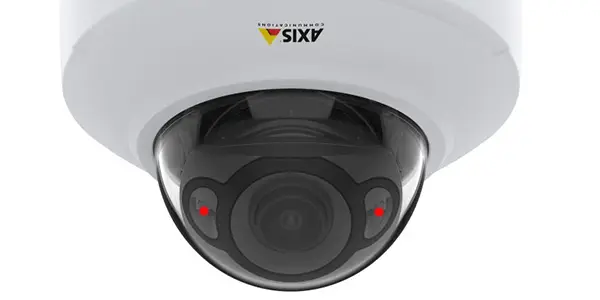
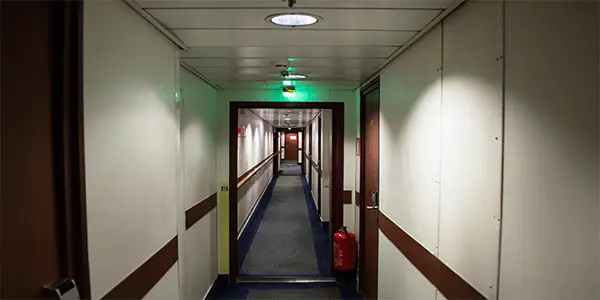
For a surveillance camera for indoor use (indoor), all camera body types are suitable depending on the application. Dome cameras or turret cameras are often preferred for aesthetic reasons due to their rather minimalist appearance. If good night vision without reflections is important, we generally recommend turret cameras and only certain models of Dome cameras in which the infrared illuminators are separated from the lens (Figure 9). For camera use in long corridors, equipping the surveillance camera with „Corridor View“ (corridor view) is definitely advisable (Figure 10). This setting option of the surveillance camera narrows the image section and adapts it to the width of the corridor. This avoids showing unnecessary amounts of wall on the left and right in the image.
 .
Analog cameras, IP cameras or WLAN cameras for efficient video surveillance?
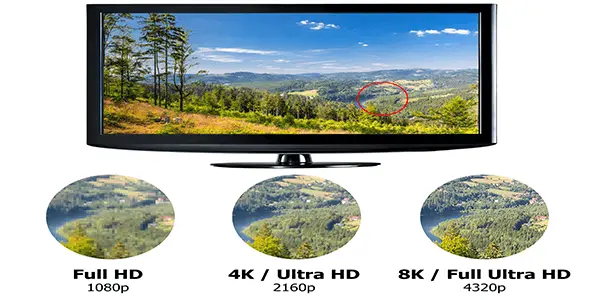
Due to the rapid technological development of video technology, we generally recommend the future-oriented use of IP cameras. Network-based transmission via IP opens up many technical possibilities, such as AI (artificial intelligence) for modern video surveillance. One no longer speaks of an ordinary surveillance camera, but of an intelligent IP camera that is equipped with numerous surveillance capabilities for protection and works autonomously. In addition, compared to other surveillance cameras, the modern IP camera offers considerably more resolution for clear and sharp images. Resolutions (Figure 11) of 4K UHD (8 megapixels) are nothing unusual today. Meanwhile, renowned manufacturers such as Hikvision, Hanwha Techwin, Axis, Avigilon, Vivotek, Dahua and Mobotix offer resolutions of 33 megapixels (Figure 12) and higher.

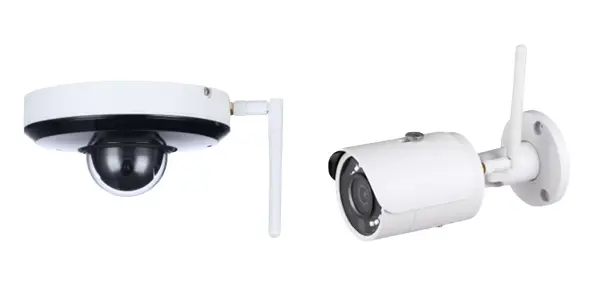
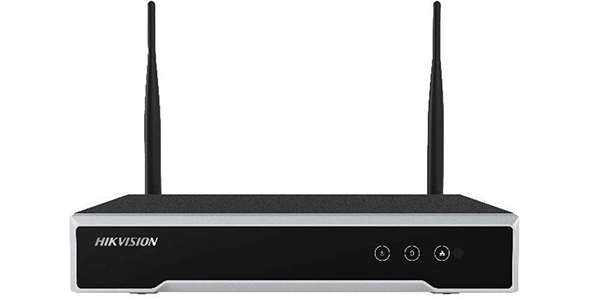
WLAN cameras are also network-based, but image transmission takes place wirelessly (cordless) via radio. Therefore, WLAN cameras are not only limited in resolution (up to a maximum of 4 megapixels) but are also very susceptible to electromagnetic interference, such as from mobile radio. To make matters worse, flawless transmission over WLAN always depends on the wall construction on site. For this reason, reputable WLAN camera manufacturers only provide range information for transmission in outdoor use. A WLAN camera (Figure 13) is therefore a convenient way to do video surveillance, but it is not recommended for security areas where continuous, reliable transmission of surveillance images to the NVR (network video recorder) (Figure 14) is essential.
Analog or Analog HD surveillance cameras offer a good alternative for upgrading an outdated surveillance system cost-effectively and without much effort.
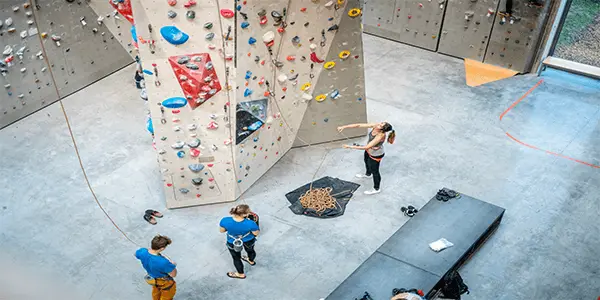
Typically, purely analog cameras transmit images over RG59 or RG60 coaxial cable with a maximum resolution of up to 800 TV lines (Figure 15). Thanks to newer analog HD systems such as TVI, CVI and AHD, manufacturers like Hikvision, ENEO, Dahua and Hanwha Techwin enable image transmission over coaxial cable at up to 8 megapixels (Figure 16). However, from a resolution of 4 megapixels onward, attention must be paid to the frame rate (FPS) of the surveillance camera. The higher the resolution, the more the frame rate is reduced, down to 15 FPS (frames per second). For typical surveillance recordings, 15 FPS is often sufficient. For special applications such as parking lot surveillance, where at least 30 FPS is required, analog HD cameras are not suitable. From a purely "cost/benefit" perspective, analog HD technology offers added value in that the existing cabling on site does not have to be replaced in order to upgrade video surveillance to multi-megapixel. If the project involves a new surveillance system, we recommend relying on wired network technology.
 .
Which recording devices should I use?
As a certified installer of professional video surveillance and security technology, we generally recommend using an NVR (Network Video Recorder) as well as a hybrid video recorder or multi-signal video recorder as the recording device (Figure 17) . Video recorders usually perform only one task: managing the surveillance cameras. Accordingly, they are far more powerful than all other recording devices.
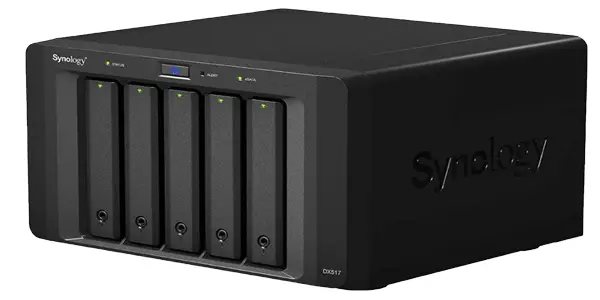 .
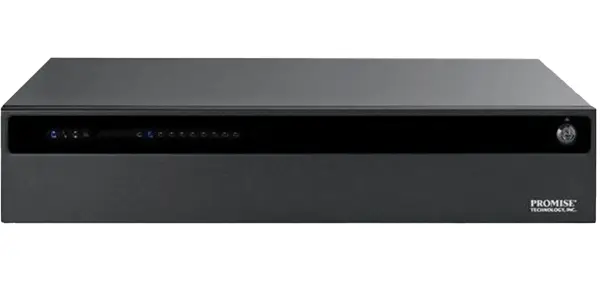
Recordings on a NAS (Network Attached Storage, mass storage device), for example, are usually associated with some hurdles, depending on manufacturer and equipment, as many intelligent analysis functions of the IP camera, such as alarms or person detection, cannot be displayed properly by the NAS. Exceptions are special NAS devices (Figure 18) designed for video surveillance. In addition, NAS devices are often associated with ongoing costs for camera licenses.
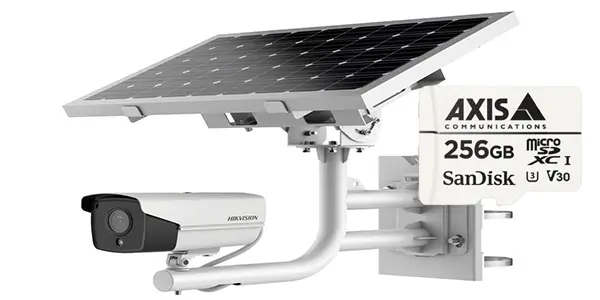
Continuous video surveillance recording to an SD card directly in the surveillance camera is only conditionally recommended. Due to the limited storage, such recording options are usually only used for autonomous security cameras, such as mobile cameras, solar cameras or other standalone solutions (Figure 19). It should also be considered that if the surveillance camera is stolen, the recordings are gone as well.
 .
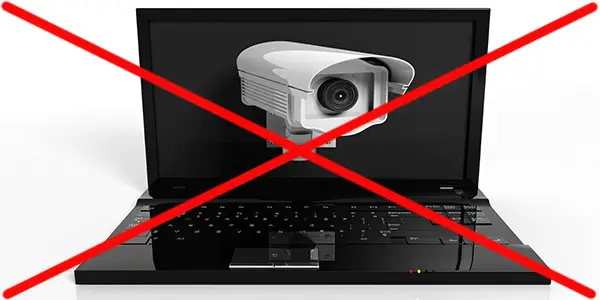
Recordings on a PC or notebook (Figure 20) are not recommended, as these devices must perform many other tasks, which can significantly affect recording performance.
Is my video surveillance GDPR-compliant from the start?
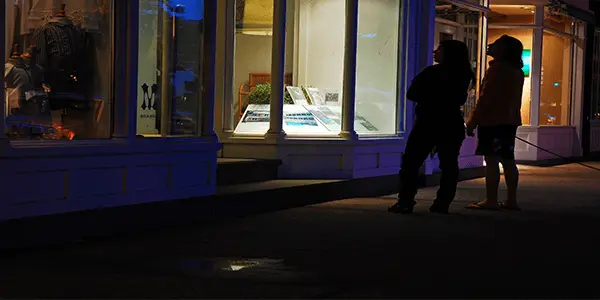
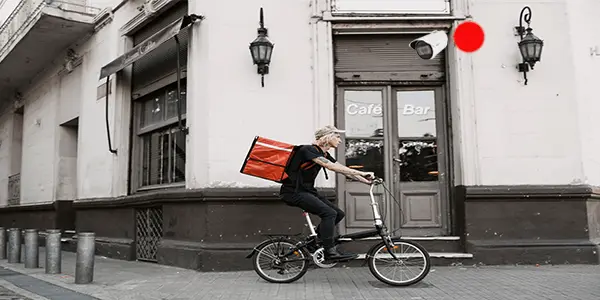
As long as the surveillance images do not leave your own property and recording is made without audio, video surveillance is GDPR-compliant. Particular attention should be paid to public areas such as streets, sidewalks and footpaths (Figure 21), public parking lots, and also neighbors (Figure 22). For publicly accessible properties or sales premises, visitors should always be made aware of video surveillance by a sign "Warning: Video Surveillance" in a clearly visible area.
 .
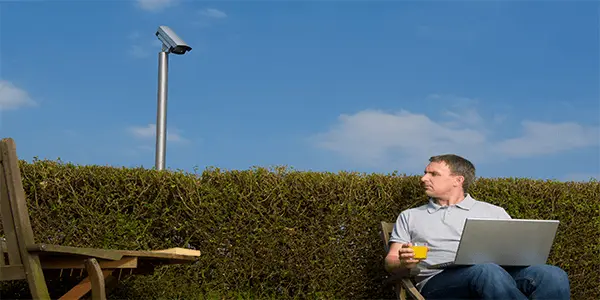
In this context, the difference between private and commercial video surveillance must be taken into account. Commercially operated video surveillance may be subject to additional data protection requirements, depending on company size and areas of application. Such data protection requirements include, for example, a data protection officer, whose name must also appear on the warning sign, documentation of each surveillance camera regarding the purpose of the video surveillance, restricted video recording, protection of employees' personal rights, etc. We therefore particularly recommend having the planning of the surveillance system for commercial video surveillance carried out by qualified installation companies. Contact us! Our qualified expert team for video surveillance and security technology is happy to assist you.


