

The most relevant surveillance camera types (also called form factors) for video surveillance are: bullet cameras, box cameras, dome cameras, turret cameras, fisheye cameras, and PTZ cameras.
The bullet camera (see Figure 1) offers plenty of space due to its relatively bulky design, so important components for outdoor use can be housed inside, such as infrared illuminators, heating, window heating and wipers. Another advantage of a bullet camera over other surveillance cameras is its infrared illuminators for night vision, which are mounted separately from the lens area. As a result, no reflections appear in the image at night, as can happen with a dome camera due to its glass dome, which is often the case in rain. In addition, depending on the model and equipment, the infrared illuminators of a bullet camera can offer a much greater infrared range (up to 100 meters) than, for example, a dome camera or turret camera. Therefore, bullet cameras or box cameras in weatherproof housings are most commonly used in professional video surveillance for outdoor use.
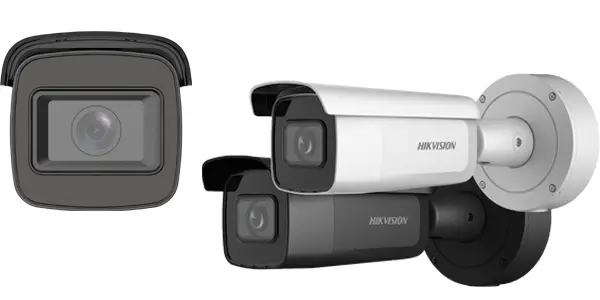
(Figure 1)
The box camera (see Figure 2) has a decisive advantage over other camera designs: it can be fitted with a longer focal length using a telephoto lens, making it suitable for surveillance tasks at greater distances. Because it allows interchangeable lenses with the appropriate focal length for a specific application, the box camera is flexible and versatile for various areas of video surveillance. In addition, when combined with a weatherproof housing (pictured), the box camera can be used for outdoor use, and without a weatherproof housing for indoor use. Due to these notable advantages, the box camera in a weatherproof housing is a widely used component in professional video surveillance.
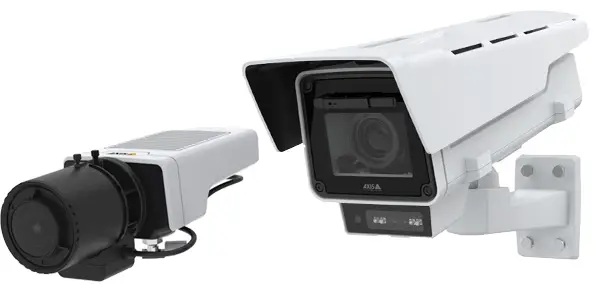
(Figure 2)
The dome camera (see Figure 3) is one of the most relevant components in video technology for making video surveillance discreet and unobtrusive. The strengths of the dome camera compared to other camera designs are particularly evident for indoor use, where good night vision with infrared illumination is not necessarily required. Because of its glass dome, it is often difficult for an intruder to determine from a distance exactly where the dome camera is pointing, but this feature also brings certain disadvantages. The glass dome makes the dome camera more susceptible to dust or other dirt than other camera designs, and it needs to be cleaned more often. In addition, raindrops, dust and dirt can cause strong light reflections, known as light cones, in the surveillance image when the infrared illuminator is switched on at night. Therefore, dome cameras are used in professional video surveillance more often indoors than outdoors. If unobtrusive video surveillance is essential for outdoor use, turret cameras are the more recommendable choice in terms of effectiveness.
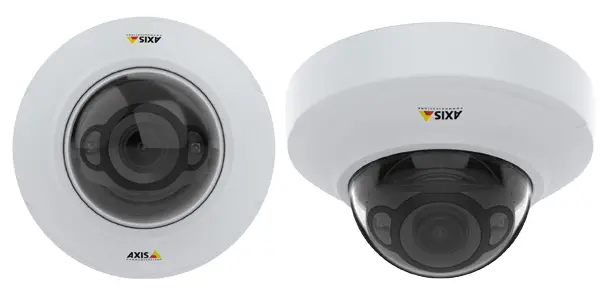
(Figure 3)
The Turret Camera (see Figure 4) is the larger sister of the Dome camera. While it is not quite as elegant and discreet as the Dome camera, it is considerably more effective for outdoor use, especially at night. In terms of size, both camera designs hardly differ from each other. The decisive difference is that the Turret camera has no glass dome, which can cause light reflections at night. Naturally, the Turret Camera is slightly disadvantaged compared to the Dome camera in terms of how clearly its surveillance direction can be perceived. During the day, the surveillance area of the Turret camera is clearly visible due to the alignment of the lens. At night, however, when the infrared illuminator is switched on, this factor no longer plays a role, since the red dots of the illuminators are equally visible from a distance, with or without a dome, and thus indicate the direction. In terms of applications, the Turret camera can be used for both outdoor and indoor use.
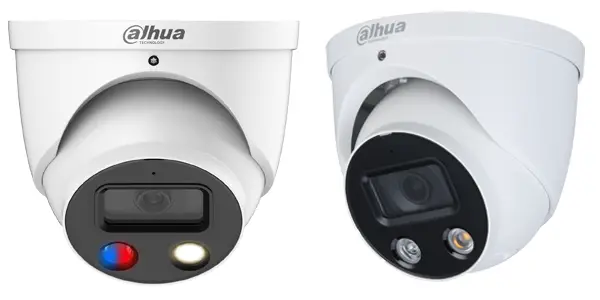
(Figure 4)
The Fisheye Camera (see Figure 5) is an efficient surveillance camera for special video surveillance applications. It is particularly valuable for department store surveillance, where vertical overhead surveillance images between the shelves are essential for theft prevention. In general, a Fisheye Camera is used for video surveillance of large areas such as halls, foyers and entrance areas. Specifically for these surveillance tasks, the Fisheye camera offers many advantages thanks to its wide viewing angle of 360° in horizontal mounting and 180° in vertical mounting. However, Fisheye cameras have only a limited infrared range for night use, between 15 and a maximum of 25 meters all around (360°), which should be taken into account depending on the application.
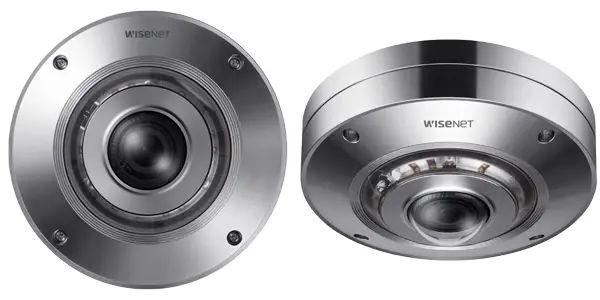
(Figure 5)
The PTZ Cameras (see Figure 6) are movable surveillance cameras equipped with pan, tilt and zoom functions (PTZ Pan-Tilt and Zoom). Thanks to these features, a PTZ camera offers considerable advantages for video surveillance compared to other surveillance cameras. Conventional PTZ cameras are usually equipped with a 20- to 36-fold zoom factor, which allows them to monitor applications efficiently at distances of up to 150 meters. High-performance PTZ cameras can also have a zoom factor of up to 60-fold, enabling surveillance distances of up to 300 meters. Accordingly, depending on the zoom factor, PTZ cameras are also equipped with powerful infrared illuminators that can optimally light up such distances at night. Due to their ability to pan and tilt, PTZ cameras can, depending on their equipment and with the help of the so-called tracking function, automatically follow detected persons and vehicles within the surveillance area. However, not all PTZ cameras are automatically equipped with a tracking function. This special feature is found in PTZ cameras in a higher price segment. In this regard, it is essential to check carefully, especially with the “cheap manufacturers” that promise such a function despite their low prices. Often the tracking function is present in the configuration of the PTZ camera, but unfortunately it is of no use.
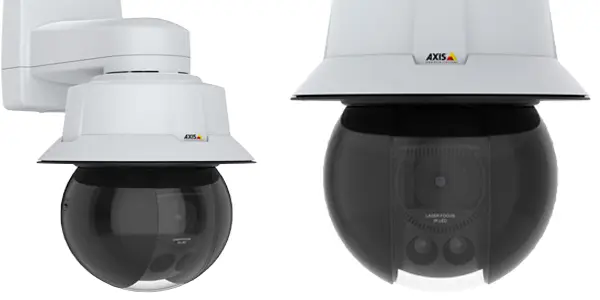
(Figure 6)
A surveillance camera is the sensory organ and therefore the eye of video surveillance. To make the right choice for your surveillance camera, we recommend seeking advice from specialist partners, especially if you are unsure about the final decision. Expert advice ultimately saves you from buying twice, and thus saves money and frustration. Renowned surveillance camera manufacturers offer a suitable surveillance camera for every conceivable requirement. It just has to be found, which is our job.
Our professional online shop for video surveillance includes over 5,000 different surveillance cameras from renowned manufacturers worldwide. Should you still not find a specific surveillance camera model in our online shop, we are certain to have it in our range. Call us or send us an email, and our certified specialist staff will be happy to help you choose the right surveillance camera.


