

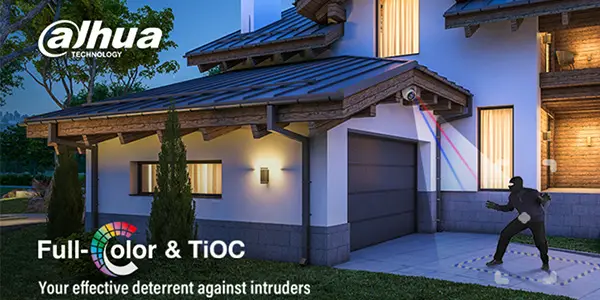
Active video surveillance offers the ability to respond more quickly to potential threats and incidents compared with passive video surveillance. This is ensured by a combination of artificial intelligence, smart motion detection and active deterrence measures.
In video surveillance, a basic distinction must be made between two variants: passive and active video surveillance. In passive video surveillance, surveillance cameras record the surroundings and offer only a few options to respond to events or deter intruders, unless the live footage is continuously watched by human operators. Passive video surveillance is therefore mainly suitable for analyzing events after they have occurred.
On the other hand, there is active video surveillance: It enables the active prevention of security-relevant events or an immediate response to them. Through a combination of artificial intelligence (AI), smart motion detection and active deterrence measures, active video surveillance makes it possible to respond to incidents in real time and to deploy its resources only when it is actually necessary. Active video surveillance is essential when it comes to efficient and cost-effective surveillance operations that do not depend on human operators.
Active Video Surveillance with Three-in-One Cameras (TiOC) and Full-Color Technology
Specifically for active video surveillance, Dahua Technology, a globally known provider of video surveillance technology, offers the Three-in-One Camera (TiOC), a surveillance camera equipped with three key features: Smart Dual Illuminators for intelligent lighting of the scene, active deterrence and AI. The camera can effectively warn and deter intruders and alert users in real time. This makes the TiOC suitable for properties and buildings that require 24/7 surveillance, such as villas, retail stores or warehouses.
The Smart Dual Illuminators offer three different operating modes. In IR mode, only the infrared light is activated, while in warm light mode, the warm light is switched on. In standard mode, the Smart Illumination mode, the lighting switches back and forth between infrared and warm light depending on the situation. When a target is detected, the lighting changes from infrared to warm light. If the target enters the critical area, the alarm is triggered, a siren sounds and the red and blue warning light is switched on. As soon as the target leaves the monitored area, the additional warm light is switched off and the camera switches back to infrared light. These different lighting modes allow the camera to adapt to the needs of users and can help reduce light pollution in the surveillance area.
Color Video Images Even at Night
Using Dahua Full-Color technology, full-color images of the monitored area can be generated even in dark surroundings and at night. This makes it possible to create detailed images of the target, which helps to clarify relevant events. When the target is within the critical surveillance area, the camera can use time-sharing control of the generated image to prevent disruptive effects from the red and blue warning light in the image. This allows true-color footage to be produced for further investigations.
Smart Motion Detection and Perimeter Protection
The AI-driven Smart Motion Detection (SMD) and the Perimeter Protection of the TiOC enable precise detection of targets and thereby help reduce the number of false alarms that could otherwise be triggered, for example, by animals, leaves or vehicle headlights.
In addition, different surveillance operating modes can be programmed on a time-controlled basis. This makes the TiOC suitable for a wide range of applications that require automatic and flexible alarm activation, as is the case, for example, with residential houses and apartments, retail stores and similar facilities.
Do you have questions about active video surveillance with Dahua's TiOC or other security topics? Then feel free to contact us. Our experts at German Protect look forward to hearing from you.


