

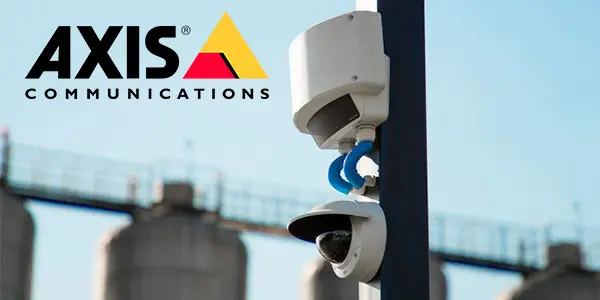
Surveillance cameras combined with radar technology provide precise motion detection even in complete darkness, significantly reducing the number of false alarms.
In environments where conventional surveillance cameras struggle due to limited lighting conditions, special cameras such as thermal imaging cameras can be used. These cameras detect the heat radiation emitted by organic objects. This means that living beings, including people, can be detected by thermal imaging cameras even in complete darkness. The cameras convert the detected heat radiation, or infrared energy of the objects, into visible colors that can be displayed on a screen. In this way, thermal imaging cameras are able, for example, to detect people approaching a fence at night. In response, a PTZ camera and a lighting system can be activated to deter the intruder and identify them.
Possible areas of application for thermal imaging cameras include monitoring facilities such as oil and gas production. By detecting changes in heat, leaks in pipelines can be identified quickly and reliably.
Radar Technology Combined with Video Surveillance
Additional use of radar technology in video surveillance systems can further improve security. For this purpose, security components such as the AXIS D2110-VE Network Radar Detector are used. The manufacturer AXIS Communications is a globally renowned provider of innovative solutions in the field of video surveillance.
When the radio signals emitted by the radar detector hit a moving object, the radio signals are reflected back to the radar unit, where they can be analyzed by a receiver. This makes it possible to determine the position of the object and classify it: Is it, for example, a car or a person? The speed, direction of movement and radar cross-section can also be determined in this way. The radar unit can then instruct a surveillance camera, such as a PTZ camera, to follow the object.
Radar Motion Detection Reduces False Alarms
Radar-based motion detection enables a reduction in the rate of false alarms compared with video image-based motion detection. A radar detector is not triggered by small changes in image pixels, as is the case with a conventional surveillance camera. Lights or even a spider web, for example, do not trigger an alarm with radar surveillance.
By being able to set different sensitivity levels for radar detection, and through the use of special signal processing algorithms and deep learning technology, alarms caused by irrelevant events, such as moving animals like rabbits or cats, can be avoided. The optimal application area for radar is large areas with moderate activity. These include, for example, logistics centers, warehouses, but also large parking lots that are closed at night.
Using radar in combination with video surveillance eliminates the need for artificial lighting and helps save energy. Additional lighting only needs to be switched on in the event of suspicious movement, in order to deter possible intruders and track them with visual surveillance cameras.
Do you have questions about surveillance cameras, thermal imaging cameras and radar devices? Then feel free to contact us. Our experts at German Protect look forward to hearing from you.


