

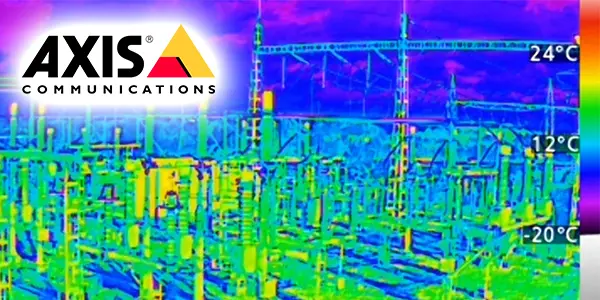
Thermal imaging cameras can play a crucial role in protecting electrical substations by making a variety of threats visible.
Electrical substations are exposed to a range of hazards. These include vandalism, intruders, extreme weather and periods of high energy demand. In addition, substations are usually unmanned and located in remote areas, which makes it more difficult to protect them against intrusion, theft and sabotage. Substations are critical, vulnerable points in the power grid and therefore of great importance to society. For this reason, it is all the more important to maintain control.
The utility sector must protect itself against the hazards mentioned above in order to ensure an uninterrupted power supply for residents and businesses. This requires monitoring to detect potential violations as well as signs of equipment faults.
Monitoring substations is still largely a manual task, but a growing number of energy companies are looking for ways to make it safer and more efficient so that they can act as quickly as possible. Thermal imaging through thermal imaging cameras can support these efforts and enable continuous, accurate monitoring of substations. This improves not only security but also operational efficiency and supply stability.
Thermal imaging compared with visual cameras
Thermal imaging does not require light. Thermal imaging cameras make it possible to see in complete darkness. They are also fully functional in daylight. This sets them apart from visual surveillance cameras, which need reflected light for the sensor to capture an image. Thermal imaging is produced by sensors that detect temperature differences in the thermal energy emitted by an object and then translate these into image details. The thermal imaging of thermal cameras, or more precisely of thermal sensors, is just as accurate on a pitch-dark night, in fog and under camouflage as on a bright, sunny day.
As new sensors, materials and improved calibration methods make thermal imaging cameras more affordable, reliable and versatile, thermal imaging is becoming interesting to a growing number of users and applications. While thermal imaging cameras are used mainly for surveillance purposes, detecting objects such as people and vehicles, there are other possible areas of application as well. When it comes to monitoring equipment and production processes, a thermal imaging camera makes it possible to calibrate the thermal display using numerical data, i.e. specific temperatures. It sends out warnings when the temperature leaves the preset range, which can then be investigated.
Thermal imaging improves operational efficiency
Handheld thermal imaging cameras are used in substations to detect heat and provide a thermal image of the energy being emitted. These inspections are carried out at intervals of three to six months. While manual measurement requires on-site visits, a thermal imaging camera permanently installed on the premises enables round-the-clock, 24/7 monitoring of the relevant equipment.
Thermal imaging cameras can both trigger alarms when temperatures rise and carry out regular inspections of critical areas. Round-the-clock monitoring of a site using thermal imaging helps to detect a problem as it develops, before its effects increase and a solution becomes more costly.
Thermal imaging cameras are becoming an indispensable piece of equipment for trend analysis, for maintaining operational efficiency and for the continuous monitoring of substations.
Detecting Various Threats
Due to the great importance of substations, they are exposed to various threats. These include cyber attacks. Cameras with integrated cybersecurity functions help prevent hackers from infiltrating networks and disrupting processes.
However, there are also other threats to substations in physical form, such as unauthorized intrusion, theft and sabotage.
Compared to visual cameras, thermal imaging cameras offer more reliable detection and shape recognition for identifying potential intruders. This is achieved through the combination of high image contrast and motion detection. This helps keep the number of false alarms low.
Thermal imaging cameras can also help detect activity inside and directly outside substation grounds, both during the day and at night. Support with perimeter protection can play an important role in securing substations. This solution could include a thermal imaging camera with analytics that detects potential intruders and activates a PTZ camera to visually capture the intruder and track them. Audio warnings such as acoustic sirens or light warnings such as strobe sirens can be added.
By using sound detection devices, these can alert to a possible attack on the site. This enables security companies to check the area concerned. For example, if a transformer has been attacked, the warning function provides an early opportunity to stop environmental emissions and the destruction of the equipment.
Another threat of growing importance is drones. Attackers are increasingly using these devices to spy on substations and cause them to fail. Drones are detected with the help of partner hardware and software. A thermal imaging camera can provide support by making drones visible.
Securing Substations for Overall Safety
A stronger focus on substation maintenance also means more intensive monitoring of the site. Overheating increases the risk of both fires and explosions, which can be monitored through thermal imaging and thermal cameras. This improves personnel safety by providing an overview of the condition of the equipment before emergency services are dispatched to the scene.
The failure of one or more substations in a region would cause a multitude of social and operational problems. It is therefore crucial to implement additional security mechanisms to increase resilience against potential threats and issues. Thermal imaging can be of great benefit here.
Thermal imaging is crucial for improving the maintenance and security of substations by monitoring areas on the grounds and in the surrounding area around the clock. The aim is to deter potential intruders and detect anomalies in equipment early in order to avoid unexpected shutdowns or developing faults. Thermal imaging cameras can help achieve this goal.
Do you have questions about thermal imaging cameras or other areas of video surveillance? Then feel free to contact us. Our security experts at German Protect look forward to hearing from you.


