

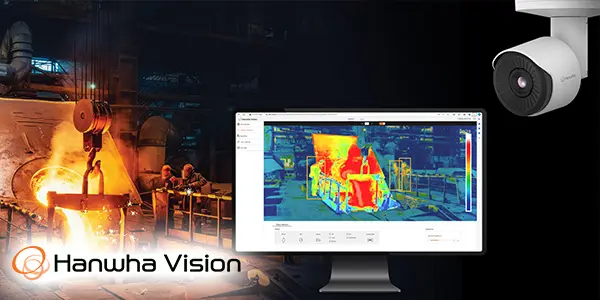
Hanwha Vision, a global provider of video surveillance products, is launching a new AI-driven series of radiometric thermal imaging cameras. They offer precision and security for critical industries. The next-generation devices go beyond simple security applications and combine artificial intelligence with temperature detection and powerful imaging. The surveillance cameras are suited to particularly security-critical industries such as power plants, factories, and oil and gas suppliers.
Clear Images with a High-Performance Detector
The radiometric thermal imaging cameras from Hanwha Vision offer QVGA resolution (384×288) with a 17 μm detector size and outstanding performance of 30mK NETD (noise equivalent temperature difference). This particularly low NETD value enables the camera to capture clear and detailed images even in difficult lighting conditions, such as low light and in smoke and fog. This makes the cameras suitable for use in critical environments as well.
Wide Temperature Range
The radiometric thermal imaging cameras from Hanwha Vision offer a temperature detection range of -40 degrees to +550 degrees Celsius and are therefore ideal for a wide variety of industrial applications. By effectively monitoring industrial equipment and materials, the cameras support safe operation. This improves maintenance efficiency and reduces downtime.
Hanwha Vision's thermal imaging technology proactively identifies problems, eliminates the need for on-site inspections, and optimizes the detection and assessment process. In addition, the cameras' high-temperature detection range enables monitoring of processes involving high-temperature materials, thereby helping to improve process quality and safety.
AI-Based Object Classification in Thermal Imaging
While AI functions are increasingly common in optical cameras, their integration into thermal imaging cameras offers additional benefits for improved surveillance. Hanwha Vision's new thermal imaging cameras feature AI-driven object detection that accurately classifies people and vehicles, even under demanding conditions. This capability enables the cameras to detect and classify people in extreme situations such as fog or smoke, helping to effectively prevent accidents.
More Flexible Option for Commercial Use
Hanwha Vision's new AI-based radiometric thermal imaging cameras are available in two variants: 30fps and 8fps. Thermal imaging cameras with a frame rate of 30fps fall under the Wassenaar Arrangement on export controls and require various licenses, even when used for security purposes. Cameras with a frame rate below 9fps, on the other hand, are not classified as "sensitive" and can be exported and imported more freely. This makes Hanwha Vision's 8fps thermal imaging cameras a flexible option for commercial use.
Benefits of AI-Based Radiometric Thermal Imaging Cameras in Critical Infrastructure
AI-driven radiometric thermal imaging cameras penetrate darkness and smoke and can be used even in particularly demanding industrial environments, such as power plants, factories, ports, and oil and gas suppliers
Equipment Monitoring
In power plants, factories and ports, thermal imaging cameras can continuously monitor critical equipment for overheating, leaks or other anomalies. Early detection of temperature changes can prevent equipment failures, accidents and production downtime. AI helps with the automated detection of anomalies, so operators can be informed of potential problems in a timely manner.
Process Monitoring
AI-based radiometric thermal imaging cameras can monitor industrial facilities and processes such as conveyor belts, pipelines and furnaces. Tracking temperature fluctuations and object movements can ensure process efficiency, detect product defects and identify potential safety hazards. AI can analyze thermal patterns to optimize process parameters and predict maintenance needs.
Fire Detection
The new AI-based radiometric thermal imaging cameras can detect fires at an early stage, even in complete darkness or through smoke. Their ability to capture heat signatures makes this possible. This rapid detection can trigger alarms and fire safety protocols to minimize damage and risks to personnel. AI can distinguish between fires and other heat sources to reduce false alarms. The cameras can also monitor cargo to detect elevated temperatures and protect containers and bulk goods from fire, explosions and spoilage.
Perimeter Security
AI-based radiometric thermal imaging cameras can monitor fences, access points and restricted areas in critical infrastructure to detect unauthorized access or intrusion, even in low light or challenging conditions. AI-driven object classification can accurately identify people and vehicles, reduce false alarms and support targeted responses. The cameras also detect unauthorized personnel and vessels, even in low light or difficult maritime conditions such as fog or rain. AI-based radiometric thermal imaging cameras provide clear images for safe navigation and docking maneuvers, especially at night or in poor visibility.
Do you have questions about the new AI-based thermal imaging cameras from Hanwha Vision or other surveillance cameras? Then feel free to contact us. Our security experts at German Protect look forward to hearing from you.


